Publishers Are No Longer Optimizing Just for Google - They're Optimizing for AI Distribution
The future of digital publishing is no longer defined by Google rankings alone. As AI-powered platforms reshape how people discover information, publishers are shifting from traffic-focused SEO to AI distribution strategies built on authority, original research, and trusted knowledge. Learn why AI visibility is becoming the next competitive advantage for businesses and content creators.
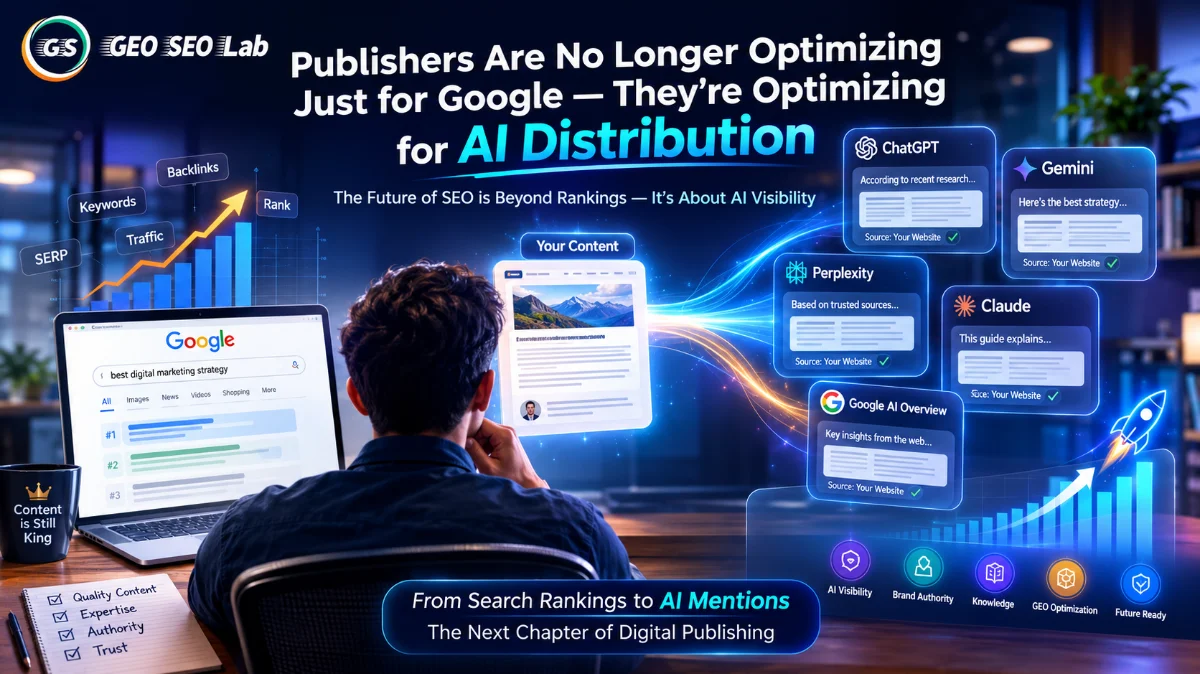
Publishers Are No Longer Optimizing Just for Google — They're Optimizing for AI Distribution
The way people discover information online is changing faster than most businesses expected. For more than twenty years, search engines acted as the primary bridge between users and websites. Companies invested in keyword research, technical optimization, backlinks, and content marketing because ranking higher on search engines meant receiving more visitors. That model created an entire industry around search visibility. Today, another major shift is unfolding. Publishers are no longer focusing only on appearing in search results. They are also working to ensure their content becomes part of AI-generated answers, recommendations, and conversations. This transformation is redefining digital publishing, search strategy, and online authority. The discussion throughout this article is based on the source document you provided.
The growing popularity of conversational AI has changed user behavior. Instead of typing short keyword phrases, people increasingly ask complete questions and expect immediate, detailed responses. AI systems collect information from multiple trusted sources, combine the knowledge, and generate a single answer that often satisfies the user's need without requiring them to visit multiple websites. This simple change in user experience has major consequences for publishers because visibility is no longer measured only by clicks. It is increasingly influenced by whether a brand's expertise becomes part of the AI's understanding of a topic.
Many organizations still believe traditional SEO alone is enough for long-term growth. While SEO remains essential, publishers have started recognizing that ranking well is only one part of the visibility equation. Their content must also be structured, trustworthy, and authoritative enough for AI systems to reference when generating responses. This represents a broader approach to digital presence rather than a replacement for existing optimization practices.
A New Era of Digital Publishing Has Begun
For years, the success of online publishing was relatively straightforward. Businesses created articles, optimized them for search engines, attracted visitors, and converted those visitors into subscribers, customers, or readers. Every improvement in rankings translated into measurable website traffic. Marketing teams relied on impressions, sessions, click-through rates, and conversions to evaluate performance.
That predictable system is changing because AI-powered platforms are introducing a different way of discovering information. Instead of showing users a page filled with links, AI platforms summarize information from multiple sources and provide direct answers. Users often receive exactly what they need without opening additional websites. This creates a situation where a publisher's research may influence millions of readers while generating very little measurable traffic.
This shift is causing publishers to rethink their priorities. Instead of asking only how to increase rankings, they are asking how to become trusted knowledge sources for AI systems. The difference may appear small at first glance, but it fundamentally changes content strategy, editorial planning, and long-term business goals.
Another important difference is that AI platforms evaluate information differently from traditional search engines. They do not simply rank pages based on hundreds of signals and present them in order. Instead, they analyze multiple sources simultaneously, compare credibility, identify overlapping facts, and generate a synthesized response. This means every published article has the potential to contribute to an answer even if users never directly visit the original page.
Publishers understand that future visibility depends on becoming part of this knowledge ecosystem. Their objective is no longer limited to earning clicks. They want their expertise, research, and authority to influence AI-generated responses across multiple platforms.
Why Publishers Changed Their Strategy
The publishing industry has experienced many disruptions over the last two decades. Algorithm updates changed ranking systems. Mobile devices changed browsing habits. Social media altered traffic sources. Voice search introduced conversational queries. Each transition required publishers to adapt, but those changes mostly affected how people reached websites.
The current transformation is different because it questions whether users need to visit websites at all.
When AI delivers complete answers immediately, the traditional relationship between publishers and readers changes. Publishers still create valuable information, but AI becomes the primary interface through which users consume that information. The contribution remains important even when direct traffic declines.
This creates a challenge for organizations that depend heavily on page views and advertising revenue. Valuable content may shape customer decisions while remaining invisible inside traditional analytics platforms. Businesses may incorrectly believe certain content performs poorly simply because visitors no longer click after receiving AI-generated answers.
Publishers recognized this trend earlier than many industries because they observed changes in reader behavior firsthand. They began investing more heavily in content that AI cannot easily replace. Instead of producing large volumes of similar articles, they started focusing on exclusive reporting, original research, expert interviews, proprietary insights, and firsthand experience. These assets provide information unavailable elsewhere, making them more valuable within AI-generated responses.
Editorial teams are also changing how they measure success. Website traffic remains important, but they increasingly monitor brand mentions inside AI responses, citation frequency, topical authority, and how accurately AI platforms describe their expertise. These measurements reflect a broader understanding of visibility in an AI-driven environment.
As more organizations notice these shifts, AI visibility is becoming an essential part of digital strategy rather than an experimental marketing activity.
SEO Is Still Essential, But It Is No Longer the Entire Strategy
Whenever new technology appears, predictions quickly emerge claiming older methods have become obsolete. Similar claims are now being made about search engine optimization. Some people argue that AI will completely replace search engines and eliminate the need for SEO. The evidence presented in the source material suggests otherwise.
Search engines continue to play a major role in online discovery. Technical optimization remains necessary because both search engines and AI systems need to access, understand, and process website content efficiently. Fast-loading pages, logical site architecture, structured data, and accessible content continue to improve discoverability across digital platforms.
Content quality remains equally important. AI systems increasingly evaluate credibility, expertise, originality, and comprehensiveness before incorporating information into generated responses. Publishers producing detailed, accurate, and trustworthy content naturally strengthen both traditional SEO performance and AI visibility.
Rather than replacing SEO, AI expands its purpose. Optimization now extends beyond rankings into knowledge contribution. Businesses must think about whether their content helps search engines understand a page while also helping AI systems answer complex questions accurately.
This broader perspective changes how content is planned from the very beginning. Instead of writing only for keywords, organizations increasingly create resources that explain topics completely, provide expert insight, answer related questions naturally, and establish authority across entire subject areas.
As this evolution continues, businesses that combine strong SEO fundamentals with AI-focused knowledge creation will likely outperform those relying exclusively on traditional ranking tactics.
Understanding the Difference Between Traditional Search and AI Discovery
The biggest difference between traditional search and AI-powered discovery is not simply the technology behind them. The real difference lies in how users consume information. Traditional search engines act like directories. They organize millions of webpages and allow users to choose which result they want to visit. AI systems behave differently. They collect relevant information from multiple trusted sources, understand the context of a question, and generate a complete answer within seconds. This completely changes the relationship between publishers and their audiences.
For many years, publishers focused on creating content that encouraged users to click. Every headline, meta description, featured image, and keyword placement was designed to increase click-through rates. Once users arrived on a website, publishers had opportunities to display advertisements, build email lists, recommend additional articles, or generate leads.
AI-powered discovery introduces another path. Instead of requiring users to visit multiple pages, AI systems perform the research on behalf of the reader. They compare different sources, identify common facts, and produce a concise response. If the answer fully satisfies the user's intent, there may be no reason to click any external link.
This doesn't mean publishers become less important. Quite the opposite. AI systems still depend on reliable information created by publishers. Without expert articles, research papers, technical documentation, case studies, and educational resources, AI would have far less knowledge to draw from. The difference is that contribution and visibility are no longer measured exclusively by website visits.
Businesses must therefore think beyond traffic. They need to ask whether their expertise is becoming part of the digital knowledge ecosystem that AI platforms rely upon every day.
This new discovery model also rewards clarity. Articles that explain concepts logically, define terminology clearly, answer related questions naturally, and provide trustworthy information are easier for AI systems to understand. Publishers who consistently create this type of content improve their chances of being represented accurately inside AI-generated responses.
The Measurement Problem Every Business Should Understand
One of the most overlooked consequences of AI-powered discovery is measurement. Digital marketing has traditionally relied on metrics such as impressions, clicks, sessions, bounce rates, conversions, and revenue attribution. These measurements worked well because users typically visited websites after searching online.
AI changes that assumption.
Imagine a potential customer asking an AI assistant for the best cybersecurity practices, enterprise software recommendations, or digital marketing advice. The AI generates an excellent answer based partly on information your company published. The customer learns from your expertise, develops trust in your knowledge, and later purchases your service after searching for your brand directly. Traditional analytics may never show how your original content influenced that decision.
This creates what many publishers describe as a visibility gap. Your content contributes to customer education, but your analytics platform records very little activity because users never clicked through from the AI interface.
Organizations that depend only on traffic reports may reach incorrect conclusions. They may stop investing in valuable educational content because website visits appear lower, even though that same content continues influencing customer decisions through AI-generated answers.
Forward-thinking publishers have started solving this challenge by expanding the way they measure success. Alongside traditional SEO metrics, they monitor AI mentions, citation frequency, brand representation, topical authority, and how consistently AI platforms explain their expertise.
Although measurement tools are still evolving, businesses that begin collecting baseline information today will have a significant advantage. They will understand how their visibility changes over time while competitors continue relying only on traditional search analytics.
The transition requires patience because AI visibility cannot yet be measured as easily as keyword rankings. However, organizations that ignore this change risk making strategic decisions using incomplete information.
The Shift from a Click Economy to a Knowledge Economy
For decades, digital marketing revolved around attracting clicks. Content succeeded when people opened webpages, spent time reading articles, and interacted with websites. Everything from keyword optimization to title writing supported this objective.
AI-powered discovery introduces a broader objective.
Instead of asking whether an article generates traffic, businesses increasingly ask whether it contributes valuable knowledge.
This subtle difference changes the purpose of content creation. Rather than producing articles designed only to rank well, organizations must create resources that genuinely improve understanding. AI systems reward information that is accurate, comprehensive, original, and supported by expertise because these qualities help them generate better answers for users.
Knowledge-driven content is built differently. It explains ideas thoroughly instead of repeating existing summaries. It introduces new perspectives rather than rewriting common advice. It solves practical problems instead of chasing temporary search trends.
Businesses entering this new environment should think of themselves less as publishers competing for attention and more as contributors building reliable knowledge.
This approach creates long-term authority because valuable knowledge remains useful regardless of changing algorithms or emerging AI platforms.
Another advantage of knowledge-focused publishing is trust. Readers increasingly recognize when content demonstrates genuine expertise. Detailed explanations, practical experience, evidence, and thoughtful analysis naturally establish credibility in ways that keyword-heavy articles never could.
Organizations investing in knowledge rather than volume often discover that both search engines and AI platforms reward the same qualities over time.
Why Original Content Is Becoming More Valuable Than Ever
One of the strongest themes emerging from publisher discussions is the growing importance of originality. AI systems are exceptionally good at summarizing information that already exists across the internet. They can combine hundreds of articles into one coherent explanation within seconds.
Because of this ability, simply rewriting existing information creates very little additional value.
Publishers increasingly understand that future success depends on producing knowledge AI cannot generate independently. This includes original research, exclusive surveys, proprietary frameworks, technical implementation guides, firsthand experience, customer case studies, industry benchmarks, and expert commentary developed through years of practical work.
When businesses publish information unavailable anywhere else, they contribute something genuinely valuable to the digital ecosystem. AI systems can reference these insights because they represent new knowledge rather than recycled summaries.
Original content also strengthens brand authority. Readers naturally associate organizations with expertise when they consistently introduce fresh ideas supported by evidence and experience.
This doesn't mean every article must contain groundbreaking research. Educational content remains important. However, businesses should gradually increase the proportion of unique insights within their content strategy.
For example, instead of publishing another generic guide explaining digital marketing basics, a company could analyze its own client data, identify emerging patterns, and explain what those findings mean for the industry. That information becomes uniquely associated with the brand because nobody else possesses the same experience or dataset.
Publishers making this transition are discovering that originality creates long-term value extending far beyond traditional search rankings.
The Modern Role of SEO Professionals
The responsibilities of SEO professionals are expanding rapidly. In the past, much of their work centered around keyword research, technical audits, backlink strategies, crawl optimization, and ranking improvements.
Those skills remain valuable, but they no longer define the entire profession.
Today's SEO specialists increasingly collaborate with editorial teams, content strategists, data analysts, subject matter experts, and brand managers. Their objective is broader than ranking pages. They help organizations build digital authority across search engines and AI systems simultaneously.
Entity management has become increasingly important because AI understands businesses as identifiable entities rather than isolated webpages. Maintaining consistent business information across websites, author profiles, industry directories, and digital platforms strengthens credibility.
Knowledge architecture is another emerging responsibility. Instead of viewing articles as independent pieces of content, SEO professionals increasingly organize them into connected knowledge hubs that help users and AI systems understand relationships between topics.
Content governance is equally important. Valuable information must remain accurate, current, and regularly updated. Publishers that review and improve existing articles consistently build stronger authority than organizations that publish new content while neglecting older resources.
The future of SEO belongs to professionals who combine technical knowledge with editorial thinking, strategic planning, and a deep understanding of how AI systems evaluate trustworthy information.
How Leading Publishers Are Preparing for an AI-First Future
Across the publishing industry, a noticeable shift is taking place. Successful publishers are no longer measuring the value of content only by page views or advertising revenue. They are asking a more important question: does this content contribute meaningful knowledge that people and AI systems can trust? That change is influencing editorial calendars, research budgets, hiring decisions, and long-term publishing strategies.
The focus is moving away from producing the highest number of articles every month. Instead, publishers are investing more time in creating content that offers genuine expertise. They understand that publishing hundreds of average articles rarely creates lasting authority. A smaller collection of high-quality resources often produces greater long-term value because those resources continue attracting readers, earning references, and influencing AI-generated responses.
This new publishing mindset rewards depth over speed. Instead of rushing to cover every trending topic, editorial teams spend more time researching subjects thoroughly. They interview experts, verify facts carefully, analyze real-world examples, and explain complicated ideas in ways that readers can easily understand.
Another major change involves editorial confidence. Publishers increasingly prefer writing about topics where they possess genuine experience instead of chasing every popular keyword. Expertise has become more valuable than volume because AI systems evaluate credibility, consistency, and reliability when selecting information.
Businesses outside the media industry can learn an important lesson from this transition. Every organization has unique knowledge based on its daily work, customer interactions, technical experience, and industry understanding. Publishing that knowledge creates far greater long-term authority than repeatedly summarizing information already available across hundreds of websites.
AI-Ready Content Is Different from AI-Written Content
Many businesses mistakenly assume that preparing for AI means producing more articles using AI writing tools. Publishers are discovering that the opposite is often true.
AI-ready content is designed to help AI systems understand accurate information. AI-written content simply uses artificial intelligence to generate text. These are completely different concepts.
Content created only by summarizing existing information rarely introduces anything new. If hundreds of articles already explain the same topic using similar wording, another rewritten version contributes very little additional value. AI systems can already generate comparable summaries without relying on any single publisher.
Human expertise changes this equation.
When experienced professionals explain how they solved difficult problems, describe implementation challenges, share lessons learned from real projects, or publish original observations, they contribute knowledge unavailable elsewhere. This type of content becomes far more useful because it reflects genuine experience rather than recycled information.
Businesses should therefore think carefully about where AI fits into their publishing workflow. AI can help organize ideas, improve editing, suggest outlines, or accelerate research. However, the expertise, judgment, creativity, and practical knowledge should still come from people who understand the subject deeply.
Readers naturally recognize authentic experience. Articles based on firsthand knowledge often contain details, examples, and practical advice that generic summaries cannot provide.
Publishers focusing on authentic expertise are building stronger reputations because their content teaches readers something genuinely useful instead of simply repeating what already exists online.
Building Content That AI Systems Can Understand
Excellent content is not only accurate. It is also organized logically.
AI systems analyze structure as well as information. Articles that follow a clear sequence of ideas are easier to interpret than pages filled with unrelated sections or confusing transitions. Publishers therefore pay close attention to how information is presented, not only what information is included.
Every article should introduce the topic clearly before moving into deeper explanations. Definitions should appear before advanced discussions. Related concepts should connect naturally instead of jumping randomly between subjects.
Logical organization benefits readers first. When readers easily understand information, AI systems generally understand it better as well.
Publishers also ensure important concepts are explained completely rather than assuming readers already possess technical knowledge. Clear language, practical examples, and natural transitions improve comprehension for every audience.
Freshness also plays an important role. Industries change quickly, especially technology, digital marketing, cybersecurity, software development, and artificial intelligence. Content that remains unchanged for several years gradually loses accuracy. Publishers therefore review important articles regularly, update outdated information, improve examples, and expand explanations whenever necessary.
This ongoing maintenance demonstrates reliability. Readers appreciate current information, while AI systems receive stronger signals that the content remains trustworthy.
Organizations treating publishing as a continuous process rather than a one-time activity gradually build stronger authority over time.
Why Research and Proprietary Knowledge Matter More Than Ever
One of the strongest competitive advantages any business possesses is knowledge that competitors cannot easily copy.
Publishers increasingly recognize that original research creates lasting value because it introduces information unavailable elsewhere. AI systems cannot invent survey results, customer data, industry benchmarks, or implementation findings that have never been published.
Businesses often underestimate how much valuable information already exists inside their own organizations. Customer support teams understand common challenges. Product teams know implementation details. Consultants solve real business problems every week. Engineers develop efficient processes through experience.
Publishing these insights transforms everyday operational knowledge into valuable educational resources.
Companies do not need million-dollar research budgets to produce original content. Even analyzing customer feedback, documenting project outcomes, conducting industry surveys, or sharing practical frameworks can create information unavailable from other sources.
Another important strategy involves documenting proprietary methodologies. Every successful organization develops unique approaches to solving problems. Many of these processes remain undocumented simply because they become part of daily operations.
Turning those methods into published frameworks creates distinctive intellectual assets. Readers begin associating those approaches with the organization, strengthening authority across the industry.
Over time, proprietary knowledge becomes one of the strongest reasons AI systems reference a particular brand instead of generic information available everywhere else.
Developing Trust Through Expert Contributors
Modern publishing increasingly emphasizes the people behind the content.
Readers naturally trust information more when they know who created it. Publishers therefore invest heavily in building expert profiles that demonstrate genuine experience, qualifications, and professional credibility.
Named authors create accountability. Their professional backgrounds, published work, industry experience, and practical knowledge help readers evaluate credibility more effectively than anonymous articles.
Businesses should encourage subject matter experts to participate directly in content creation whenever possible. Engineers can explain technical concepts. Consultants can share implementation experience. Researchers can publish findings from original studies. Executives can discuss strategic insights based on years of leadership.
This approach produces richer content because it reflects real experience rather than generalized information.
Strong expert profiles also strengthen long-term brand authority. As contributors continue publishing valuable insights, readers begin recognizing individual expertise alongside organizational credibility.
Trust develops gradually through consistent quality, transparency, and helpfulness. Publishers investing in expert-driven content position themselves for stronger visibility across both traditional search engines and AI-powered discovery platforms.
The Future of SEO, GEO, and AI Visibility
The digital publishing industry has entered a period where adaptation matters more than prediction. No one can say with complete certainty how AI-powered discovery will evolve over the next five years, but one trend is already clear. Businesses that consistently create trustworthy, original, and useful knowledge will be better positioned than those relying only on traditional ranking tactics. The discussion in the source document suggests that AI-powered discovery should not be viewed as a temporary trend. Instead, it represents a structural change in how people access information online.
Organizations that understand this shift are investing in stronger content foundations rather than chasing short-term visibility. They recognize that every article, research report, guide, or educational resource becomes part of a larger knowledge ecosystem. Instead of publishing content simply to increase traffic, they are building libraries of expertise that remain valuable regardless of how search technology changes.
The coming years are likely to reward businesses that combine technical excellence with genuine knowledge creation. Fast websites, logical content organization, structured information, and excellent user experience will continue supporting discoverability. At the same time, originality, expert insight, and reliable information will become increasingly important because AI systems depend on trustworthy knowledge when generating responses.
This combination of technical quality and human expertise creates a sustainable strategy that works across multiple digital platforms instead of depending on a single algorithm.
Why Cross-Platform Visibility Is Becoming Essential
In the past, businesses often measured success by monitoring rankings on a single search engine. If important keywords appeared near the top of search results, many organizations considered their digital strategy successful.
That approach is becoming too narrow.
People now discover information through search engines, AI assistants, voice interfaces, productivity applications, and conversational platforms. Every one of these systems may introduce customers to a business in different ways. Publishers therefore think about visibility across an entire ecosystem instead of focusing on one traffic source.
Cross-platform visibility requires consistency.
Business information should remain accurate wherever it appears online. Company descriptions should clearly communicate expertise. Important services should be explained consistently. Author profiles should connect naturally with published content. Research should remain accessible and regularly updated.
These consistent signals help AI systems understand organizations more accurately.
Businesses should also recognize that different platforms may present information differently. Some systems emphasize detailed explanations while others generate concise summaries. High-quality content prepared with clarity and depth performs better because it adapts naturally to multiple presentation formats.
Instead of optimizing for one platform, organizations should focus on creating resources that remain valuable wherever people search for information.
Building Long-Term Digital Authority
Authority has always mattered online, but AI-powered discovery gives it even greater importance.
Authority is not created through a single article or marketing campaign. It develops gradually through consistent publication of accurate, reliable, and genuinely helpful information. Readers begin trusting organizations that repeatedly demonstrate expertise over time. AI systems also recognize these consistent patterns when evaluating knowledge sources.
Businesses often make the mistake of treating content as a marketing expense instead of a long-term business asset. Every well-researched guide, educational article, customer success story, technical explanation, or industry report contributes to organizational knowledge.
Over months and years, these resources accumulate into a comprehensive library that supports customer education, brand reputation, and digital visibility simultaneously.
Another characteristic of authoritative organizations is consistency. They continue updating important resources rather than abandoning them after publication. They correct outdated information, improve explanations, expand coverage, and respond to changes within their industries.
This commitment to quality strengthens both reader trust and AI confidence.
Organizations building long-term authority are not chasing temporary ranking opportunities. They are creating knowledge that continues providing value regardless of future technological changes.
Practical Steps Businesses Can Start Today
Preparing for AI-powered discovery does not require abandoning existing marketing strategies. Instead, businesses should strengthen the quality of what they already produce while expanding their focus beyond rankings alone.
The first priority should be evaluating existing content honestly. Articles that provide little value, repeat common information, or no longer reflect current knowledge should be improved, combined with stronger resources, or replaced with more comprehensive content.
The second priority involves identifying areas where the organization possesses unique expertise. Customer experience, technical implementation, industry observations, research findings, internal processes, and real project outcomes all represent valuable knowledge that competitors cannot easily duplicate.
Businesses should also establish regular review cycles for important content. Updating articles once every year is often far more effective than publishing dozens of new pages that receive little attention.
Another valuable investment involves developing recognizable expert contributors. Articles connected with knowledgeable professionals naturally build stronger credibility than anonymous publications.
Finally, organizations should begin monitoring how AI platforms describe their products, services, and expertise. Understanding current representation provides a useful baseline for future improvement.
None of these actions require abandoning SEO. Instead, they expand traditional optimization into a broader strategy focused on long-term knowledge leadership.
A New Opportunity Instead of a Threat
Whenever technology changes, discussions often focus on potential risks. AI-powered discovery certainly creates challenges for publishers that depend heavily on website traffic. However, the source document argues that this transformation also creates significant opportunities for organizations willing to invest in genuine expertise.
The internet contains an enormous amount of repetitive information. AI systems can summarize much of that material extremely efficiently. What they cannot easily replace is authentic human knowledge developed through research, experimentation, professional experience, and practical problem solving.
This creates an advantage for organizations that truly understand their industries.
Companies with experienced professionals, strong research capabilities, and original insights now have greater opportunities to differentiate themselves through quality rather than quantity.
Instead of competing only for keywords, they compete through knowledge.
Instead of publishing hundreds of similar articles, they publish resources that genuinely improve understanding.
Instead of measuring only clicks, they measure influence.
This represents a healthier direction for digital publishing because it rewards expertise, accuracy, and usefulness.
Organizations embracing this philosophy are not simply adapting to artificial intelligence. They are creating stronger businesses built upon lasting knowledge and trusted authority.
Final Thoughts
The evolution from traditional search optimization toward AI-powered distribution represents one of the biggest changes in digital publishing since search engines became the primary gateway to online information. Publishers have already begun adapting because they recognize that visibility increasingly depends on becoming part of AI-generated knowledge rather than relying exclusively on search rankings.
SEO remains an essential foundation, but future success belongs to organizations that combine technical excellence with expert knowledge, original research, consistent authority, and carefully maintained content.
Businesses should not view AI as a replacement for quality publishing. Instead, AI highlights why quality publishing matters more than ever.
Organizations producing reliable, original, and genuinely useful knowledge will continue earning trust from readers while strengthening their visibility across both traditional search engines and AI-powered discovery platforms.
The future belongs to businesses that contribute meaningful knowledge instead of simply producing more content.
Frequently Asked Questions
Find answers to common questions about this topic
About the Author

Aman Kesharwani
SEO Expert & Content Creator
Experienced digital marketing professional specializing in SEO strategies, content optimization, and data-driven marketing solutions. Passionate about helping businesses grow their online presence and achieve better search rankings.
Related Articles
View all posts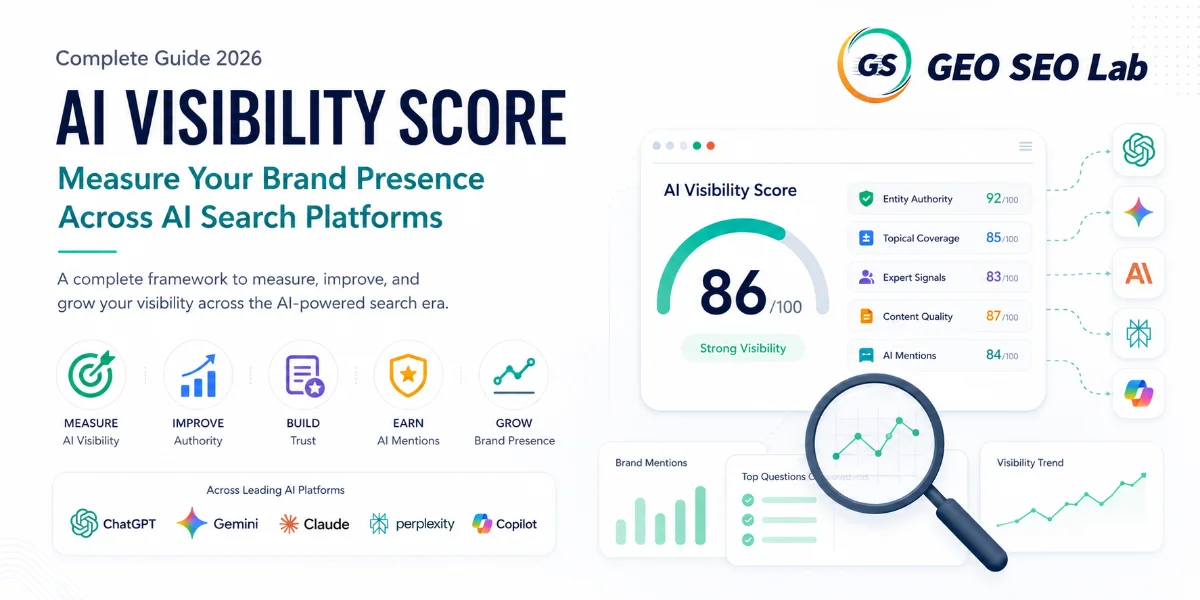
The AI Visibility Score: Measure Brand Presence Across AI Search
Learn how to measure and improve your AI Visibility Score across ChatGPT, Google AI Mode, Gemini, Claude, Perplexity, and modern AI search platforms.
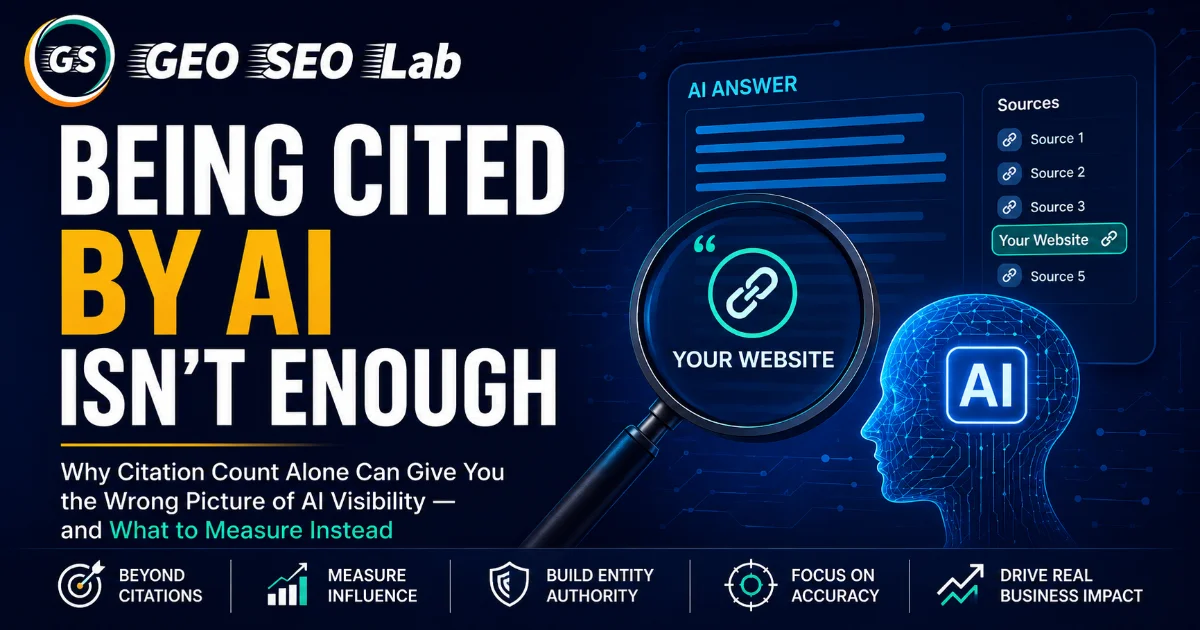
Being Cited by AI Isn't Enough: Why AI Visibility Needs Better Metrics
AI citation count can show that your content is being selected, but it does not reveal how much your knowledge actually influences AI generated answers. Learn why businesses need to measure informational contribution, content quality, entity authority, accuracy, competitive visibility, and real business impact.
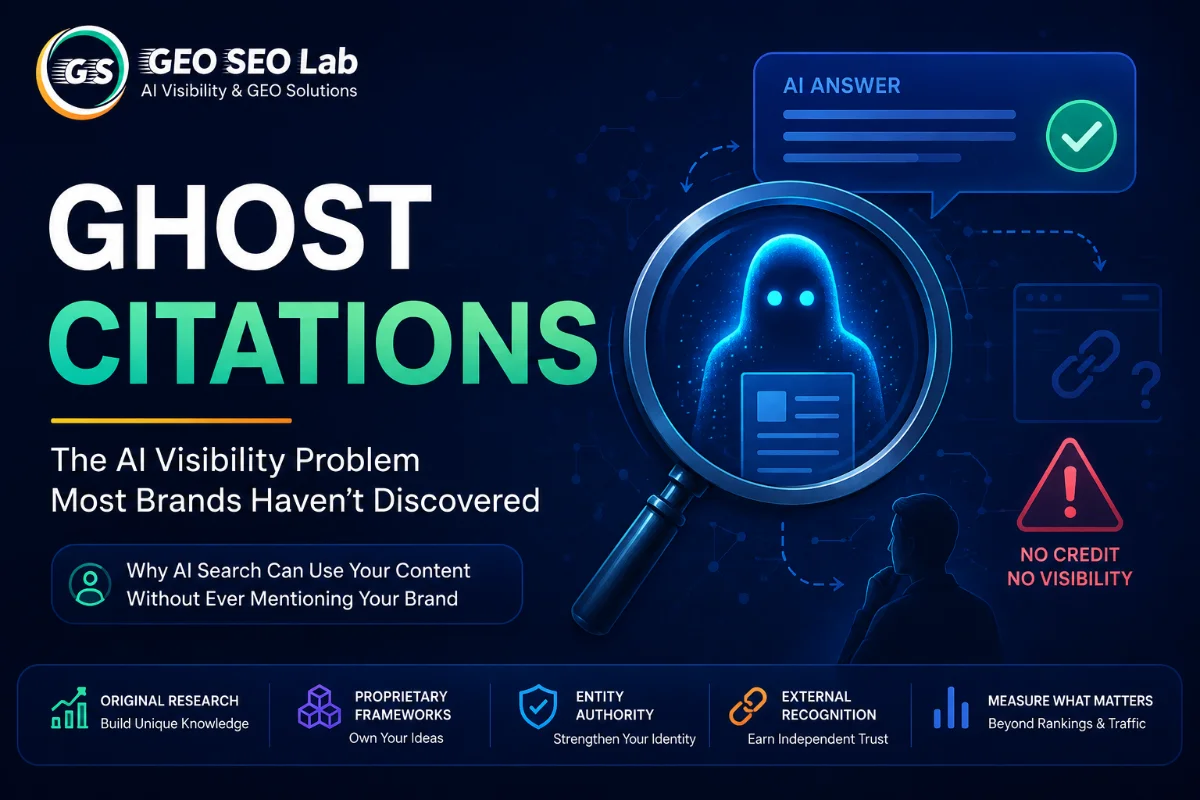
Ghost Citations: The AI Visibility Problem Most Brands Have Not Discovered
Ghost Citations happen when AI systems use a brand’s knowledge to answer user questions without giving meaningful recognition to the original source. Learn why this happens and how businesses can build stronger AI visibility through original research, proprietary frameworks, entity authority, and brand recognition.