How to Audit Your AI Entity Footprint Before Your Competitors Do
Learn how to audit and improve your AI Entity Footprint by checking business identity, digital profiles, topical authority, expert information, external recognition, and online consistency. This guide explains how businesses can build a clearer digital identity for GEO and AI search visibility.
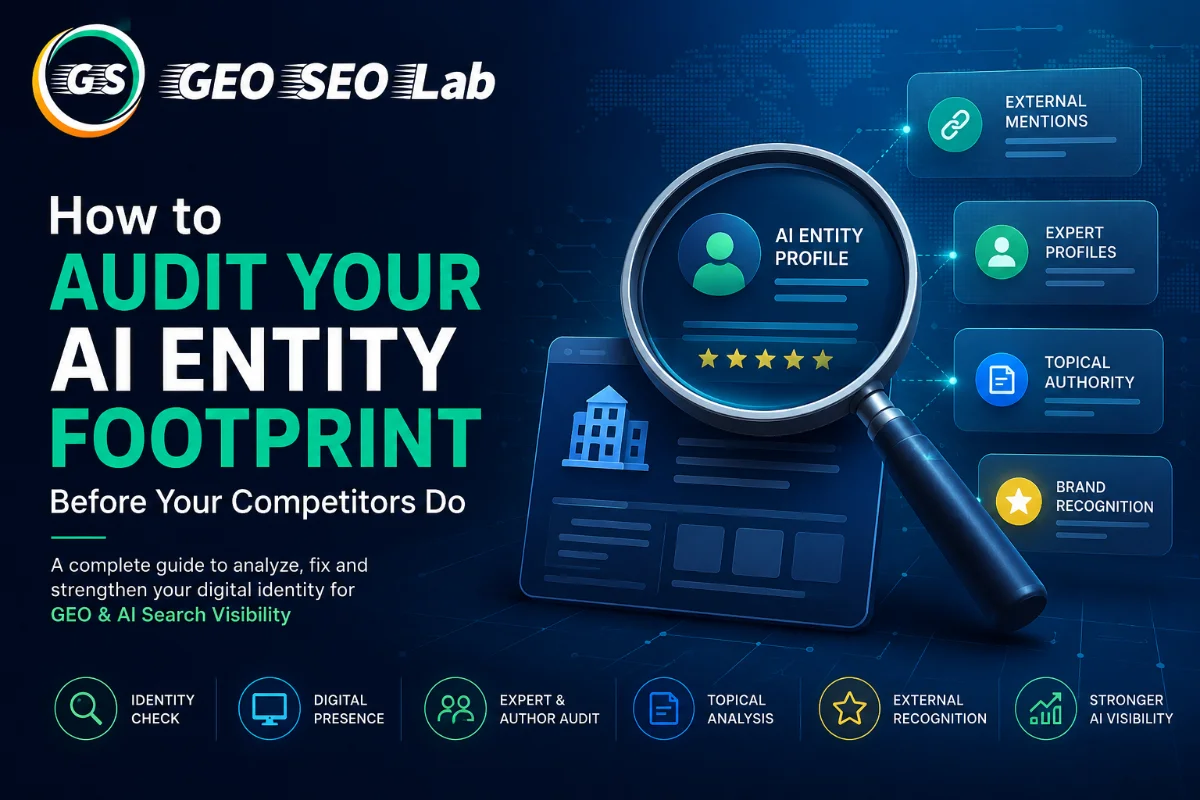
How to Audit Your AI Entity Footprint Before Your Competitors Do
Why Entity Visibility Is Becoming Important for GEO and AI Search
Most businesses today are focused on one basic question. Can people find our website when they search for our products or services?That question is still important, but it is no longer the only question businesses should be asking.A more important question is becoming relevant as search changes. Does the system actually understand who our business is,what we do, what we are known for, and why people should trust us?This difference may look small, but it can have a major effect on visibility.Imagine two companies working in the same industry. Both have similar marketing budgets. Both publish content regularly. Both have websites that are technically strong. Both have worked on search optimization for several years.The first company has hundreds of articles, good keyword research, several backlinks and a well designed website. From a traditional search perspective, the company looks strong.The second company has taken a different approach. Its company information is consistent across its website, professional profiles, business directories and industry platforms. Its founders have detailed professional profiles. Its experts appear in industry discussions. Its research is mentioned by other publications. Its services are described in a similar way across different websites.Now imagine that a person asks a search assistant for recommendations in that industry.Which company is easier for the system to understand?The second company has an important advantage. Its digital identity is clearer.The system can understand what the company does, which subjects it works on, who is behind the company, what experience those people have and whether other sources recognize that expertise.The first company may have more content, but if its information is scattered or inconsistent, understanding the company becomes more difficult.This is why entity visibility is becoming an important part of modern search strategy.The future of search is not only about individual pages. It is increasingly about the organizations, people, products and subjects behind those pages.Businesses that understand this change early can build a stronger digital identity before the same practices become common across their industry.This guide explains what an AI Entity Footprint means, why it matters, how to audit it, what problems businesses usually discover and how to improve it over time.
What an AI Entity Footprint Really Means
Search Is Moving Beyond Individual Web Pages
For many years, search optimization was mainly focused on individual web pages.Businesses worked on title tags, keywords, internal links, backlinks, page speed, headings and other page level elements.The basic idea was simple.A person searches for something. A search engine finds relevant pages. The better optimized pages have a better opportunity to appear in the results.This model still matters.However, modern search systems are increasingly trying to understand the meaning behind information instead of simply matching words on a page.When a search system needs to answer a question about a company, it needs more than a single webpage.It needs to understand the company itself.
It needs to know what the company does, what services it provides, which industry it belongs to, who its experts are, what subjects it understands and whether other reliable sources recognize the company.This is where entity understanding becomes important.
What Does Entity Mean in This Context
An entity is basically a clearly identifiable person, company, organization, place, product or concept.For example, a company is not only its homepage.The company also has founders, employees, services, publications, profiles, reviews, business listings, social accounts, research, customers and mentions across the internet.All of these pieces can contribute to how the company is understood.If those pieces tell a similar story, the business becomes easier to identify.If every platform tells a different story, the picture becomes confusing.This is the basic idea behind an AI Entity Footprint.
Your Digital Identity Exists Across the Web
Your website is only one part of your digital identity.A company may have information on its website, LinkedIn, Google Business Profile, industry directories, review platforms, social media accounts, conference websites, podcast pages, news websites and professional databases.Every one of these locations can contain information about the business.
Some information may be controlled directly by the company.Other information may come from customers, journalists, partners, event organizers, industry publications or other independent sources.Together, these sources create a broader picture of the organization.A strong entity footprint means that this picture is clear and consistent.A weak footprint usually means that important information is missing, outdated, contradictory or difficult to verify.
Why Consistency Matters
Imagine a company describes itself as a digital marketing agency on its website.
On LinkedIn, it calls itself a technology consultancy.On another directory, it is listed as an SEO company.On a different platform, it is described as a software development company.Every description may contain some truth.The problem is that the combined picture becomes unclear.What is the company actually known for?What industry should it be associated with?What type of expertise should people expect from it?A human can usually investigate and understand the differences.A system trying to build a clear representation of the organization may have a harder job.
This is why consistent descriptions, service names, company information and expert profiles are important.
The Main Parts of an AI Entity Footprint
Website Information
Your website remains the foundation of your entity footprint.The About page should clearly explain who the company is.The service pages should clearly explain what the company offers.The team pages should show the people responsible for the organization and its expertise.Author pages should explain who writes the content and why that person is qualified to discuss the subject.Company information should not change unnecessarily from one page to another.A visitor should be able to move from the homepage to the About page, service pages and author pages and still understand the same basic company identity.
Business Profiles and Directories
Business directories also contribute to your online identity.Google Business Profile, industry directories, local business platforms and professional databases can contain important company information.These profiles should be claimed where appropriate and maintained regularly.The company name, description, category, website, contact information and location should be accurate.Old information can create problems.A company may change its services or location but forget to update an old directory profile.That outdated information can remain visible for years.
Professional Profiles
Professional networks are especially important when people are central to the company's expertise.
A company page alone does not tell the whole story.The profiles of founders, executives, writers and subject matter experts can also support the organization's identity.A strong expert profile explains the person's professional background, experience, responsibilities and areas of knowledge.When the information on the person's profile matches the information on the company website, the overall picture becomes stronger.
Author and Expert Information
Content without clear authorship can be difficult to connect with real expertise.
A business may publish excellent articles, but if every article appears without a clear author, readers have less information about who produced that knowledge.Author pages can solve this problem.An author page should explain the person's role, professional experience and relevant expertise.The same information should appear consistently on professional profiles and other appropriate external platforms.The goal is not to make exaggerated claims.The goal is to make genuine expertise visible.
External Mentions
Independent mentions can be especially valuable.When a company talks about itself, there is an obvious reason to be positive.When another publication, organization, conference, customer or industry expert mentions the company, that information provides an outside perspective.External references may come from industry publications, news websites, podcasts, conferences, research papers, professional organizations or partner websites.The quality of these references matters.One meaningful mention from a respected industry publication may provide more useful context than many low quality directory listings.
Reviews and Customer Discussions
Customer reviews can also contribute to how a company is understood.Reviews often describe what customers actually experienced.They can reveal the type of service a company provides, the problems it solves and the quality customers associate with it.Businesses should therefore monitor important review platforms and keep their information accurate.
Responding professionally to customer feedback is also part of maintaining a healthy public identity.
Research and Original Work
Original research can create a stronger association between a company and a subject.A company that regularly publishes useful research, original data, industry analysis or practical frameworks has more opportunities to become associated with those subjects.When other websites reference that work, the value can increase further.The important point is that the work should be genuinely useful.Publishing something only to create mentions is unlikely to build lasting authority.
Why Businesses Need an Entity Footprint Audit
Most Companies Have Never Done One
Many businesses have worked on their website.Many have created social media profiles.Many have created business listings.Some have worked extensively on search optimization.But very few businesses have reviewed all of these locations together and asked a simple question.Do all these sources describe the same organization?
This is where an entity footprint audit becomes useful.An audit looks at the company's digital identity as a complete system instead of examining individual profiles separately.It helps identify information that is missing, outdated, inconsistent or difficult to verify.
The Entity Confidence Problem
When information about a company is clear and consistent, it becomes easier to build a reliable understanding of that company.When the information is contradictory, confidence can decrease.This can happen for several reasons.
A company may use different descriptions across websites.Its content may cover too many unrelated subjects.Its writers may have weak author profiles.Old business listings may still contain outdated information.The company may make strong expertise claims without independent references.All of these problems can weaken the overall picture.
Description Problems
One of the easiest problems to discover is inconsistent business descriptions.A company may describe itself as a marketing agency on one platform and a technology company on another.Another company may describe its services using different names everywhere.This does not necessarily mean that the company is doing something wrong.
Businesses naturally evolve.The problem occurs when old descriptions remain online long after the business has changed.
A company should have a clear core description that can be adapted to different platforms without changing its basic meaning.
Topical Confusion
Another common problem is publishing content about too many unrelated subjects.A company may publish an article about cybersecurity today, financial planning tomorrow and recruitment next week.From a traditional content perspective, this may appear to create more opportunities.From an entity perspective, it can create confusion.What does the company actually know?What subject should people associate with it?Businesses should develop a clear set of main topics where they have genuine knowledge and experience.This does not mean every article must discuss exactly the same subject.
It means the overall content library should have a recognizable center.
Missing Author Information
Another common problem is anonymous content.If important content has no clear author, readers have less information about the person behind the information.This becomes more important for subjects that require professional experience.
A detailed author profile can provide useful context.It can show what the person does, how long they have worked in the field and what subjects they understand.
Old Information
Businesses change.Services change.Employees change.Locations change.Company names and positioning can also change.But online profiles do not automatically update themselves.An old directory listing can continue describing a company in a way that is no longer accurate.An old conference profile can show an outdated job title.
An old social profile can contain a previous company description.Regular reviews help prevent these outdated signals from becoming part of the organization's permanent digital identity.
Lack of Independent Recognition
A company may have a very strong website and still have limited external recognition.Its website may say that it is highly experienced.Its About page may say that its team consists of industry experts.Its service pages may contain impressive claims.But if there is little evidence outside the company's own website, those claims have limited independent support.
This does not mean every company needs major media coverage.It means genuine expertise should gradually become visible through appropriate external channels.
How to Conduct an AI Entity Footprint Audit
Audit Layer One: Check Your Core Business Identity
Start With the Company Name
The first step is to document exactly how the company name appears online.Check the website, professional profiles, business listings, social accounts, industry directories and other relevant sources.Look for differences in spelling, capitalization, abbreviations and older company names.A company should have one preferred official name.
If different versions are used for legitimate reasons, those differences should still be controlled and understood.
Check the Business Category
Next, examine how the company is categorized.Is it consistently described as an agency, software company, consultancy, manufacturer, retailer or another type of organization?Different platforms may have different category systems.
That is normal.The important thing is that the selected categories should represent the same basic business identity.
Check the Main Description
Compare the company's descriptions across major platforms.The wording does not need to be exactly identical everywhere.A LinkedIn profile may use a longer description while a directory may allow only a short one.What matters is that the core meaning remains consistent.The company should communicate the same basic answer to three questions.
Who are we? What do we do? Who do we help?
Check Founding and Location Information
If the company mentions its founding year, location or history, check whether those details are consistent.Historical information is especially important because old pages can remain visible for a long time.If a business moved from one location to another, old information should be reviewed and corrected where appropriate.
Create a Master Identity Document
After completing this review, create a single internal document containing the approved company information.This document should contain the preferred company name, main description, business category, website, contact information, location, major services and other important facts.This becomes the reference point for future profile updates.
Audit Layer Two: Review Your Digital Presence
Create a Complete Presence Map
The next stage is identifying every important location where the company appears online.Start with major business platforms.Then check professional networks, industry directories, review websites, social platforms, publication profiles and relevant databases.Do not only look at profiles managed by the marketing team.Search for the company name and discover profiles that may have been created by third parties.
Check Whether Profiles Are Claimed
A business profile that cannot be managed is more difficult to maintain.Where appropriate, claim important profiles.
Once a profile is claimed, update its information and assign responsibility for future maintenance.
Check Website Links
Old website links are common.A company may have changed domains, redesigned its website or moved to a new URL structure.Check whether external profiles still point to the correct website.Broken or outdated links should be corrected.
Check Contact Information
Phone numbers, email addresses, addresses and other contact details should be reviewed.Different platforms may have different formatting requirements, but the underlying information should be accurate.This is especially important for local businesses.
Find Missing Profiles
An audit should not only identify existing profiles.It should also identify important platforms where the company is absent.
Look at competitors.If competitors consistently appear on an important industry platform while your company has no presence there, investigate whether that platform is relevant to your business.The goal is not to create profiles everywhere.
The goal is to be present where your customers and industry actually look for information.
Audit Layer Three: Review Topical Authority
Define Your Main Topics
A company should know the subjects it wants to be associated with.These topics should come from genuine expertise.
For example, a company working in technical SEO may focus on technical SEO, website performance, search visibility,structured data and related areas.The exact topics depend on the organization.The important part is having a clear center.
Review Your Existing Content
Once the main topics are defined, examine the existing content library.Look at blog articles, research reports, case studies, videos, podcasts and other educational resources.Ask whether the content supports the company's main areas of expertise.Some content will be directly related.Some will be indirectly related.Some may have very little connection.
This review helps reveal whether the content strategy is focused or scattered.
Understand Topical Sprawl
Topical sprawl happens when a company keeps expanding into unrelated subjects.The problem is not simply publishing many articles.The problem is publishing many articles without a clear relationship between them.A company that wants to become known for one area should develop depth instead of constantly changing subjects.
Deep coverage creates a stronger body of knowledge.
Connect Related Content
Content should not exist as isolated pages.Related articles should reference each other where useful.A beginner resource can lead readers to an intermediate explanation.An intermediate explanation can lead to advanced research.Research can reference supporting guides.This creates a connected knowledge structure.It also makes the website easier for people to understand.
Review Internal Links
Internal linking should help visitors move naturally through related information.If ten articles discuss the same subject but none of them connect to each other, the overall content library may look disconnected.A strong internal structure makes relationships between subjects easier to understand.
Audit Layer Four: Review Authors and Experts
Identify Important Contributors
Create a list of the people who regularly publish content or represent the organization publicly.This may include founders, executives, writers, consultants, researchers and subject experts.Then review their public profiles.
Review Author Pages
Every important author should ideally have a useful profile page.The page should explain the person's role, professional experience and relevant knowledge.The biography should be specific enough to establish context.Generic statements such as experienced professional are less useful than clear information about actual work and experience.
Review Professional Profiles
LinkedIn and other professional profiles should match the author's website information.The person's job title, company, experience and main expertise should not contradict the company website.Again, exact wording does not need to be identical.The important thing is consistency.
Look for External Evidence
Strong professional profiles can be supported by external work.An expert may have written for industry publications, spoken at conferences, participated in professional events, contributed to research or appeared on relevant podcasts.
These activities help create a broader public record of expertise.
Avoid Unsupported Claims
Businesses should be careful with phrases such as industry leader, top expert or best specialist.These claims are more convincing when supported by evidence.Instead of repeatedly saying that someone is an expert, show the person's actual experience.Show their work.Show their research.Show where they have contributed.Real evidence is more useful than exaggerated language.
Audit Layer Five: Review External Recognition
Search for Independent Mentions
Search the company name across the web.Look for news articles, industry publications, podcasts, conferences, research papers, partner websites and professional organizations.The purpose is to understand how the company appears outside its own website.
Review Media Coverage
Media coverage can provide independent context.It may mention the company directly or quote one of its experts.
Review whether the coverage is still relevant and whether company information is accurate.
Review Industry Publications
Industry publications can be especially valuable because they often discuss businesses within a specific professional context.A company working in a specialized industry should look for appropriate trade publications and professional resources.
Review Research Citations
If the company publishes research, check whether other organizations or researchers reference it.Research that is useful to others can naturally attract citations.This creates a connection between the company and the subject it researches.
Review Conference Presence
Conference websites often contain speaker profiles, session descriptions and event recordings.These pages can become useful external references for experts.Companies should keep speaker information accurate and make sure important events are properly represented online.
Review Customer and Partner References
Customers and partners may mention the company on their own websites.
Case studies, testimonials, partnership announcements and project pages can provide useful external context.
These references are particularly useful because they show the organization from another perspective.
Common Problems Found During Entity Audits
Identity Fragmentation
Identity fragmentation is one of the most common problems.It usually does not happen because a business intentionally provides different information.It happens slowly.The company changes its name.Then it changes its service description.Then it redesigns its website.Then it creates a new LinkedIn page.But old directory profiles remain unchanged.
After several years, different websites contain different versions of the same organization.The solution starts with creating a clear master identity and updating important platforms systematically.
The Orphaned Expert Problem
Many businesses have highly experienced people whose online profiles do not reflect their real knowledge.A founder may have twenty years of industry experience but only a short professional biography.A senior consultant may have worked on important projects but have no detailed author page.A researcher may have created valuable work but no external profile connects that work to them.This is a missed opportunity.The people behind the company are part of the company's identity.
Their public professional presence can strengthen the broader organization.
The Topical Sprawl Problem
Another common issue is publishing content about everything.Businesses sometimes believe that more subjects automatically mean more search opportunities.That strategy can create a large website but a weak identity.
If a company wants to become known for a specific field, it should build substantial knowledge around that field.
Content can still cover related subjects.The important thing is that the subjects should make sense together.
The Recognition Vacuum
Some companies have excellent websites, consistent information and good author profiles but very little external recognition.Almost everything they say about themselves comes from their own website.This creates a recognition gap.Independent sources can provide another layer of evidence.A company should gradually develop relationships with relevant publications, professional communities, conferences, podcasts and other legitimate channels.
The Update Lag Problem
A company can change faster than its digital footprint.A new service may be launched on the website while directories still show the old service list.A new executive may join the team while external profiles still show the previous leadership.A new research report may be published but never promoted outside the company website.
Regular reviews reduce this problem.
How to Improve Your Entity Footprint
Start With Identity Corrections
The first improvement should usually be fixing inconsistent basic information.Create the master identity document first.
Then work through the important platforms.Do not try to change everything randomly.Start with the most important and authoritative profiles.Once those are corrected, move toward secondary platforms.This creates a controlled process.
Improve Important Profiles
After correcting identity information, review missing or incomplete profiles.Claim relevant profiles.Complete important company information.Add accurate descriptions.Use the correct website.Add appropriate categories.Keep the information current.The goal is not to create hundreds of profiles.The goal is to create a strong presence on relevant platforms.
Strengthen Expert Profiles
Choose the people who represent the company's expertise most often.Improve their author pages.Improve their professional profiles.Connect their work to the company.Show genuine experience and relevant contributions.
Over time, look for opportunities for those experts to contribute to external publications, events and professional discussions.
Bring Content Back to Core Topics
If the audit reveals too many unrelated subjects, review the content strategy.Not every old article needs to be deleted.
Some articles can be updated.Some can be combined.Some can simply remain without additional promotion.
Future content decisions should be made with the company's main expertise areas in mind.
Build Genuine External Recognition
External recognition takes time.It cannot usually be created in a single campaign.Companies can begin by publishing useful research.They can participate in relevant conferences.Experts can contribute to industry publications.
Teams can appear on useful podcasts.Businesses can build relationships with journalists and analysts who genuinely cover their industry.The objective should be useful contribution rather than artificial promotion.
Maintain the Entity Footprint Regularly
Entity Management Is Not a One Time Task
A business changes continuously.New employees join.Old employees leave.Services change.New products are introduced.Companies move locations.Research is published.Partnerships begin.All these changes affect the digital identity of the organization.That is why entity management should become part of regular marketing operations.
How Entity Work Fits Into GEO
Entity work is not a replacement for traditional search optimization.Both areas support each other.A company still needs technically accessible websites.Pages still need useful content.Search engines still need to crawl and understand websites.Users still need clear answers.But there is another layer.The organization behind that information also needs to be understandable.A strong GEO strategy therefore needs useful content, a clear business identity, identifiable experts, consistent information and external recognition.When these areas work together, the organization becomes easier to understand.
The Entity Maturity Model
Level One: Basic Web Presence
At the first level, the company has a website and perhaps a few social profiles.Its information may be inconsistent.
Author information may be limited.External recognition may be very small.The company exists online, but its broader identity is not clearly developed.
Level Two: Consistent Identity
At the second level, major profiles are claimed and important company information is consistent.The company has a clear description.Contact information is accurate.The basic identity is established.However, external recognition and deeper topical authority may still be limited.
Level Three: Demonstrated Topic Authority
At this stage, the company has a clear content strategy.It regularly publishes useful material around its main areas of expertise.Authors are identifiable.Expert profiles are stronger.Some independent mentions and references begin to appear.
The company is becoming associated with specific subjects.
Level Four: Recognized Industry Authority
At this stage, independent sources begin supporting the company's expertise.The organization may receive media coverage, research references, conference opportunities and professional recognition.Its identity is no longer supported only by its own website.Other sources are helping create the same picture.
Level Five: Trusted Entity
At the highest stage, the organization's identity is mature and well understood.Its business information is consistent.
Its experts are publicly recognized.Its original work is referenced by others.Its research and intellectual contributions are strongly connected with its name.The company has a recognizable place within its industry.
Most organizations will not reach this level immediately.
The practical goal is to move from one stage to the next by fixing the weaknesses of the current stage.
Why Entity Signals Will Become More Important
Search systems continue to develop.
As systems become better at understanding relationships between people, companies, subjects and information, clear entity information becomes increasingly useful.A system that needs to answer a question about a particular industry does not only need relevant text.It also needs context.Who created the information?What does that organization do?
Is the organization actually connected with the subject?Do other sources recognize its work?Are the available facts consistent?These questions make entity information important.As people rely more on search assistants for recommendations and research, accuracy becomes increasingly important.Systems have a reason to prefer information that can be understood and supported through multiple reliable signals.
The Early Advantage
Entity management is still unfamiliar to many businesses.Most companies continue to spend most of their effort on rankings, keywords and website traffic.Those activities remain useful.But businesses that also build a clear digital identity can develop an additional advantage.The earlier a company starts cleaning its information, building expert profiles, creating useful research and earning genuine external recognition, the more time those signals have to develop.
This is not a shortcut.It is a long term process.The advantage comes from consistency over time.
How to Measure Entity Footprint Progress
Traditional SEO metrics alone do not tell the whole story.Businesses should also monitor how their brand is represented across the web.Branded searches can provide useful information.Direct traffic can show whether more people are intentionally visiting the company.External mentions can be tracked over time.The quality of those mentions should also be reviewed.Businesses can also test how different search assistants describe the company when asked about its industry, services or expertise.The goal is not simply to appear.The goal is to see whether the description is accurate.
If a company specializes in a particular field but search systems describe it incorrectly, there may be an identity or content problem that needs investigation.
Executive Entity Footprint Review
Identity Review
The company name should be consistent across major platforms.The main business description should communicate the same basic meaning.Services should use clear and consistent names.Contact information should be accurate.
Founding information and company history should not contradict each other.
Presence Review
Important business profiles should be claimed and maintained.Professional company pages should be complete.
Relevant industry directories should be accurate.Review profiles should be monitored.Important external profiles should link to the correct website.
Topic Review
The company should have clearly defined areas of expertise.Most important content should support those areas.
Related content should be connected.New topics should be evaluated before publication.The content library should gradually become deeper instead of simply becoming larger.
Expert Review
Published content should have identifiable authors where appropriate.Author pages should provide useful professional information.Expert profiles should be complete.Professional experience should be consistent across major platforms.External contributions should be documented where they genuinely exist.
Recognition Review
The company should monitor relevant external mentions.Important experts should have opportunities to contribute outside the company website.Original research should be made easy to reference.Relevant media coverage should be maintained.
Professional memberships and legitimate recognitions should be documented accurately.
Information Integrity Review
All important company information should reflect the current business.Old profiles should be updated.Outdated listings should be corrected where possible.Proprietary research and frameworks should have consistent names.
Important knowledge resources should be connected and maintained.
Frequently Asked Questions
Find answers to common questions about this topic
About the Author

Aman Kesharwani
SEO Expert & Content Creator
Experienced digital marketing professional specializing in SEO strategies, content optimization, and data-driven marketing solutions. Passionate about helping businesses grow their online presence and achieve better search rankings.
Related Articles
View all posts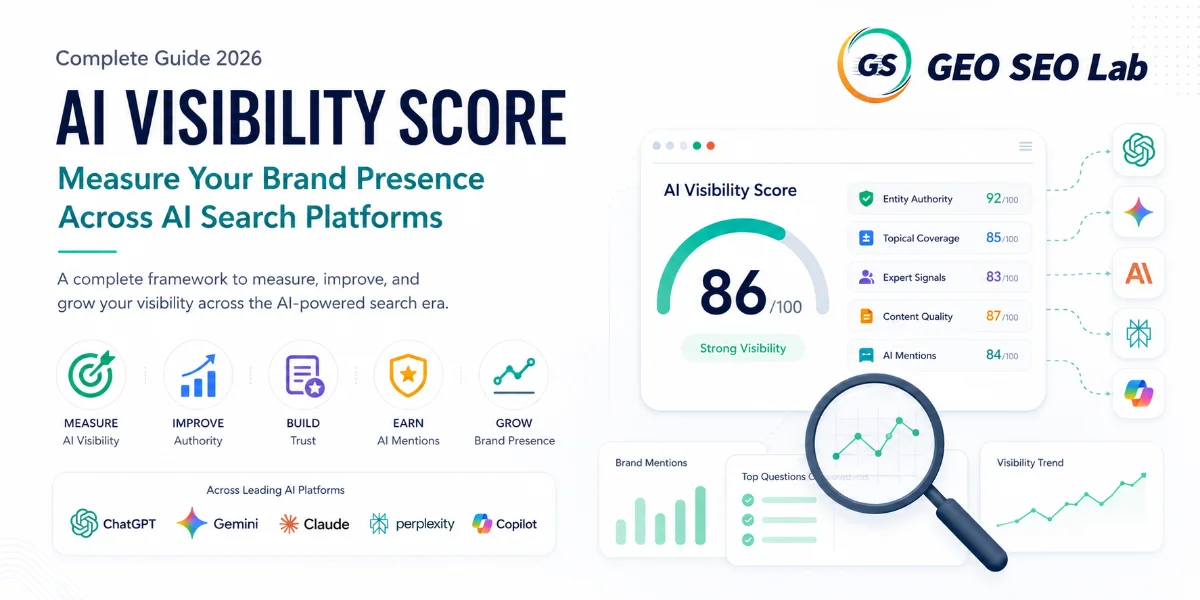
The AI Visibility Score: Measure Brand Presence Across AI Search
Learn how to measure and improve your AI Visibility Score across ChatGPT, Google AI Mode, Gemini, Claude, Perplexity, and modern AI search platforms.
AI Search Spam Is Rising: Why Brand Mentions Alone Will Not Win AI Visibility
AI search spam is increasing as businesses look for shortcuts to improve brand visibility. This guide explains why fake brand mentions, Reddit manipulation and coordinated promotion are not sustainable strategies, and why genuine expertise, community trust, original research and authentic digital reputation matter more for long term AI visibility.
PR Is Becoming Part of GEO: Why Earned Media May Matter More in AI Search
PR Is Becoming Part of GEO: Why Earned Media May Matter More in AI SearchWhy the Brands That Win in AI Discovery Will Be the Ones the Entire Web Vouch...