AI Experience Optimization: The Complete Guide to Building AI-Ready Websites in 2026
AI Experience Optimization is transforming how businesses build websites for the future. Modern websites are no longer created only for human visitors or search engines. AI platforms such as ChatGPT, Gemini, Perplexity, and AI-powered search systems also evaluate website content before recommending businesses. This guide explains how AI Experience Optimization works, why it matters, and how to create AI-ready websites that improve trust, visibility, user experience, and long-term digital growth. Learn practical strategies for organizing content, building authority, improving website structure, and preparing for the next generation of AI-driven search.
AI Experience Optimization: The Future of Websites Built for Humans and AI
Introduction
The internet is changing faster than most businesses realize. For years, companies focused on creating websites that attracted visitors through search engines and converted them into customers. Every marketing strategy revolved around improving rankings, increasing traffic, and making websites easier for people to use. That approach worked well because people were the primary users of digital content.Today, another type of visitor is becoming increasingly important. AI systems now help millions of people research products, compare services, summarize information, and make buying decisions before they ever visit a website. Instead of opening dozens of browser tabs, many users ask AI tools for recommendations and trust the answers they receive. This shift is creating a completely new digital environment where businesses must think beyond traditional search engine optimization.Modern websites are no longer judged only by human visitors. AI models also evaluate how well information is organized, how trustworthy it appears, how complete the content is, and whether the information can help users accomplish a specific goal. Companies that recognize this shift early are creating stronger digital foundations that benefit both people and intelligent systems.AI Experience Optimization has emerged as a practical approach for designing websites that communicate effectively with both audiences. It combines content quality, structured information, user experience, and knowledge organization into a strategy that prepares businesses for the next generation of online discovery.Instead of replacing existing digital marketing practices, AI Experience Optimization builds on them. Businesses still need strong SEO, valuable content, excellent user experience, and technical performance. The difference is that these elements are now designed with both humans and AI systems in mind.Organizations that invest in this approach are positioning themselves for long-term visibility as AI-assisted search becomes more common across industries. The goal is not simply to appear in search results but to become a trusted source of information that AI systems confidently reference when helping users make decisions.
What Is AI Experience Optimization?
AI Experience Optimization is the process of creating digital experiences that are easy for both people and AI systems to understand, evaluate, and use. Instead of focusing only on search engine rankings, this strategy ensures that every important piece of information on a website is clear, accurate, connected, and useful during every stage of the customer journey.Traditional optimization mainly focused on helping search engines discover pages through keywords and backlinks. AI Experience Optimization goes further by improving how knowledge is organized across an entire website. AI models do not simply look for keywords. They analyze relationships between topics, evaluate consistency, identify expertise, and determine whether the available information is reliable enough to answer user questions.
A well-optimized website provides clear explanations of products, services, pricing, implementation processes, customer benefits, limitations, and real-world applications. When all of this information is connected logically, AI systems gain greater confidence in the content they present to users.This approach also encourages businesses to think about information as a complete knowledge ecosystem instead of isolated blog posts or landing pages. Every article should support another piece of content, every service page should connect naturally with educational resources, and every important concept should reinforce the overall authority of the website.The result is a digital experience that serves visitors regardless of whether they arrive through Google Search, AI-powered assistants, recommendation engines, or direct website visits.
Key Differences Between Traditional Website Optimization and AI Experience Optimization
| Traditional Website Optimization | AI Experience Optimization |
|---|---|
| Focuses mainly on search engine rankings. | Focuses on helping both people and AI understand content. |
| Uses keywords to improve discoverability. | Uses clear context, relationships, and structured knowledge. |
| Measures success through traffic and rankings. | Measures success through trust, visibility, and AI recommendations. |
| Individual pages often work independently. | Connected content creates a complete knowledge ecosystem. |
| User experience is designed primarily for human visitors. | User experience is optimized for both humans and intelligent systems. |
Why This Matters More Than Ever
Consumer behavior has changed dramatically over the past few years. People increasingly rely on conversational AI tools to research software, compare agencies, evaluate products, learn new skills, and solve business problems.
Instead of typing several search queries into a browser, users now ask one detailed question and receive a complete answer within seconds. The AI gathers information from multiple trusted sources before generating a recommendation.
This means businesses are competing not only for search rankings but also for inclusion in AI-generated responses.
When AI cannot clearly understand a company's expertise, services, pricing, or authority, it becomes less likely to recommend that business. Even excellent companies may lose visibility simply because their information is incomplete or difficult for AI systems to interpret.Businesses that publish accurate, detailed, and organized information create stronger confidence signals. These signals increase the chances of appearing in AI-generated recommendations while also improving the experience for human visitors.This is why AI Experience Optimization is becoming a valuable part of modern digital strategy rather than an optional experiment.
The Evolution of Digital Optimization
Digital marketing has evolved continuously since the early days of the internet. Every stage introduced new technologies and new expectations from users.The first generation of websites focused on simply establishing an online presence. Businesses published information because having a website was enough to stand out. Design was basic, content was limited, and competition remained relatively low.As search engines became the primary method of finding information, Search Engine Optimization transformed digital marketing. Companies optimized pages around keywords, backlinks, technical improvements, and content relevance to increase organic visibility.The rapid growth of smartphones introduced another major shift. Mobile optimization became essential because users expected websites to load quickly and function smoothly across every device. Businesses that ignored mobile usability quickly lost visitors.The next stage emphasized user experience. Instead of focusing only on attracting traffic, organizations began improving navigation, page speed, readability, accessibility, and conversion optimization. Creating enjoyable digital experiences became a competitive advantage.Customer experience expanded this concept even further by connecting every digital touchpoint into a consistent journey. Marketing, sales, onboarding, customer support, and retention all became part of one connected experience.Generative AI introduced another transformation by changing how people discover information. AI assistants summarize content instead of simply displaying search results. They evaluate authority, compare information, and recommend solutions based on context rather than keywords alone.AI Experience Optimization represents the next logical step in this evolution. Instead of optimizing only for search engines or human visitors, businesses now optimize their entire knowledge ecosystem for intelligent systems that actively participate in customer decision-making.
Why AI Is Changing Website Strategy
Artificial intelligence processes information differently than people.
Human visitors appreciate attractive design, emotional storytelling, persuasive messaging, and visual branding. They often make decisions based on trust, familiarity, recommendations, and personal preferences.
AI focuses on facts, relationships, consistency, and structured information. It evaluates whether information is complete enough to answer a user's question accurately.For example, when someone asks an AI assistant to recommend marketing agencies for local businesses, the system does not simply choose companies with attractive websites. Instead, it compares expertise, services, pricing transparency, industry focus, documented experience, customer success, technical capabilities, and overall credibility.If important information is missing, AI becomes less confident in recommending that organization.This creates a new requirement for website owners. Every important business detail should be documented clearly instead of remaining hidden inside sales conversations or downloadable PDFs.
AI also rewards consistency.If a company describes the same service differently across multiple pages, the AI may struggle to understand exactly what the organization offers. Consistent terminology improves understanding and reduces uncertainty.Businesses should therefore think about clarity before creativity. Creative copywriting still matters, but it should never make important information difficult to understand.
Human Experience and AI Experience Work Together
Some businesses mistakenly believe they must choose between designing for humans and designing for AI.
The reality is completely different.The best websites already satisfy many AI requirements because they prioritize clarity, organization, expertise, and helpful content.When information is easy for humans to understand, AI systems usually interpret it more effectively as well.Clear headings improve readability for visitors while helping AI understand page structure.Logical navigation helps users find information while strengthening relationships between connected topics.
Detailed service pages answer customer questions while giving AI better context about business capabilities.
Comprehensive documentation helps buyers make informed decisions while increasing AI confidence.
Educational content builds trust with readers while strengthening topical authority.
Although humans and AI consume information differently, both benefit from websites that emphasize accuracy, transparency, and completeness.Instead of treating AI optimization as a separate marketing activity, organizations should integrate it into every stage of content creation, website development, and digital strategy.
Doing so creates a stronger experience for every visitor regardless of how they discover the business.
The New Goal Is Trust, Not Just Traffic
For many years, success was measured primarily by website traffic.Businesses celebrated higher rankings, increased clicks, and growing visitor numbers.Those metrics still matter, but they no longer tell the complete story.AI-powered discovery introduces new forms of influence that may never generate a website visit.An AI assistant might evaluate several companies, recommend one to a user, and help that person make a purchasing decision without anyone clicking a search result.Traditional analytics cannot always measure these interactions.Because of this, businesses should begin focusing on becoming trusted knowledge sources rather than simply attracting visitors.Trust is created through accurate information, expert content, transparent communication, consistent terminology, updated documentation, real customer examples, and complete explanations.Organizations that invest in building trustworthy knowledge ecosystems are likely to perform better across search engines, AI assistants, voice search, recommendation systems, and future technologies that have yet to emerge.AI Experience Optimization is ultimately about creating digital experiences that deserve to be recommended because they genuinely help people solve problems with confidence.
How AI Systems Read and Understand Websites
Many business owners assume that AI reads websites in the same way people do. This assumption seems logical because both humans and AI access the same web pages. However, the way each one processes information is completely different.A person usually lands on a website, notices the design, reads headlines, looks at images, checks testimonials, and gradually builds trust before making a decision. Even if some information is missing, people often fill the gaps using their own experience or by contacting the company directly.Artificial intelligence works differently. It approaches every website with a specific objective. It tries to collect facts, verify information, compare available options, and determine whether the content provides enough evidence to answer the user's request accurately.If the information is incomplete or inconsistent, AI becomes uncertain. Rather than making assumptions, it often selects another source that explains the same topic more clearly.This is why websites should no longer focus only on visual appeal. Information quality has become equally important because AI evaluates websites based on clarity, completeness, and consistency rather than attractive design.
AI Always Has a Goal
Unlike human visitors who sometimes browse casually, AI almost always begins with a clear purpose.
A user may ask an AI assistant to recommend accounting software for startups, compare SEO agencies, explain cloud hosting options, or identify the best CRM for small businesses.
The AI then searches for information that helps complete that specific task.
Instead of reading every sentence on a website, it identifies the sections that answer important questions.
It looks for clear explanations.It looks for factual information.It looks for evidence.It looks for structured knowledge.
Every piece of information contributes to its confidence level. The stronger the confidence, the more likely the website becomes part of the final recommendation.Businesses that understand this behavior can organize content around user objectives instead of publishing random articles.
When every page solves a real problem, AI gains a much better understanding of the business.
AI Prefers Complete Information
Imagine two companies offering similar services.The first company has a beautiful website but provides only a short service description with a contact form.The second company explains its services in detail, discusses pricing options, describes implementation timelines, shares customer success stories, answers common questions, and publishes educational resources.Which company gives AI more confidence?The answer is obvious.
The second website provides enough information for AI to understand exactly what the company does.
AI prefers websites that reduce uncertainty.Whenever information is missing, confidence decreases.
This is one of the biggest reasons why detailed content consistently performs better than thin pages containing only promotional language.Businesses should think about every question a potential customer might ask and answer those questions before anyone needs to contact the sales team.
Why Content Organization Matters More Than Ever
Publishing valuable content is only the beginning.The way information is connected across a website is becoming equally important.Many websites contain hundreds of excellent articles that exist completely independently from one another.
One article discusses AI.Another explains SEO.A third covers content marketing.None of them connect naturally.
For AI, these disconnected pages appear as isolated pieces of information rather than parts of a complete knowledge system.A connected website creates relationships between topics.An article about technical SEO naturally links to website speed.Website speed connects with user experience.User experience relates to conversion optimization.Conversion optimization connects with customer journeys.These relationships help AI understand the broader context instead of treating every page separately.Over time, this creates stronger topical authority because every article supports the overall expertise of the website.
Internal Linking Builds Knowledge
Internal links are often viewed as an SEO technique.Today they serve a much larger purpose.They show AI how ideas relate to each other.When one page consistently references another relevant resource, AI understands that both topics belong within the same knowledge area.This strengthens overall understanding.Instead of creating isolated content, businesses should build complete learning paths where readers and AI systems can naturally move from one concept to the next.This improves user experience while also strengthening AI interpretation.
Consistency Builds Confidence
Consistency may sound simple, but it is one of the strongest trust signals available.
Many organizations unknowingly describe the same product in different ways across their website.
One page calls it an AI Visibility Audit.Another refers to it as AI SEO Analysis.A third page describes it as AI Search Optimization.Although humans understand these variations, AI may treat them as separate concepts unless the relationship is obvious.Consistent terminology removes confusion.The same principle applies to company descriptions, service names, product categories, pricing models, and business expertise.When every page communicates the same message using similar language, AI develops greater confidence in the accuracy of the information.Consistency also improves brand recognition because users repeatedly encounter the same terminology throughout the website.Over time, this creates stronger authority across both search engines and AI platforms.
Why Evidence Matters More Than Marketing Claims
Every business says it offers high-quality services.Every company claims to have experienced professionals.
Every agency promises excellent results.AI pays less attention to these statements than many people expect.
Instead, it searches for evidence that supports those claims.Real case studies demonstrate practical experience.
Industry research shows expertise.Original data adds credibility.Customer testimonials reinforce trust.Detailed guides prove subject knowledge.Author profiles establish authority.Evidence transforms marketing statements into believable information.This makes websites significantly more valuable for AI-assisted recommendations.
Instead of simply claiming to be an expert, businesses should demonstrate expertise through useful educational resources that genuinely help readers.The more value a website provides, the stronger its authority becomes.
The Importance of Topic Authority
Publishing dozens of unrelated articles rarely creates long-term visibility.
AI looks for depth rather than randomness.A business specializing in digital marketing should build comprehensive knowledge around marketing topics instead of briefly discussing hundreds of unrelated subjects.
Every major topic deserves detailed coverage.Begin with foundational concepts.
Expand into advanced techniques.Answer practical questions.
Discuss common mistakes.Explain industry trends.Publish implementation guides.Share real-world examples.
Eventually, the website becomes a complete learning resource instead of a simple company blog.
AI recognizes this depth because every article reinforces the same expertise.As topical authority grows, confidence also increases.This makes future content more likely to appear in AI-generated responses.
Quality Always Beats Quantity
Many organizations still believe that publishing hundreds of articles automatically improves visibility.
That strategy is becoming less effective.One detailed guide often provides more long-term value than twenty short articles repeating similar information.Quality content answers questions completely.It removes confusion.It provides context.It explains practical applications.It offers reliable information that remains useful over time.AI consistently favors content that genuinely solves problems.Instead of measuring success by publishing frequency, businesses should focus on creating resources that remain valuable for years.A smaller collection of outstanding content usually outperforms a large archive of average articles.
Why Transparency Creates Trust
Modern customers appreciate honesty.
AI values it even more.Every business has strengths.Every business also has limitations.Being transparent about those limitations actually increases credibility.For example, a software company may explain which business sizes benefit most from its platform.A consulting agency may describe industries where it has the strongest experience.A service provider may explain situations where another solution would be more suitable.This type of honesty creates stronger trust because the information feels balanced instead of overly promotional.AI recognizes balanced explanations as more reliable than exaggerated marketing claims.Transparency therefore becomes another important element of AI Experience Optimization.
Businesses should focus on helping users make better decisions rather than trying to appear perfect.
That mindset builds long-term credibility with both people and intelligent systems.
Building a Website That Serves Every Visitor
The future of digital marketing is not about choosing between people and AI.Successful websites will serve both audiences at the same time.Human visitors still expect attractive design, fast loading pages, intuitive navigation, and engaging content.AI expects structured knowledge, complete information, logical organization, factual accuracy, and consistent terminology.Fortunately, these goals complement each other.A website that communicates clearly becomes easier for everyone to understand.A website that answers important questions completely becomes more valuable for customers.A website that demonstrates expertise naturally earns greater trust.Businesses that invest in these fundamentals are preparing for a future where AI-assisted discovery becomes a normal part of everyday decision-making.
Rather than chasing every new trend, they are building digital assets that remain useful regardless of how technology continues to evolve.
Creating an AI-Ready Website for Long-Term Growth
Building a website that performs well in the future requires more than attractive design and basic SEO. Businesses need a digital platform that answers questions, builds trust, supports customer decisions, and provides information in a way that both humans and AI systems can understand.An AI-ready website is not created overnight. It develops through consistent improvements that strengthen every part of the digital experience. From homepage content to blog articles, service pages, documentation, and customer resources, every section should contribute to one connected knowledge ecosystem.
Organizations that adopt this mindset today will be far better prepared for the next generation of online search and AI-assisted discovery.
Build Information Before Building Visibility
Many companies focus on increasing traffic before improving their information.This approach often creates disappointing results because visitors arrive but cannot find the answers they need.The better strategy is to build a strong information foundation first.Every important service should have a dedicated page explaining exactly what it offers.Every product should include complete descriptions instead of short promotional paragraphs.Implementation processes should be explained clearly.Pricing expectations should be transparent whenever possible.Frequently asked questions should remove uncertainty before customers ask them.Educational resources should help people understand the industry instead of simply promoting services.When businesses document their expertise thoroughly, visibility naturally improves over time because search engines and AI systems gain confidence in the available information.
Think Like Your Customer
Every successful website begins with understanding customer questions.
Instead of asking what content should be published, businesses should ask what information customers need before making a decision.Someone researching digital marketing may first want to understand SEO basics.
Later they may compare different optimization strategies.Eventually they begin evaluating agencies.
Finally they decide which company best fits their needs.Each stage requires different information.
A website that supports this complete journey becomes significantly more useful than one focused only on generating leads.AI also follows these decision-making patterns.When every stage contains clear and detailed content, AI gains enough context to recommend the business confidently.
Create Connected Knowledge Instead of Random Articles
Publishing blog posts without a clear strategy rarely produces lasting authority.Successful websites build connected topic clusters.Every article should support a larger subject.For example, a website discussing artificial intelligence could begin with introductory content before expanding into machine learning, automation, AI search, prompt engineering, AI marketing, and practical implementation guides.Each article naturally connects with another.Readers continue learning.AI recognizes the relationship between topics.The website gradually becomes an authoritative resource instead of a collection of unrelated posts.Connected knowledge also keeps visitors engaged longer because every page offers a logical next step.This improves both user satisfaction and overall website quality.
Keep Content Updated
Technology changes quickly.Information that was accurate last year may no longer reflect current best practices.Businesses should review important content regularly.Statistics should remain current.Examples should reflect modern tools.Outdated screenshots should be replaced.Broken links should be fixed.
New industry developments should be included whenever they improve the article.Fresh content demonstrates that a business actively maintains its knowledge rather than publishing information once and forgetting about it.
AI values updated information because it increases confidence in the reliability of the source.
Make Every Page Easy to Understand
Complicated writing often creates unnecessary confusion.Professional content does not need complicated vocabulary.
Simple language communicates ideas more effectively.Every paragraph should focus on one clear idea.Headings should explain exactly what readers will learn.Technical concepts should be introduced gradually instead of overwhelming beginners.Examples should illustrate important points whenever possible.Clear writing benefits everyone.Human visitors understand information faster.AI extracts meaning more accurately.Search engines interpret page topics more confidently.
Good communication therefore becomes one of the strongest optimization strategies available.
Authority Comes From Experience
Authority cannot be created through marketing slogans.It develops through demonstrated expertise.Businesses should regularly publish original insights based on practical experience.Case studies show how problems were solved.
Research reveals industry trends.Practical guides explain proven processes.Expert opinions provide valuable perspectives.Real examples strengthen credibility because they demonstrate knowledge instead of simply claiming it.Over time, this content builds trust with both customers and AI systems.Organizations that consistently share useful information gradually become recognized as reliable industry resources.
Focus on Helping Before Selling
The most successful websites educate first and promote second.Visitors appreciate businesses that genuinely help them solve problems.Educational content reduces uncertainty.It answers difficult questions.It explains available options.It prepares customers to make informed decisions.When people trust the information they receive, they naturally develop greater confidence in the company providing it.AI reaches similar conclusions.Websites that consistently help users accomplish meaningful tasks become stronger candidates for recommendations.Helping people should therefore become the primary purpose of every content strategy.Sales become a natural result of trust rather than aggressive promotion.
Measure Success Beyond Traffic
Traditional website analytics remain valuable.Traffic, rankings, engagement, and conversions continue providing important business insights.However, modern digital success extends beyond these numbers.Businesses should also evaluate how effectively their content answers customer questions.They should examine whether important topics are fully covered.
They should identify missing information that prevents confident decision-making.Customer feedback provides valuable clues.Support questions often reveal documentation gaps.Sales conversations highlight missing explanations.Website search data identifies topics visitors cannot easily find.Improving these areas strengthens the overall knowledge ecosystem.Success becomes measured by usefulness rather than visitor counts alone.
Preparing for the Future of AI Search
Artificial intelligence will continue changing how information is discovered.Search experiences will become increasingly conversational.Recommendations will become more personalized.AI systems will compare businesses more intelligently.
Decision support will become faster and more accurate.Companies that prepare today will enjoy a significant competitive advantage.Instead of reacting to future changes, they will already have the structured knowledge, trustworthy content, and connected information that AI requires.This preparation does not require abandoning traditional SEO.It simply expands digital strategy to include another important audience.Businesses should continue creating excellent user experiences while also improving the clarity, completeness, and organization of their information.
Doing both creates stronger long-term results than focusing on either audience alone.
Common Mistakes Businesses Should Avoid
Many organizations unintentionally reduce their AI visibility through avoidable mistakes.Some publish extremely short service pages that provide little useful information.Others create duplicate content that repeats the same ideas across multiple pages.Many use inconsistent terminology, making products and services difficult to understand.
Some hide essential details such as pricing, implementation requirements, or service limitations.Others publish content without updating it for several years.These issues reduce confidence because important questions remain unanswered.
Businesses should review their websites regularly to identify information gaps before AI systems encounter them.
Continuous improvement creates stronger digital assets over time.
The Future Belongs to Trusted Knowledge
The internet has always rewarded useful information.
Artificial intelligence simply raises the standard.Instead of rewarding websites that publish the most content, AI increasingly favors organizations that publish the most reliable, complete, and well-organized knowledge.
This creates an opportunity for businesses of every size.Large budgets are no longer the only competitive advantage.
Small companies with genuine expertise, excellent documentation, and consistent educational content can compete successfully because authority is built through quality rather than volume.Organizations willing to invest in trustworthy information today are creating digital assets that will remain valuable for years.Their websites become more than marketing tools.They become trusted knowledge resources that support customers throughout every stage of the buying journey.
Conclusion
AI Experience Optimization represents the natural evolution of digital strategy.Businesses are no longer creating websites exclusively for human visitors or traditional search engines.They are building complete digital ecosystems that communicate effectively with both people and intelligent systems.The organizations that succeed in this new environment will focus on clarity instead of complexity.They will value knowledge over marketing claims.They will connect information logically instead of publishing isolated pages.They will update content consistently instead of allowing resources to become outdated.Most importantly, they will prioritize helping users make informed decisions.That commitment creates stronger trust, better customer experiences, improved search visibility, and greater recognition across AI-powered platforms.The future of digital success will belong to businesses that treat their websites as living knowledge systems rather than static online brochures.As AI continues transforming how people discover information, compare solutions, and choose companies, organizations with complete, accurate, and well-organized digital experiences will stand out naturally.
Building that foundation today is one of the smartest long-term investments any business can make.
Frequently Asked Questions
Find answers to common questions about this topic
About the Author

Aman Kesharwani
SEO Expert & Content Creator
Experienced digital marketing professional specializing in SEO strategies, content optimization, and data-driven marketing solutions. Passionate about helping businesses grow their online presence and achieve better search rankings.
Related Articles
View all posts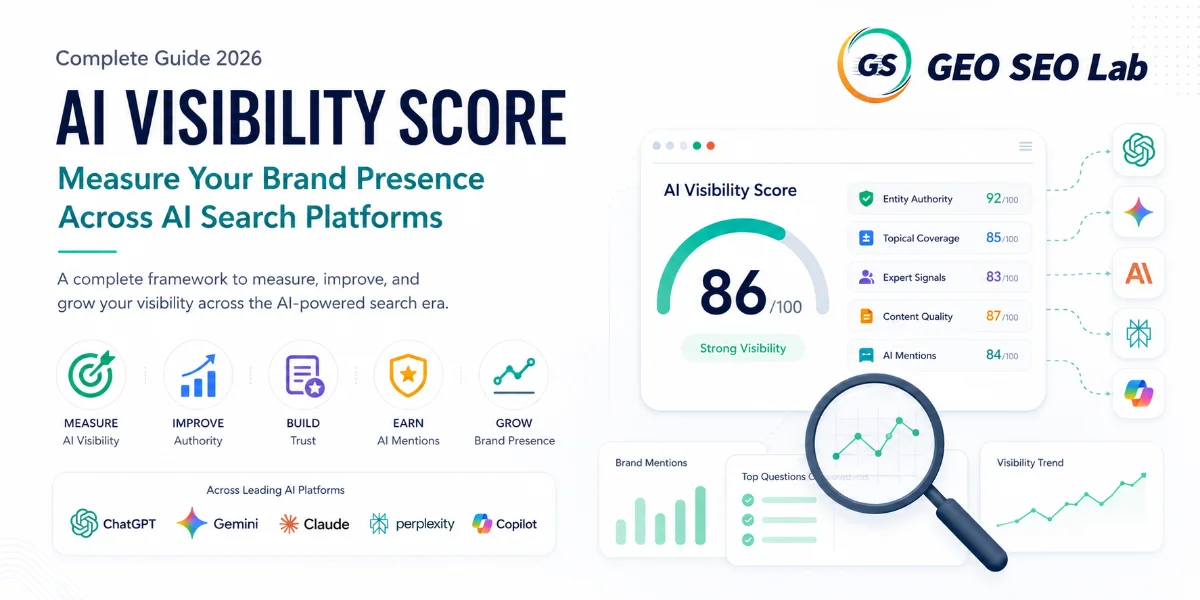
The AI Visibility Score: Measure Brand Presence Across AI Search
Learn how to measure and improve your AI Visibility Score across ChatGPT, Google AI Mode, Gemini, Claude, Perplexity, and modern AI search platforms.
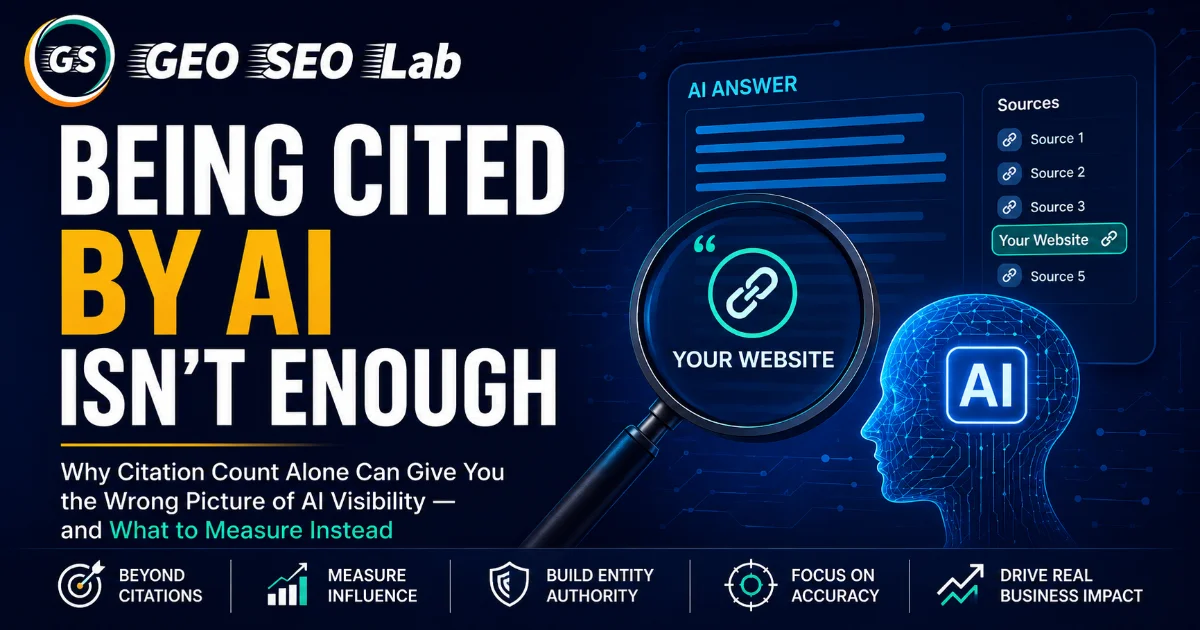
Being Cited by AI Isn't Enough: Why AI Visibility Needs Better Metrics
AI citation count can show that your content is being selected, but it does not reveal how much your knowledge actually influences AI generated answers. Learn why businesses need to measure informational contribution, content quality, entity authority, accuracy, competitive visibility, and real business impact.
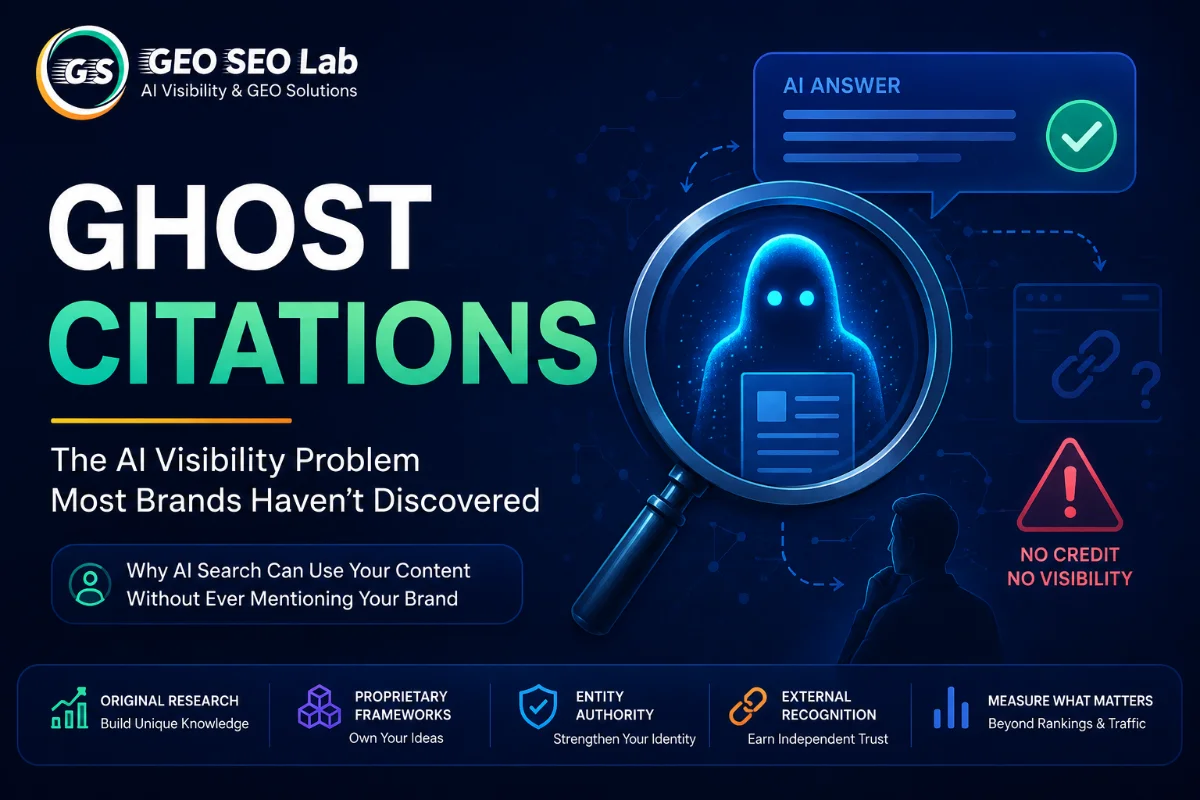
Ghost Citations: The AI Visibility Problem Most Brands Have Not Discovered
Ghost Citations happen when AI systems use a brand’s knowledge to answer user questions without giving meaningful recognition to the original source. Learn why this happens and how businesses can build stronger AI visibility through original research, proprietary frameworks, entity authority, and brand recognition.