Your Brand Can Rank #1 and Still Lose the AI Search
Your Brand Can Rank #1 and Still Lose the AI SearchGoogle AI Overviews Are Changing Brand Search, and What It Means for SEOEditorial DisclosureThis ar...
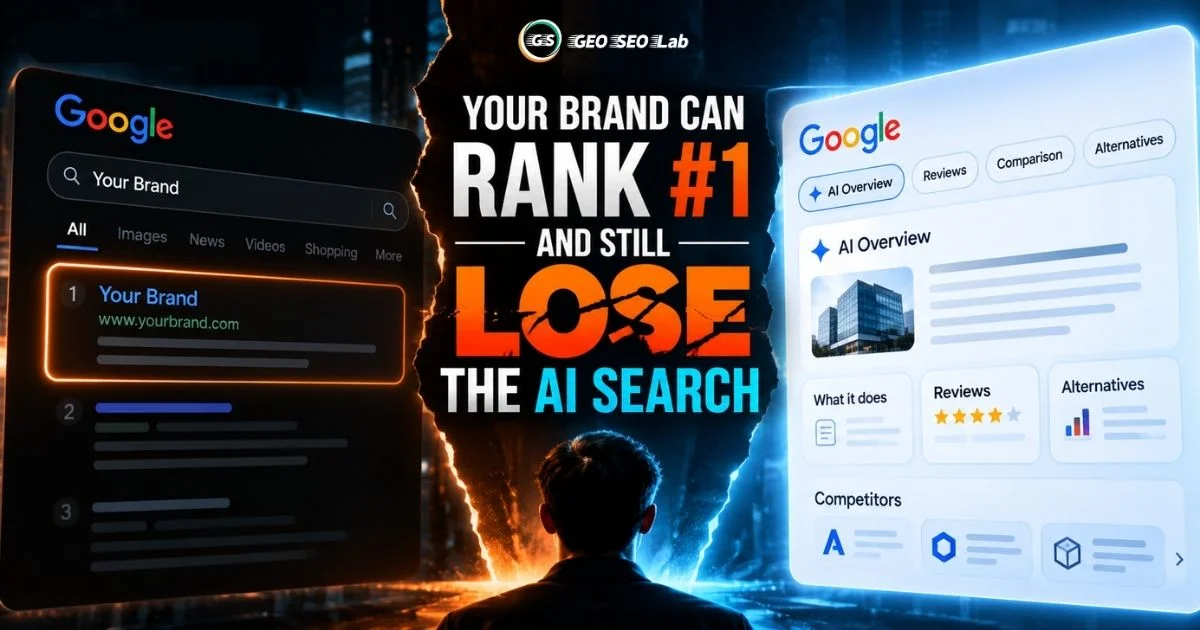
Your Brand Can Rank #1 and Still Lose the AI Search: The New Realities of Google AI Overviews
Think about the last time you typed your own company name or a major competitor into a search engine. For decades, the outcome was entirely predictable. The official homepage occupied the absolute top spot, followed closely by your social media profiles, a couple of review directories, and perhaps a press release or two. You owned that digital real estate completely. When someone searched for you, they entered your ecosystem through your front door.
Today, that familiar experience is vanishing. If you perform that same brand search right now, you are likely to encounter a large, artificially generated summary box sitting proudly at the very top of the page. This box does not just list your website link. It introduces your company in someone else's words, weighs your strengths against your competitors, aggregates customer complaints from public forums, and potentially recommends alternative solutions before the user ever lays eyes on your homepage.
This is the reality of Google AI Overviews. Recent industry data reveals a staggering operational shift. AI Overviews now appear for more than eighty percent of branded queries tracked across major analytics platforms, climbing steeply from a fraction of that volume in a very short period. That is not a minor design tweak or an experimental feature. It is a fundamental rewriting of how search engines mediate relationships between brands and their audiences.
The consequences for digital marketing are profound. For years, the ultimate goal of search optimization was simple and linear. You fought for keywords, built backlinks, secured the top organic ranking, and watched traffic flow to your landing pages.
We have now entered an era where a brand can capture the coveted number one organic ranking and still effectively lose the search. You can hold the top spot on the results page, yet watch your traffic decline because the AI overview gave the user all the information they needed without requiring a single click. Worse still, the generative summary might misunderstand your product, highlight an outdated pricing flaw, or elevate a competitor, all while displaying your hard-earned domain link somewhere down in the footnotes.
Navigating this new landscape requires a complete mental reboot. Visibility is no longer just about where your website ranks in a list of links. It is about how artificial intelligence systems understand, interpret, and represent your brand when no one is looking.
The Great Rewriting of the Search Engine Result Page
To understand why your branded search results look so different today, we have to look closely at how search engines have evolved under the pressure of generative technology. For the better part of twenty-five years, the internet operated on a referral model. Search engines acted as clever librarians. They indexed billions of pages, evaluated relevance and authority, and handed users a curated list of destinations. The underlying philosophy was simple. The user wanted a webpage, and the search engine delivered a pathway to that webpage.
Generative artificial intelligence shatters that traditional bargain. Modern search engines are no longer content with being mere matchmakers. They want to be direct answer providers.
When Google introduces an AI Overview into a search results page, it initiates a complex real-time computational process known as retrieval-augmented generation. The system looks at the user query, searches the live index for relevant sources, reads multiple web pages simultaneously, extracts core facts, synthesizes the information, and writes a cohesive paragraph or bulleted list that answers the query natively on the screen.
This transformation moves the focal point of the internet away from individual websites and toward centralized summaries. For unbranded queries, such as generic advice on software selection, this change felt disruptive but somewhat expected. Users were accustomed to seeing varied results for broad terms.
However, the rapid expansion of AI Overviews into branded searches introduces an entirely different set of strategic stakes. A branded query is not a casual exploration. When someone types a brand name into a search box, they possess high intent. They might be a prospective customer doing final due diligence, an investor evaluating market position, or a current user seeking troubleshooting help.
When the search engine steps between you and that high-intent user with an automated summary, it takes control of your brand narrative. If the AI summary mischaracterizes your software features or highlights old controversies found in forum discussions, your potential customer forms an opinion before ever visiting your domain. The traditional organic ranking below the fold suddenly feels less like a victory and more like an afterthought.
Why Branded Searches Are No Longer Your Private Property
Many business leaders and marketing executives make a dangerous assumption about branded search traffic. They believe that because their company name is unique, they own the territory. They assume that anyone searching for their brand name wants their specific homepage, and therefore, external interference is minimal.
That assumption ignores how modern language models process information. An AI search engine does not view your brand name as a protected trademark. It views your brand name as a semantic entity embedded within a vast, interconnected web of public conversation.
When a user searches for your brand, the generative engine treats that query as an invitation to synthesize everything the internet currently says about you. It scans your website, yes, but it also crawls customer review platforms, public Reddit threads, technology blogs, social media discussions, financial reports, and competitor comparison sites.
If the public discourse surrounding your brand is fragmented, inconsistent, or dominated by negative customer service anecdotes on social media, the AI overview will reflect that reality. The resulting summary becomes a composite portrait, stitched together from thousands of disparate data points across the digital ecosystem.
This means your brand reputation on Google is no longer determined solely by the marketing copy you publish on your own website. It is determined by the consensus view of the entire internet.
Consider the implications for brand trust. If a potential buyer searches for your enterprise platform and the AI overview casually mentions that your software has a steep learning curve and lacks native integration with specific third-party tools, that statement carries immense weight. Even if your homepage claims your software is intuitive and universally compatible, the user tends to trust the perceived neutrality of the AI summary.
You can no longer rely on controlled messaging. You have to manage the broader digital footprint that feeds the retrieval algorithms powering generative search.
The Illusion of Victory: Ranking First While Vanishing From the Answer
We need to confront the most unsettling paradox of modern search engine optimization. It is entirely possible to win the traditional game and still lose the commercial outcome.
Imagine you invest substantial resources into technical optimization, content creation, and authority building. Your efforts pay off, and your primary product landing page captures the coveted number one organic ranking for your target commercial terms. By the old rules of digital marketing, you have won the championship. You sit at the pinnacle of the search results page.
Now, look at the screen through the eyes of a modern user. Because of the generative layout, the very top of the page is dominated by an AI Overview. The overview features a neat comparative table evaluating three different solutions in your niche. Your brand is mentioned briefly in the third row, while your primary competitor is praised as the leading choice for enterprise deployments.
Directly below this prominent AI summary sits your number one organic ranking. Yet, because the user found their answer, read the comparison, and noted the AI's recommendation, they never look down at your link. Or perhaps they click on the competitor link cited inside the AI overview text instead.
Your traffic drops. Your conversion rates decline. Your analytics dashboard shows a puzzling disconnect between stable keyword rankings and falling revenue.
This is the illusion of victory. Holding the top organic position no longer guarantees user attention if an algorithm interposes itself between your ranking and the user's eyes. The battleground has shifted upward. Success now requires securing inclusion, accurate representation, and favorable context inside the AI-generated answer itself.
Traditional optimization asked how to get the browser to point to your page. Generative optimization asks how to get the model to trust your claims enough to feature you in its synthesized response. If you fail to answer the second question, winning the first question becomes an empty achievement.
Rewriting the Optimization Playbook: From Keywords to Cognitive Entities
If traditional rankings are losing their monopoly on user attention, what should modern digital marketers focus on instead? The answer lies in shifting your strategic mindset from keyword targeting to entity optimization and generative visibility.
Generative models do not care about exact-match keyword density in the way legacy algorithms once did. They care about semantic coherence, contextual depth, and entity relationships. An entity is any distinct person, place, organization, product, or concept that a machine can recognize and map within its internal knowledge graph.
When an AI engine evaluates your brand, it builds a cognitive profile. It looks at your official website as the primary source of truth, but it immediately validates your claims against secondary and tertiary nodes in its knowledge network.
To win in this environment, you must ensure that your brand entity is clearly defined, consistently described, and authoritatively supported across the entire web.
Start by auditing how your brand is represented across third-party industry directories, review platforms, and knowledge bases. If your software is described as a simple project management tool on your homepage, but three major review sites describe you as a heavy enterprise resource planning system, the generative engine experiences semantic friction. That confusion often leads the AI to omit your brand from specialized search queries because it cannot reconcile the conflicting definitions.
Consistency is the bedrock of machine trust. Every piece of content you publish, every press release you distribute, and every profile you maintain must articulate your core value proposition using stable, precise terminology.
Furthermore, you must build robust off-site signals. Generative models weigh the authority of external sources heavily when deciding which brands to recommend in comparative summaries. If independent industry analysts, expert bloggers, and community discussions repeatedly mention your brand in positive contexts, the AI model registers those citations as proof of market authority.
You are no longer just optimizing for a search crawler reading your HTML code. You are actively shaping the digital consensus that trains and informs artificial intelligence memory.
Practical Blueprint: How to Secure Your Brand Inside AI Overviews
Knowing that generative search is changing the rules is only half the battle. You need a practical, actionable blueprint to ensure your brand remains visible, trusted, and recommended when AI Overviews appear.
First, master the art of direct, authoritative answering. When AI retrieval systems scan your web pages, they look for clean, unambiguous statements that resolve specific user questions immediately. If your landing pages are filled with vague marketing fluff and lengthy introductions before getting to the core product details, the retrieval model will likely skip your text in favor of a competitor who states facts plainly. Structure your product pages, feature descriptions, and help centers around the exact questions your prospective customers ask.
Second, embrace aggressive digital PR and off-site validation. Because AI models rely heavily on multi-source verification, your presence outside your own website matters more than ever. When a prospective customer asks an AI assistant to compare solutions in your market, the model looks for consensus across trusted industry publications, user review sites, and expert forums. Investing in public relations that generates authentic discussions on platforms like Reddit, specialized industry blogs, and verified review networks directly feeds the training and retrieval data that AI Overviews draw from.
Third, optimize your structured data and semantic markup. While search engines do not rely solely on schema code, clean technical markup helps machine parsers understand the relationships between your brand, your products, your pricing tiers, and your core features. Ensure your organizational schema, product schemas, and FAQ schemas are flawlessly implemented across your site.
Fourth, focus intensely on topical authority rather than isolated keyword optimization. AI search tools prefer to cite brands that demonstrate comprehensive mastery over an entire subject area. If you only publish content about one narrow feature of your software, the generative engine will view you as a limited resource. By building a rich, interconnected library of content that covers every nuance, challenge, and use case within your industry, you signal to the model that your brand is a definitive center of expertise.
Finally, monitor your brand search footprint regularly. Perform incognito searches for your brand name and key product terms across different platforms. See what the AI Overviews are saying about you. If you notice factual inaccuracies, outdated pricing details, or unfair comparisons in the generated summary, investigate the source of that information across the web and take proactive steps to correct the narrative at its root.
The Ultimate Transformation: From Where to Click to What to Trust
The evolution of search engine result pages from a list of blue links into dynamic generative summaries marks the most significant transition in the history of digital marketing. We are moving away from an economy built on renting clicks via keyword rankings and entering an economy built on earning trust through machine-verified authority.
When Google AI Overviews appear for more than eighty percent of branded queries, they send an unmistakable message. The search engine is no longer just pointing users toward your front door. It is standing on your doorstep, welcoming the visitor, summarizing your character, and telling them what to expect before they ever step inside.
If your brand is absent from that summary, or if the summary portrays you unfavorably, traditional SEO metrics will offer very little comfort. You can celebrate your number one organic ranking all you want, but if the AI recommendation engine sends your prospective customers straight to your competitor, your business will feel the impact where it hurts most.
The future belongs to brands that understand how to communicate not just with human buyers, but with the artificial intelligence systems that inform them. By prioritizing entity clarity, cross-web consistency, authoritative third-party validation, and direct structural answering, you can reclaim control of your brand narrative.
Search is no longer merely about figuring out which webpage the user should click. It is about ensuring the machine understands your value proposition well enough to make your brand the only logical answer.
Key Takeaways
- Google AI Overviews have expanded dramatically, now appearing for the vast majority of branded search queries.
- Traditional SEO metrics like keyword rankings and organic traffic can remain high while commercial performance drops if AI summaries bypass your brand.
- Branded searches are no longer private property; AI models synthesize opinions from across the entire web to summarize your company.
- Generative engines view brands as semantic entities within a broader knowledge graph rather than isolated destination links.
- Winning AI search requires shifting focus from keyword optimization to entity clarity, cross-web consistency, and multi-source authority validation.
- Digital PR, third-party reviews, and active community discussions directly feed the retrieval data that powers AI Overviews.
- Structuring content to provide direct, unambiguous answers helps AI retrieval models parse and cite your pages accurately.
- The future of digital visibility is defined by machine trust and generative inclusion rather than simple link-based referrals.
References
- Semrush Intelligence. (2024). Global Search Trends and the Rapid Expansion of Google AI Overviews. Industry Benchmark Report.
- Stanford University Human-Centered AI Institute. (2024). Retrieval-Augmented Generation and Brand Perception in Conversational Search. Academic Monograph.
- Search Engine Land. (2024). The Death of the Ten Blue Links: How Branded Search is Changing. Digital Marketing Analysis.
- Digital Intelligence Lab. (2024). Entity Optimization and Semantic Authority in Generative Search Engines. Research Whitepaper.
Tags
Frequently Asked Questions
Find answers to common questions about this topic
About the Author

Anubhav
SEO Expert & Content Creator
Experienced digital marketing professional specializing in SEO strategies, content optimization, and data-driven marketing solutions. Passionate about helping businesses grow their online presence and achieve better search rankings.
Related Articles
View all posts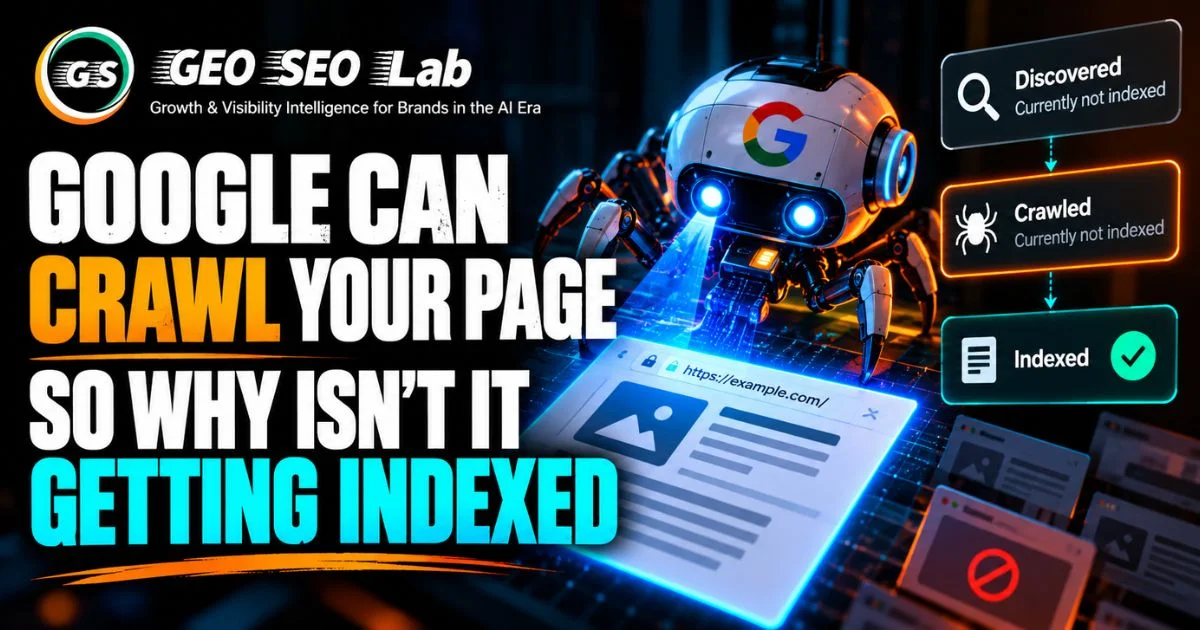
Google Can Crawl Your Page: So Why Isn't It Getting Indexed?
Google Can Crawl Your Page: So Why Isn't It Getting Indexed?Imagine pouring weeks of painstaking effort into a comprehensive, deeply researched articl...

How to Turn FAQ Content Into GEO Content
How to Turn FAQ Content Into GEO ContentThink about the last time you searched for a complex product or a nuanced troubleshooting step. Did you type a...
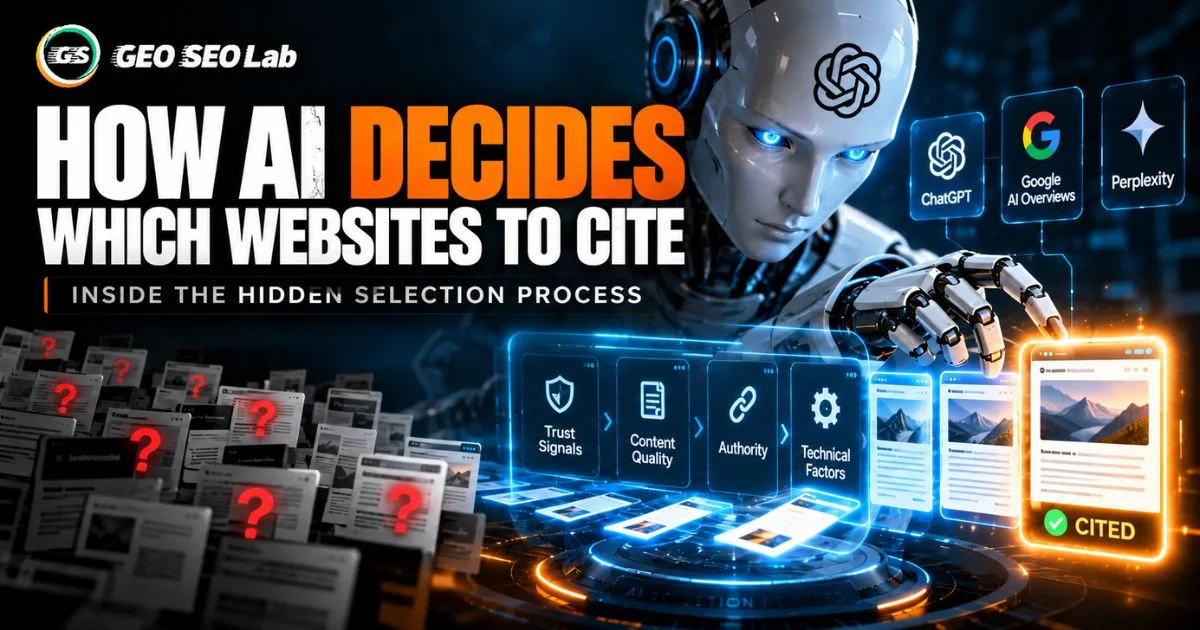
How AI Decides Which Websites to Cite: Inside the Hidden Selection Process
Introduction: The New Gatekeepers of VisibilityPicture this. Someone types a question into ChatGPT, Perplexity, or Google's AI Overview box. Within se...