The New SEO Funnel
The New SEO FunnelHow People Actually Discover Brands in AI SearchA GEO SEO Lab ReportEditorial Disclosure: This report introduces an original framewo...
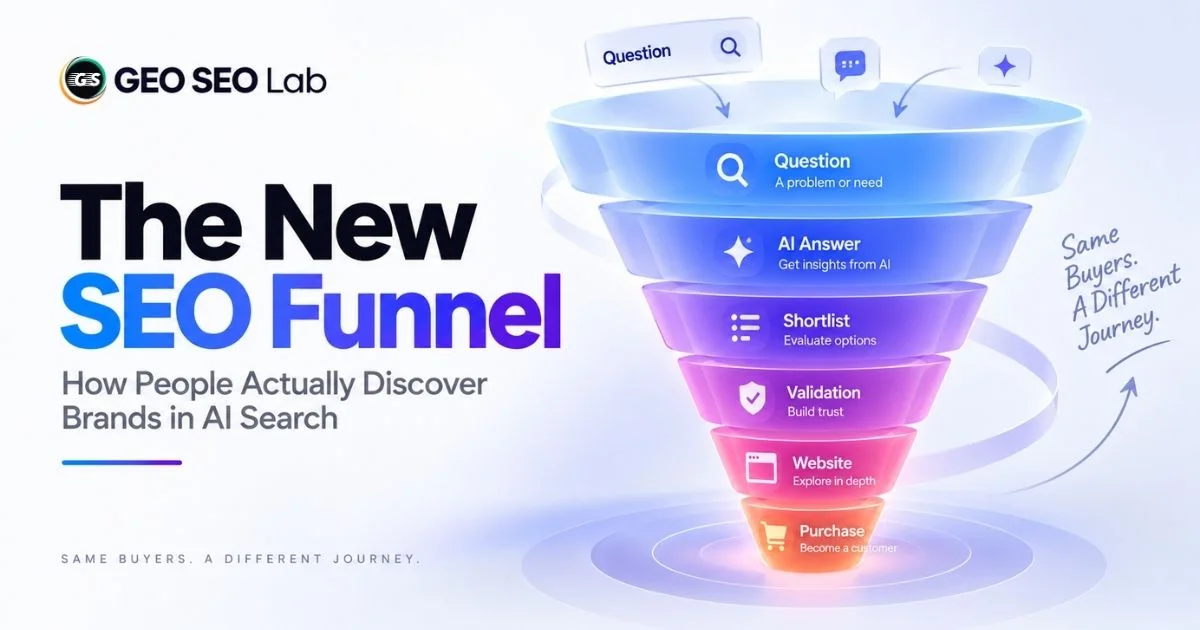
The New SEO Funnel in 2026
How AI Search Is Reshaping the Modern B2B Buyer Journey
Introduction
The new AI SEO funnel is changing how B2B buyers discover, evaluate, and choose brands. Instead of moving directly from Google Search to a website, buyers can now begin with an AI-generated answer, compare the options an AI system recommends, validate those recommendations through independent sources, visit a vendor's website, and then make a purchase decision. SEO is not disappearing. The buyer journey around it is changing
The scale of that shift is genuinely hard to overstate at this point. Forrester's 2026 Buyers' Journey Survey, covering nearly 18,000 global business buyers, found that 94% used AI during their most recent purchase process, up from 89% just a year earlier. G2's 2026 Answer Economy report found 51% of B2B software buyers now begin their vendor research inside an AI chatbot rather than a traditional Google search, up from 29% just eleven months before. And maybe the most striking single number in all of this research, one worth sitting with directly, comes from LinkedIn's Indie Summit findings, reported this June: 94% of B2B buyers now use large language models somewhere in their buying process.
None of that means the traditional website, the sales demo, or the review platform has stopped mattering. What it means is that a genuinely new stage has inserted itself at the front of the buying journey, and a lot of B2B marketing teams are still building strategy around a funnel that no longer accurately describes how their buyers actually behave. This report walks through what the new funnel actually looks like, question, AI answer, shortlist, validation, website, purchase, and then does the harder, more useful work of showing exactly where traditional SEO still fits inside that new structure, because it absolutely still does, just not in the position it used to occupy.
What Is the New AI SEO Funnel?
The new AI SEO funnel is the modern buyer journey in which people discover and evaluate brands across traditional search and AI-powered search experiences before reaching a company's website
Instead of following a simple search → website → conversion path, buyers may move through six stages: question, AI answer, shortlist, validation, website, and purchase
The goal of AI SEO is therefore not only to rank a page. It is to make a brand discoverable, citable, credible, and easy to validate throughout the entire journey
Why the Traditional SEO Funnel No Longer Describes B2B Buying
The traditional B2B funnel, awareness, consideration, decision, mapped reasonably well onto a world where research happened primarily through search engines and vendor websites. A buyer had a problem, searched Google, clicked through a handful of results, compared a few vendors directly, maybe downloaded a whitepaper or requested a demo, and eventually made a decision. Marketing built entire content calendars, keyword strategies, and lead scoring models around that specific sequence.
That sequence has genuinely broken down, and the research backing this up is remarkably consistent across multiple independent sources rather than resting on a single study. Gartner's B2B time-allocation research found buyers now spend 27% of their total buying time on independent online research, compared to just five to six per cent spent with any single vendor directly. LinkedIn and Bain's June 2026 research, "The Principles of Buyability," went further, formally introducing a concept called FOMU, fear of messing up, as the dominant psychological barrier in modern B2B purchase decisions, arguing that AI discoverability and what they call Buyability now operate on the same underlying trust signal layer. The clear implication is that buyers aren't just researching more independently. They're researching more anxiously, leaning on AI tools specifically because those tools promise to reduce the risk of choosing wrong.
This is exactly why a generic "SEO is dying" narrative misses the point entirely. SEO isn't dying. The stage of the journey where SEO used to do its heaviest lifting, the moment a buyer first becomes aware that a category of solution exists and starts comparing options, has partially relocated into a conversation with an AI system instead of a search results page. Understanding that relocation, rather than mourning the old funnel, is the actual useful work here.
The Six-Stage / Gate of SEO Funnel
This is where GEO SEO Lab's original framework comes in. We're calling it the Five-Gate Funnel, and it maps directly onto the sequence a modern B2B buyer actually moves through: question, AI answer, shortlist, validation, website, and finally, purchase.
Each of these five gates represents a genuinely distinct moment where a brand can either advance toward the sale or quietly get filtered out, often without ever knowing it happened. And critically, each gate rewards a different kind of marketing and content investment. Treating all five gates as one undifferentiated "SEO problem" is exactly the mistake that leaves brands optimising for the wrong stage while a genuinely important gate sits completely unaddressed. The rest of this report walks through each gate individually, what's actually happening at that stage, what the current research shows about buyer behaviour there, and specifically where traditional SEO fits into winning it.
Gate One, the Question
Every buying journey starts with a real problem someone's trying to solve, and increasingly, the first thing that person does isn't type a search query. It's asking an AI system a genuine, often quite specific question.
This matters because the nature of that question has changed considerably from the keyword-shaped queries that used to define search behaviour. A buyer isn't typing "project management software." They're asking something closer to "what's the best project management tool for a twelve-person remote agency that needs strong client reporting," a question loaded with role, constraint, and context in a way a traditional keyword search never was. Forrester's research found buyers using AI at this exact stage for genuinely foundational work: 54% research product information directly, and 47% build internal business cases before ever engaging a single vendor. That last figure is worth sitting with. Nearly half of B2B buyers are constructing their internal justification for a purchase using AI-synthesized information before a vendor even knows they exist.
This is the stage where a brand's absence is most invisible and most costly simultaneously. If a brand isn't part of the information an AI system draws on to answer that very first question, it's not just missing from a shortlist later. It's missing from the buyer's entire mental framing of what solutions even exist, and 2X's 2026 survey found this happening at a genuinely alarming scale, with 96% of B2B companies invisible in early-stage AI discovery queries, and only 4.3% of companies appearing at all in AI responses to broad category-level questions.
Gate Two, the AI Answer
Once a buyer's question gets asked, an AI system constructs an actual answer, and this is the gate where getting cited by name starts to carry direct, measurable weight rather than being a nice-to-have.
The research here is genuinely striking. G2's 2026 Answer Economy report found that 85% of buyers view vendors more favourably when an AI system cites them by name specifically. That's not a small credibility bump. It's a structural advantage baked directly into how trust forms at this stage of the journey. And the flip side carries real, quantifiable risk. Buyers are increasingly aware of gaps in what AI systems surface, with one survey finding 66% of B2B buyers say they've personally spotted vendors missing from AI results, and 26% saying this happens frequently.
What determines whether a brand actually gets named at this gate has less to do with traditional ranking signals and more to do with how citable a brand's information actually is, whether it's structured with specific, verifiable claims an AI system can quote confidently rather than vague marketing language it has to interpret or guess at. Vague claims get genuinely ignored at this gate. Precise, specific, verifiable statistics and claims get quoted directly, which is exactly why brands willing to publish real numbers, honest comparisons, and specific outcome data tend to earn citation far more reliably than brands relying purely on broad positioning language.
Gate Three, the Shortlist
Getting named inside an AI answer doesn't automatically mean winning the deal, but it does something arguably more foundational. It gets a brand onto the actual shortlist a buyer carries forward into the rest of their evaluation, and the research shows this shortlist-shaping effect happening at a genuinely disruptive scale.
One of the more striking findings circulating in 2026 B2B research comes from Omnibound's data, showing that 69% of B2B buyers ended up choosing a different vendor than they'd originally planned, specifically because of what an AI chatbot told them during research. That's not a marginal influence on an already-formed opinion. That's a majority of buyers having their actual shortlist rewritten by an AI conversation. Separate research derived from Gartner and G2's Answer Economy data found that 33% of B2B buyers purchased from a vendor they'd never previously heard of, discovered entirely through an AI search answer. Put plainly, for a real, substantial share of B2B deals in 2026, the shortlist isn't being built by the buyer's prior knowledge or a sales rep's outreach at all. It's being built inside a conversation with an AI system the vendor never saw happen.
This is the gate where the earlier gates' consequences become concrete and visible in pipeline numbers. A brand that's invisible at the question and answer stages doesn't just miss out on brand awareness in some abstract sense. It gets structurally excluded from the actual shortlist a buyer carries into every subsequent stage of their decision, often without the brand's sales team ever knowing that buyer, or their entire evaluation process, existed in the first place.
Gate Four, Validation
Here's where the "SEO is dead" narrative runs into its biggest, most important counterargument. Buyers don't take an AI's word for it and buy blind. They validate what the AI told them, and that validation stage is where traditional trust signals, reviews, case studies, direct comparisons, and yes, a genuine visit to search results, come roaring back into relevance.
TrustRadius's 2026 B2B Buying Disconnect Report found that while 63% of buyers used AI during their purchase journey, a full 94% of those same buyers fact-check AI responses at least some of the time. That's a genuinely important nuance sitting right in the middle of this whole conversation. AI handles discovery remarkably effectively. It does not, on its own, handle trust. G2's own 2026 Buyer Behavior Report data backs this up directly too, finding AI chatbots at 37% influence sitting nearly equal with review sites at 38% influence, meaning the AI answer and the independent review site are functioning as parallel, complementary trust inputs rather than one simply replacing the other.
This is genuinely the gate where a brand's third-party reputation, its review platform presence on sites like G2, Clutch, or Capterra, its case studies, and its independent media coverage, does the heaviest lifting in the entire funnel. A brand can win Gates One through Three cleanly, get named, get shortlisted, and still lose the deal entirely at Gate Four if a buyer's validation research turns up thin, inconsistent, or unconvincing evidence once they start actually checking what the AI told them.
Gate Five, the Website
By the time a buyer actually lands on a company's own website in this new funnel, they're arriving in a fundamentally different mental state than the cold, early-stage visitor traditional website design was built around for two decades. This buyer has already asked their question, already read an AI-generated answer, already built a shortlist, and already done independent validation research elsewhere. They're not browsing to learn what a category even is. They're checking specifics before making a final call.
Peter Geisheker's research on this exact dynamic names the problem directly: the single most common cause of lost late-stage deals is a sales team, and by extension a website, still running a discovery-mode playbook against a buyer who has already arrived in validation mode. A homepage built to explain broad category basics to a cold visitor is genuinely mismatched to a buyer who's already convinced enough of the category to be here specifically checking pricing, integration details, and proof points. This is where the earlier GEO SEO Lab research on landing pages, comparison content, and evidence libraries connects directly into this funnel. A website functioning well at Gate Five needs to meet an already-informed buyer with specific, concrete confirmation, not a broad introduction they've already outgrown three stages earlier.
Gate Six, Purchase
The final gate is where the deal actually closes, and the research here suggests something genuinely important about what actually drives that final decision, once a buyer has moved through every earlier stage of validation and comparison.
Responsive's research covering enterprise B2B buyers found that industry expertise, at 52%, actually outranks both price at 49% and product fit at 46% as the single most significant factor in final vendor selection. That's a meaningful finding sitting at the very end of this funnel. After all the AI-assisted discovery, all the shortlist rewriting, all the independent validation, the deciding factor still often comes down to a distinctly human judgment about whether a vendor's team genuinely understands the buyer's specific situation, a factor that no AI citation or review-site rating can fully substitute for on its own. Geisheker's broader research reinforces this same conclusion from a different angle, arguing that sales processes historically built around delivering basic information need to be rebuilt entirely around validation, ROI confirmation, and genuine trust development, because buyers are simply arriving too educated for a discovery-mode sales conversation to feel credible anymore.
Where Traditional SEO Actually Fits Across All Five Gates
This is the question this report set out to answer directly, and the honest answer is that SEO doesn't disappear from this new funnel. It redistributes across it, doing meaningfully different work at each gate than it used to do in the old, single-stage model.
At Gate One, the question stage, traditional SEO fundamentals, genuinely helpful, well-structured content that clearly answers a real buyer question, remain the raw material an AI system actually draws from when constructing its answer. Google's own guidance has consistently maintained that AI Overviews and AI Mode are rooted in core Search systems, meaning a page still generally needs to be crawlable, indexable, and eligible for standard search before it can ever be considered as a source at this stage. SEO fundamentals aren't obsolete here. They're the entry ticket.
At Gate Two, the AI answer stage, traditional keyword optimisation matters less than structural citability, but SEO's underlying discipline of understanding what a real searcher, or now a real prompt, actually needs answered directly carries forward almost unchanged. The specific tactics shift toward precise, verifiable claims and clear entity clarity, but the underlying SEO instinct- understand genuine user intent and answer it directly rather than talking about yourself- iy the same instinct that wins at this gate too.
At Gate Three, the shortlist stage, SEO's traditional focus on competitive positioning and content differentiation translates directly into winning a spot on an AI-influenced shortlist. Comparison content, category pages, and genuinely differentiated positioning, all classic SEO content types, are precisely what determines whether an AI system names a brand as one of several viable options rather than omitting it from the shortlist entirely.
At Gate Four, validation, traditional SEO connects into something SEO teams have always cared about but rarely owned directly: off-site reputation. Review platform optimisation, third-party mention building, and digital PR have always sat somewhat adjacent to core SEO work, and this is the gate where that adjacent work becomes genuinely central rather than a nice-to-have side project.
At Gate Five, the website, classic on-page SEO and conversion-focused content structure remain directly relevant, just aimed at a considerably more informed visitor than the old model assumed. The technical SEO fundamentals, page speed, mobile experience, clear information architecture, still matter enormously here, because a buyer this far along the funnel who hits a confusing or slow website can still abandon the process entirely, even after everything that led them there.
And at Gate Six, purchase, SEO's role becomes genuinely indirect but not irrelevant, since the accumulated content, case studies, and expertise-demonstrating material that SEO efforts built across the earlier gates is exactly what a sales team draws on to reinforce the industry expertise buyers report valuing most in that final decision.
The throughline across all six gates is this: SEO never stopped mattering. What changed is that it stopped being one discipline focused on one moment, ranking for a search query, and became a foundational layer running underneath five genuinely distinct stages of a considerably longer, more distributed buying journey.
What This Actually Means for a B2B Marketing Team
Given this five-gate structure, the practical implication for a marketing team isn't abandoning SEO in favour of some entirely new discipline. It's recognising that budget, content planning, and measurement all need to spread across gates that used to collapse into a single funnel stage.
That means auditing where a brand currently stands at each of the five gates individually, rather than assuming strong traditional SEO performance automatically means strong performance everywhere else in the funnel. A brand ranking well on Google can still be absent from Gate One and Two's AI-answer visibility, entirely missing Gate Three's shortlist inclusion, and thin on Gate Four's third-party validation evidence, all while its SEO dashboard shows healthy, stable numbers. LinkedOtter's research on this exact gap found brands cited in AI Overviews earning 35% more organic clicks than non-cited competitors on the same queries, a direct, measurable reminder that these gates connect and compound rather than operating in isolation.
It also means genuinely investing in the validation gate specifically, since it's the one most B2B marketing teams currently underweight relative to how much weight buyers actually place on it. Review platform presence, third-party case studies, and independent media coverage aren't adjacent nice-to-haves anymore. They're the specific content buyers are actively seeking out to fact-check whatever an AI system told them, and TrustRadius's finding that 94% of buyers do exactly that fact-checking makes this gate impossible to responsibly skip.
Finally, it means updating measurement to reflect all five gates rather than collapsing everything back into traditional rank tracking and organic click-through rate. A brand needs visibility into whether it's actually getting named across realistic AI prompts relevant to its category, whether its shortlist inclusion rate is improving or declining over time, and whether its third-party validation footprint, reviews, case studies, independent coverage, is genuinely strong enough to survive the fact-checking every serious buyer is now doing before they'll trust an AI-generated recommendation enough to act on it.
Key Takeaways
- The traditional B2B funnel has genuinely restructured around a new sequence: question, AI answer, shortlist, validation, website, and purchase, rather than collapsing into a single, simpler search-and-click journey.
- Forrester's 2026 research found 94% of B2B buyers used AI during their most recent purchase process, with 55% comparing vendors and 47% building internal business cases before ever contacting a vendor directly.
- Getting cited by name inside an AI answer carries direct measurable weight, with 85% of buyers viewing vendors more favourably when AI systems name them specifically, according to G2's 2026 Answer Economy report.
- AI is reshaping actual shortlists, not just awareness. 69% of buyers chose a different vendor than originally planned after AI chatbot research, and 33% purchased from a vendor they'd never previously heard of before an AI answer surfaced it.
- Validation remains a distinctly human, trust-based stage. 94% of buyers fact-check AI responses at least some of the time, meaning reviews, case studies, and independent coverage remain essential rather than obsolete.
- Traditional SEO doesn't disappear in this new funnel. It redistributes across all five gates, doing different but genuinely essential work at each stage rather than functioning as one discipline focused on a single ranking moment.
About GEO SEO Lab
GEO SEO Lab researches the evolution of search and discovery across Google Search, Google AI Mode, ChatGPT, Gemini, Claude, Perplexity, and other AI-powered platforms. Our mission is to help B2B and B2C businesses alike understand how buying journeys have genuinely restructured around AI-mediated discovery, combining current industry research with original, practical frameworks for building visibility and trust across every stage of a modern, distributed buying journey.
References
- Forrester, 2026 Buyers' Journey Survey (January 2026)
- G2, 2026 Buyer Behaviour Report and 2026 Answer Economy Report
- TrustRadius, 2026 B2B Buying Disconnect Report
- LinkedIn and Bain, The Principles of Buyability (June 2026)
- Mimi Turner, LinkedIn Marketing Blog, The B2B Navigation System Is Broken: Why AI Is Forcing a Shift From Visibility to Buyability
- Machine Relations Research, 94% of B2B Buyers Use AI for Vendor Research (March 2026)
- Omnibound, B2B Buying Statistics 2026 and 69% of B2B Buyers Switch Vendors After AI Chatbot Research
- Gartner, B2B time-allocation research, cited via G2 Answer Economy Report (March 2026)
- 2X, 2026 Survey on AI Discovery Visibility
Responsive, enterprise B2B buyer research on vendor selection factors
- Peter Geisheker, How AI Has Changed the B2B Buying Process in 2026
- Semrush, How AI Tools Shape the B2B Buying Process: A Survey of 600+ US Business Professionals
All statistics reflect publicly available research current as of mid to late 2026. Given how quickly AI-driven buyer behaviour continues to evolve, figures are worth reverifying against sources before quoting them elsewhere.
Tags
Frequently Asked Questions
Find answers to common questions about this topic
About the Author

Anubhav
SEO Expert & Content Creator
Experienced digital marketing professional specializing in SEO strategies, content optimization, and data-driven marketing solutions. Passionate about helping businesses grow their online presence and achieve better search rankings.
Related Articles
View all posts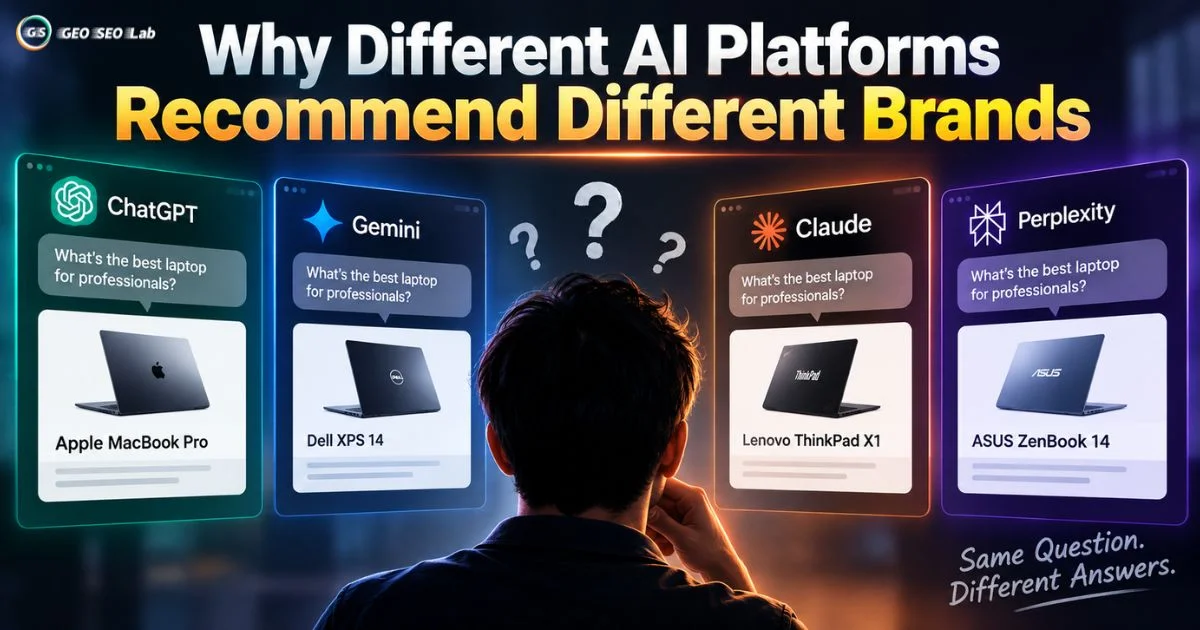
Why Different AI Platforms Recommend Different Brands
Why Different AI Platforms Recommend Different BrandsSame Question, Four Answers, Almost Zero OverlapA GEO SEO Lab ReportEditorial Disclosure: This re...
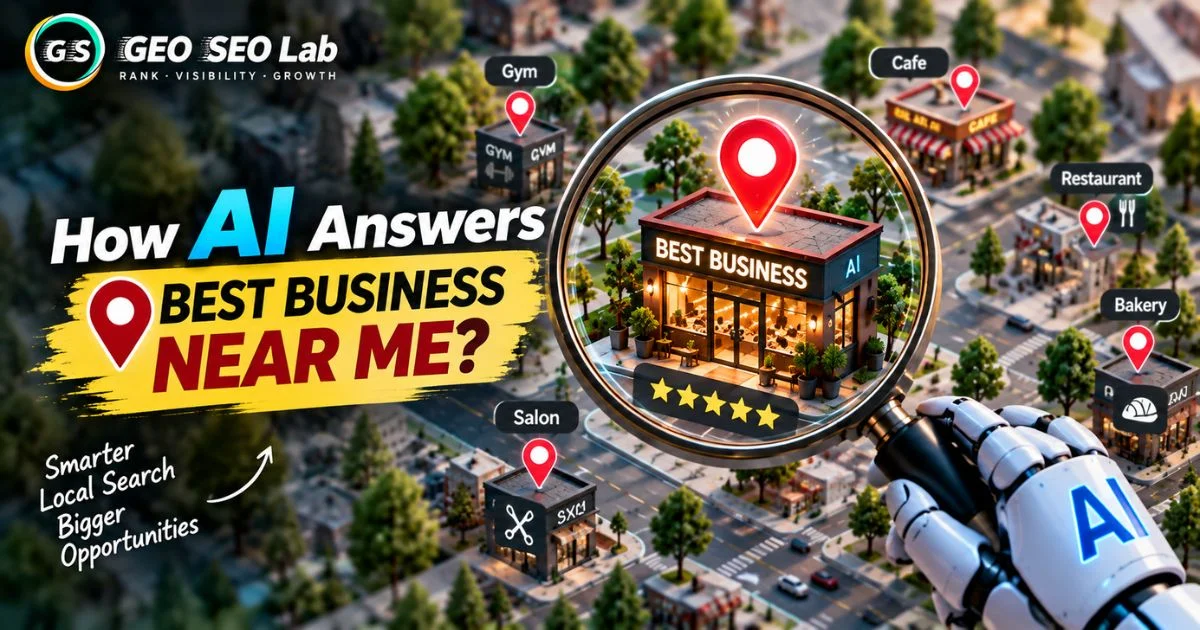
How AI Answers “Best Business Near Me” in 2026 | Local AI Search
How AI Answers "Best Business Near Me"Inside the Shortlist That Decides Who Gets the CallA GEO SEO Lab ReportEditorial Disclosure: This report introdu...
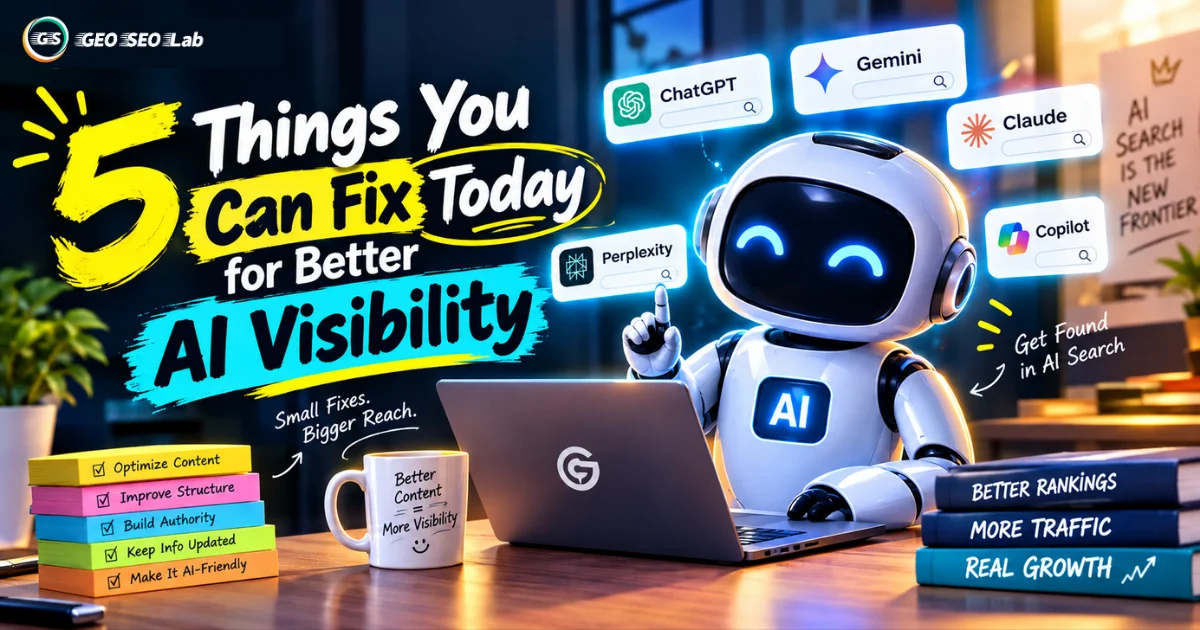
How to Improve AI Visibility in 2026 : 5 Fixes You Can Make Today
5 Things You Can Fix Today for Better AI Visibility No Redesign, No New Budget, Just Real Fixes You Can Ship This Afternoon Introduction Most GEO advice ...