Google Is Making AI Search Links More Visible: What Should SEO Professionals Do Next?
Google Is Making AI Search Links More Visible: What Should SEO Professionals Do Next?Editorial DisclosureBefore diving in, a quick note on sourcing. T...
Introduction
For the past couple of years, SEO professionals have been living with a slow, creeping anxiety. AI Overviews showed up in Google Search, answered questions directly on the results page, and traffic to some websites started dipping even as rankings stayed the same. The term "zero-click search" went from niche jargon to dinner-table conversation among marketers.
So when news broke that Google is reworking how links appear inside its AI-generated search responses, people paid attention. Fast.
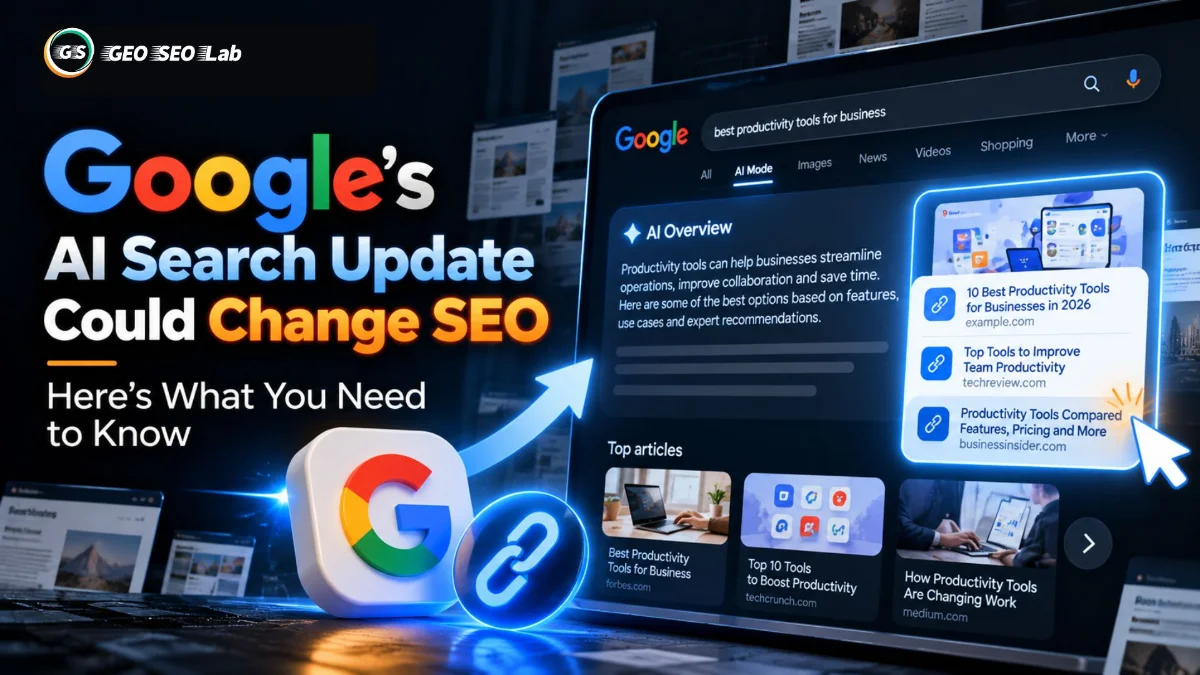
According to The Verge, Google is rolling out several changes designed to make source links more visible and more clickable within AI Mode and AI Overviews. These include more prominent inline links woven directly into the generated text, a cleaner visual treatment for the links that appear at the end of an AI answer, expanded carousels showing related articles, and early experiments with clickable profiles that let users jump straight to a publisher's or creator's other content. Alongside this, Google is reportedly expanding a news initiative involving hundreds of publishers, which includes compensation and content-licensing arrangements for the organizations taking part.
On paper, this sounds like good news for anyone who's been worried about AI search quietly starving their site of traffic. More visible links should mean more opportunities to be clicked, right?
Well, sort of. And this is exactly where things get interesting for SEO and GEO (Generative Engine Optimization) practitioners.
Visibility and traffic are not the same thing. A link can be beautifully placed, perfectly formatted, and still get ignored if the AI answer already satisfied the user's question. This article walks through what's actually changing, why it matters, what the realistic impact looks like, and most importantly, what you should actually do about it starting this week, not six months from now when the dust has settled.
We're going to get specific. No vague "adapt to AI search" platitudes. You'll get frameworks you can apply, a measurement approach you can set up, and a clear-eyed view of what's hype versus what's genuinely actionable.
What Exactly Is Google Changing in AI Search Results?
Let's break down the reported changes piece by piece, because "more visible links" is doing a lot of heavy lifting as a phrase, and the details matter.
More prominent inline links. Instead of AI-generated answers reading like a single block of synthesized text with citations tucked away somewhere, Google is reportedly weaving links more naturally into the body of the response itself. Think of it as the difference between a research paper with footnotes at the bottom of the page versus one where the citation appears right where the claim is made. The idea is to reduce the cognitive gap between "here's a fact" and "here's where that fact came from."
Improved visual presentation of end-of-answer links. Even before this update, AI Overviews typically listed source links at the bottom of a generated answer. The redesign appears to make these more visually distinct, potentially with clearer formatting, source branding, or layout changes that make them easier to spot and click. Visual hierarchy matters enormously in search behavior. A link buried in gray text at ten-point font gets ignored. A link presented with a clear title, a recognizable domain, and some breathing room around it gets noticed.
Expanded article carousels. Carousels, the horizontally scrollable rows of content cards, have been part of Google's toolkit for years in contexts like "Top Stories" or shopping results. Bringing an expanded version of this format into AI-generated answers suggests Google wants to give users more browsable options tied to a single query, rather than just one definitive AI-written answer.
Experiments with clickable profiles. This is arguably the most interesting piece, and the one with the least precedent. The idea of a "profile" for a publisher or individual creator that users can click into from an AI answer hints at something closer to how platforms like Pinterest or even LinkedIn structure content discovery around creators rather than just individual pieces of content. If this expands, it could change how authority and recognition work in AI search. It's not just "this article was cited," it's "this source is a creator you can follow and explore."
The news publisher initiative. Perhaps the most consequential piece for the publishing industry specifically is the reported expansion of a program involving compensation and licensing deals with hundreds of publishers. This echoes similar moves other AI companies have made (licensing deals between AI labs and major news organizations have become increasingly common since 2023), and it suggests Google recognizes that an AI-driven search ecosystem without healthy publisher participation is, frankly, not sustainable. If publishers stop producing original reporting because AI answers cannibalize their traffic and revenue, the AI systems themselves eventually run out of fresh material to synthesize.
Taken together, these changes paint a picture of Google trying to thread a difficult needle: keep AI Overviews useful and fast for users while also keeping the broader content ecosystem that feeds those answers alive and incentivized to keep producing quality work.
Whether this succeeds is genuinely an open question. We'll get into that.
Why This Matters for SEO and GEO Specifically
Here's the uncomfortable truth that's been sitting underneath every AI search conversation since 2023: AI-generated answers can fully satisfy a searcher's intent without that person ever clicking through to a website.
If someone asks "what's the ideal room temperature for sleeping" and gets a clear, accurate answer directly in the search results, most people won't click anything. Why would they? Their question got answered. The job the search engine was hired to do, satisfy curiosity or solve a problem, got done without a website visit.
This has obvious implications for publishers, affiliate marketers, and content-driven businesses whose entire revenue model depends on traffic. Pageviews fund ad revenue. Clicks drive affiliate commissions. Visits generate leads. When the AI answer short-circuits that entire chain, the business model underneath a huge portion of the internet gets wobbly.
So when Google announces changes designed to make links more visible inside these AI answers, the SEO and GEO community understandably perks up. It suggests Google is, at minimum, aware of this tension and is trying to mitigate it rather than ignore it.
But here's where we need to pump the brakes a little, because enthusiasm without analysis leads to bad strategy.
More visible links are a necessary condition for more traffic. They are not a sufficient one.
A link can be the most visually prominent, beautifully formatted thing on the page, and users still won't click it if:
The AI answer already gave them everything they needed.
The query was purely informational and low-stakes (think "what year did World War II end" rather than "best accountant for a small business in Austin").
The user doesn't trust or recognize the source enough to feel the click is worth their time.
The surrounding content in the AI answer was comprehensive enough that exploring further feels unnecessary.
This is the core tension that every SEO professional needs to internalize about this update. Visibility improvements shift the ceiling of what's possible. They don't automatically raise the floor of actual outcomes. Your job, as someone optimizing for this landscape, is to understand which queries and which content types sit in that gap between "visible" and "clicked," and build your strategy around widening that gap in your favor.
Introducing the AI Link Visibility Impact Model
To make sense of when this update will actually help you and when it probably won't, we built a simple framework we're calling the AI Link Visibility Impact Model. It sorts queries and content types into four categories based on how likely increased link visibility is to translate into actual clicks and conversions.
Category one: high-stakes, low-answerability queries. These are searches where the AI can summarize the landscape but genuinely cannot resolve the user's actual need within the answer itself. Think "best CRM software for a 15-person remote team" or "should I refinance my mortgage in 2026." The AI can give context, but the decision requires personalized judgment, comparison shopping, or trust-building that a short synthesized answer simply can't deliver. These queries benefit the most from improved link visibility, because the user was always going to click through to something. The only question was which source got the click. More prominent, well-placed links increase the odds that it's you.
Category two: low-stakes, high-answerability queries. These are the "what time zone is Tokyo in" or "how many ounces in a cup" type searches. The AI answer fully resolves the need in one or two sentences. No amount of link visibility improvement meaningfully changes click behavior here, because there's simply nothing left for the user to go looking for. If your content strategy leans heavily on capturing this kind of traffic, this update won't rescue you. Nothing will, frankly, until user behavior itself shifts, and there's little indication that will happen soon.
Category three: exploratory and comparison queries. Searches like "top GEO SEO Lab strategies for 2026" or "ChatGPT Ads vs Meta Ads for small business" sit in a middle zone. The AI can provide a reasonable overview, but users researching a topic this way often want to dig deeper into specific sources, read more detailed breakdowns, or verify claims across multiple perspectives. This is where carousels and clickable profiles likely have the most practical impact, since they're explicitly designed to invite that kind of browsing behavior rather than a single click-or-don't-click decision.
Category four: brand and entity-specific queries. When someone searches for a specific company, product, or named individual, the AI answer typically pulls from a narrower set of authoritative sources. If you're one of those sources, improved visibility genuinely helps, since the person already has intent to learn more about that specific entity. If you're not already recognized as an authority on that entity, better link formatting elsewhere on the page won't change the fact that you're not in the conversation to begin with.
The practical takeaway from this model is straightforward: audit your own content against these four categories before you get excited about this update. If most of your traffic historically came from category two queries (pure fact lookups), this change probably won't move the needle much for you. If you're sitting on category one or category three content, this is genuinely worth paying close attention to and optimizing around.
The Difference Between Visibility and Traffic: Why the Caveat Matters
It's worth spending a little more time on this distinction because it's the single most important mental model shift this update demands.
Think about how often you personally see a citation or footnote and choose not to click it, even when it's right there in front of you. You might trust the summary enough. You might be in a hurry. You might just not care enough about the source to break your reading flow.
Search behavior researchers have documented this pattern for years in the context of featured snippets, a much simpler precursor to today's AI Overviews. When Google introduced featured snippets back in the mid-2010s, publishers initially worried about losing traffic to "position zero" answers, and in many cases, that worry was justified. But the data also showed something more nuanced: snippets pulled from genuinely helpful, well-structured content sometimes drove curiosity clicks precisely because the snippet demonstrated credibility and depth, inviting the reader to see more.
The same logic likely applies here, perhaps even more so, since AI Overviews synthesize across multiple sources rather than quoting a single page verbatim. If your content is cited as one of several sources feeding an AI answer, and that answer is thorough, some portion of readers will still want to verify, explore, or get more nuance. That portion is unlikely to be the majority, but it's also not zero, and this update appears designed to make capturing that minority easier.
So the real question for your SEO strategy isn't "will this update bring back my old traffic levels." It almost certainly won't, not across the board. The real question is "how do I position my content to be one of the sources that earns the click, rather than one of the sources that just gets cited and skipped."
That's a fundamentally different strategic question, and it requires a different kind of content.
Source Attribution Opportunity Framework
We built a second framework to help answer that exact question. We're calling it the Source Attribution Opportunity Framework, and it breaks down into three layers that determine whether your content is likely to earn a click once it's already been selected as a cited source.
Layer one: distinctiveness of contribution. If your article says largely the same thing as five other sources the AI pulled from, there's little reason for a user to click specifically on you. But if your piece contains a unique data point, an original case study, a contrarian but well-supported perspective, or specific numbers that aren't available elsewhere, the AI answer is more likely to flag your contribution as distinct, and users curious about that specific detail are more likely to click through to see it in full context.
Layer two: depth beyond the summary. AI answers are, by design, compressed. They extract the core claim and strip away supporting detail, nuance, caveats, and examples. If your content has meaningfully more depth than what could fit in a two-sentence summary, that depth itself becomes the incentive to click. This is why thin content, even if technically accurate, tends to underperform in this environment. There's nothing left to discover once the summary has been extracted.
Layer three: recognizable authority signals. This connects directly to the clickable profiles experiment mentioned earlier. If a user recognizes your brand, your author byline, or your publication name as credible within a specific niche, they're more likely to click through out of trust rather than pure information need. Building this kind of recognizable authority doesn't happen overnight. It comes from consistent publishing in a specific topical lane, genuine expertise demonstrated over time, and ideally, some presence beyond your own website too, in the form of citations, mentions, or guest contributions on other respected platforms within your industry.
Put simply, the formula looks something like this: distinctive insight, real depth, and recognizable authority combine to turn a citation into a click. Miss any one of these three, and you're more likely to be background material than a destination.
What This Means for Different Types of Websites and Creators
Not every website experiences this update the same way, and it's worth breaking down how different categories of content producers should think about it.
News and journalism organizations stand to benefit most directly from both the link visibility changes and the publisher compensation initiative. Original reporting, exclusive interviews, and breaking news coverage are exactly the kind of content that AI systems need and cannot generate independently. If you're in this category, the compensation and licensing arrangements reported by The Verge are worth investigating directly and potentially pursuing, since direct relationships with Google could prove more lucrative and stable than organic traffic alone ever was.
Niche educational and how-to content creators are in a trickier spot. If your content answers discrete, narrow questions thoroughly, you're providing exactly the kind of material AI Overviews love to summarize, which is both good (you get cited) and risky (the summary might fully satisfy the user). Your best move here is to structure content so that the summary-able part sits near the top, satisfying basic intent, while genuinely valuable depth, examples, tools, or personalized advice lives further into the piece, giving motivated readers a reason to actually visit.
E-commerce and product-focused sites probably won't see dramatic shifts from this specific update, since AI-generated shopping answers tend to rely more heavily on structured product data, reviews, and pricing information than on narrative link citations. That said, the general principle of building distinctive, trustworthy content (detailed buying guides, genuine comparison content, expert reviews) still applies and may matter more as AI shopping assistants mature further over the next year or two.
Local service businesses are largely unaffected by this particular change, since local search results and AI Overviews for local queries typically pull from Google Business Profile data, reviews, and map-based signals rather than long-form article citations. If you run a local business, your energy is better spent on profile optimization and review management than worrying about AI link carousels.
Personal brands and individual creators have the most to potentially gain from the clickable profiles experiment specifically, assuming it expands beyond early testing. If Google builds out a genuine profile-based discovery mechanism, creators who've built recognizable, consistent personal brands around specific expertise areas could see AI search become a meaningful new discovery channel, similar to how creator profiles function on platforms like YouTube or Substack.
Building the Kind of Content That Actually Benefits From This Update
Let's get tactical. Based on everything above, here's what we'd actually recommend doing, starting now.
Audit your existing content against the four query categories. Before changing anything, understand where your traffic currently comes from. Pull your top-performing pages by organic traffic and sort them mentally (or in a spreadsheet, no coding required) into the four categories from the AI Link Visibility Impact Model. This tells you how much upside this update realistically holds for your specific site.
Add genuinely original data or perspective wherever possible. This doesn't mean commissioning expensive research for every article. It can be as simple as sharing results from your own client work, a small survey of your audience, a case study from your own experience, or a clearly labeled hypothetical worked example that illustrates a concept concretely. The goal is to give the AI something to cite that isn't available verbatim elsewhere, which increases both citation likelihood and click-through curiosity.
Support important claims with credible evidence, every single time. This sounds obvious, but it's worth repeating because it's the difference between content AI systems trust enough to cite confidently versus content they either ignore or summarize cautiously. Link to primary sources. Cite actual studies, not vague references to "experts say." Attribute statistics to their original publishers. This habit alone does more for AI citation likelihood than almost any technical SEO tweak.
Build topical expertise instead of publishing scattered, generic content. AI systems, much like human readers, develop a sense of which sources are consistently reliable within a specific topic area. A site that publishes fifty shallow articles across unrelated topics sends a weaker trust signal than a site that publishes twenty genuinely thorough articles within a focused niche. If you're serious about GEO in 2026 and beyond, topical depth beats topical breadth almost every time.
Make your landing pages genuinely useful for visitors arriving from AI search. Someone who clicks through from an AI Overview has already received a summary. They're not starting from zero. Don't make them re-read a slow, generic introduction that repeats what the AI already told them. Get to the substance fast. Acknowledge, implicitly or explicitly, that they're looking for more depth, examples, or nuance, and deliver that immediately.
Structure content with clear, specific headings that match real search intent. AI systems extract and attribute information more reliably when content is organized logically, with headings that clearly signal what each section covers. This isn't new SEO advice, but it matters more than ever when your content needs to be both human-readable and machine-extractable at the same time.
GEO Traffic Attribution Protocol: Measuring the Real Impact
Here's the part most articles about this update skip entirely: how do you actually know if any of this is working?
We built a simple, non-technical measurement approach called the GEO Traffic Attribution Protocol, broken into four steps you can realistically implement without needing a developer.
Step one: segment your traffic sources clearly. Inside Google Search Console, pay close attention to the breakdown between traditional organic search clicks and any newly surfaced categories related to AI features, where available. Google has been gradually adding more visibility into AI Overview performance within Search Console over time, though reporting granularity varies and continues to evolve. Cross-reference this with your analytics platform's referral traffic reports to spot any changes in direct or referral patterns that might correlate with AI search exposure.
Step two: track changes in click-through rate by query category, not just overall traffic. Overall organic traffic numbers can mask what's actually happening. A page might lose clicks on simple, easily-summarized queries while gaining clicks on complex, exploratory ones. Break your query performance data down by the four categories in the AI Link Visibility Impact Model and watch each category separately over a period of at least eight to twelve weeks, since AI search behavior and reporting can be noisy week to week.
Step three: monitor citation frequency, not just click volume. Even when a citation doesn't generate an immediate click, being consistently cited in AI answers for your target topics builds brand recognition over time, which can influence future direct searches for your brand name specifically. If you notice branded search volume increasing even while direct AI-referral clicks stay flat, that's a meaningful signal worth tracking, not something to dismiss.
Step four: separate conversion quality by traffic source. Not all clicks are equal. A visitor who clicked through from an AI Overview after seeing a thorough summary has already self-selected as genuinely interested in more depth. Track conversion rates (newsletter signups, inquiries, purchases) specifically for this traffic segment where your analytics setup allows it. In many cases, this traffic converts at a different rate than traditional organic traffic, sometimes better because the user's intent has already been partially pre-qualified by the AI summary itself, sometimes worse because the user was just casually curious. You won't know which pattern applies to your business until you actually measure it.
One important caveat here: because these interface changes are still rolling out and reporting tools are still evolving, don't expect clean, immediately obvious data in the first few weeks. Treat this as a slow-building dataset you check monthly rather than a daily dashboard you obsess over. Chasing short-term noise in this kind of data usually leads to bad decisions.
A Hypothetical Walkthrough (Illustrative Only)
To make this more concrete, let's walk through a hypothetical, clearly illustrative scenario. The numbers here are invented for explanatory purposes only and should not be treated as real benchmarks or guaranteed outcomes.
Imagine a mid-sized blog covering personal finance topics. Before this update, roughly 40 percent of its traffic came from category one and three queries (comparison and high-stakes research queries), 35 percent from category two (simple fact lookups), and the remainder from branded and category four searches.
After the update rolls out and the site owner applies the recommendations above, a hypothetical three-month tracking period might show something like this: category two traffic continues its gradual decline, since no link visibility improvement meaningfully changes behavior for simple fact-lookup queries. Category one and three traffic, however, shows modest growth, since the site had already invested in original case studies and detailed comparison content that gave users a genuine reason to click through even after seeing an AI summary. Branded search volume ticks up slightly, plausibly linked to increased citation frequency building brand recognition over time.
Again, this is a hypothetical illustration meant to show how the categories and measurement approach might play out in practice, not a projection of guaranteed results for any real website. Your actual outcomes will depend heavily on your niche, your existing content depth, your domain authority, and factors outside anyone's direct control, including how Google continues to adjust this feature over time.
What We Still Don't Know
In the interest of staying grounded rather than speculative, let's be honest about the open questions here.
We don't yet know how consistently these changes will roll out across different regions, languages, and query types. Google has a well-documented history of testing features in limited markets before (or instead of) global rollout.
We don't know the exact criteria Google uses to decide which publishers get included in the expanded news compensation initiative, or what the compensation structures actually look like in practice.
We don't know how the clickable profiles experiment will evolve, or whether it will become a permanent, widely available feature versus a limited test that eventually gets shelved, as has happened with other Google search experiments in the past.
We also don't know how user behavior will actually respond to these visual and structural changes once they're fully live at scale. Interface changes sometimes produce different real-world click behavior than internal testing predicts, simply because real users behave less predictably than test panels.
Given all of this, the most responsible stance for any SEO professional is cautious optimism paired with disciplined measurement. Don't overhaul your entire content strategy based on a single news report. Do start building the kind of distinctive, deep, well-attributed content that benefits you regardless of exactly how this update unfolds, and set up measurement now so you're not scrambling to understand impact six months from now.
Key Takeaways
Google is reportedly making AI-generated search answers show source links more prominently, through inline citations, improved end-of-answer link formatting, expanded article carousels, and early experiments with clickable publisher and creator profiles, alongside an expanded publisher compensation initiative.
More visible links create opportunity, but they don't guarantee more clicks or conversions. The actual impact depends heavily on query type, how fully the AI answer already satisfies the user, and how distinctive and trustworthy your content appears relative to other cited sources.
Use the AI Link Visibility Impact Model to understand which of your content types (high-stakes research queries, simple fact lookups, exploratory comparisons, or brand-specific searches) are most likely to benefit from this update before investing heavily in changes.
Apply the Source Attribution Opportunity Framework by focusing on distinctive contributions, depth beyond what a summary can capture, and recognizable authority signals, since these three factors determine whether a citation turns into an actual click.
Different website types experience this update differently. News organizations and personal brands likely see the most direct benefit, while local businesses and highly transactional e-commerce queries see comparatively little change.
Set up the GEO Traffic Attribution Protocol now: segment traffic sources, track click-through rate by query category rather than overall traffic alone, monitor citation frequency as a brand-building signal, and measure conversion quality separately for AI-referred visitors.
Treat this update with grounded optimism. It's a meaningful shift, but it's based on a single news report rather than comprehensive official documentation, and real-world impact will take months to fully understand through careful measurement rather than assumption.
About GEO SEO Lab
GEO SEO Lab is a research and content publication focused on helping marketers, publishers, and business owners understand and adapt to the evolving landscape where search engines increasingly rely on generative AI to answer user queries. We break down platform updates, develop practical frameworks for Generative Engine Optimization (GEO), and translate fast-moving industry news into clear, actionable guidance. Our goal is always to ground analysis in verifiable reporting and documentation while being transparent about where original frameworks and interpretations are our own, rather than official platform guidance.
References
The Verge, "Google is making AI search results easier to navigate with more visible links" (theverge.com/tech/1012206/google-ai-mode-overview-inline-links)
Google Search Central, official documentation and blog (developers.google.com/search)
Google Search Central Help, "AI Features and Your Website" guidance documentation
Search Engine Land, ongoing coverage of Google AI Overviews and search feature updates
Search Engine Journal, analysis of generative search and publisher traffic trends
Moz, research on featured snippets and click-through behavior patterns
BrightLocal, local search and Google Business Profile behavior studies
Think with Google, consumer search behavior insights
Tags
Frequently Asked Questions
Find answers to common questions about this topic
About the Author

Anubhav
SEO Expert & Content Creator
Experienced digital marketing professional specializing in SEO strategies, content optimization, and data-driven marketing solutions. Passionate about helping businesses grow their online presence and achieve better search rankings.
Related Articles
View all posts
SEO Traffic Is Growing, but Revenue Is Not: Closing the Gap Between Clicks and Cash
SEO Traffic Is Growing, but Revenue Is Not: Closing the Gap Between Clicks and CashEditorial DisclosureBefore we get into it, a quick note on how this...
ChatGPT Ads vs Meta Ads vs Google Ads: Which Delivers the Best ROI in 2026?
ChatGPT Ads vs Meta Ads vs Google Ads: Which Delivers the Best ROI in 2026?Subtitle: Comparing advertising costs, audience intent, lead quality, conve...
How to Measure YouTube and Social Content Performance in Google Search
Introduction: Your Videos Are Already Showing Up in Google. Do You Know How Well?Here is something a lot of content teams still underestimate: a meani...