How ChatGPT Chooses Websites to Cite: The Future of ChatGPT SEO and AI Visibility
Learn how ChatGPT chooses websites to cite, the ranking signals behind AI visibility, entity SEO, content structure, and AI Search Optimization strategies for 2026.
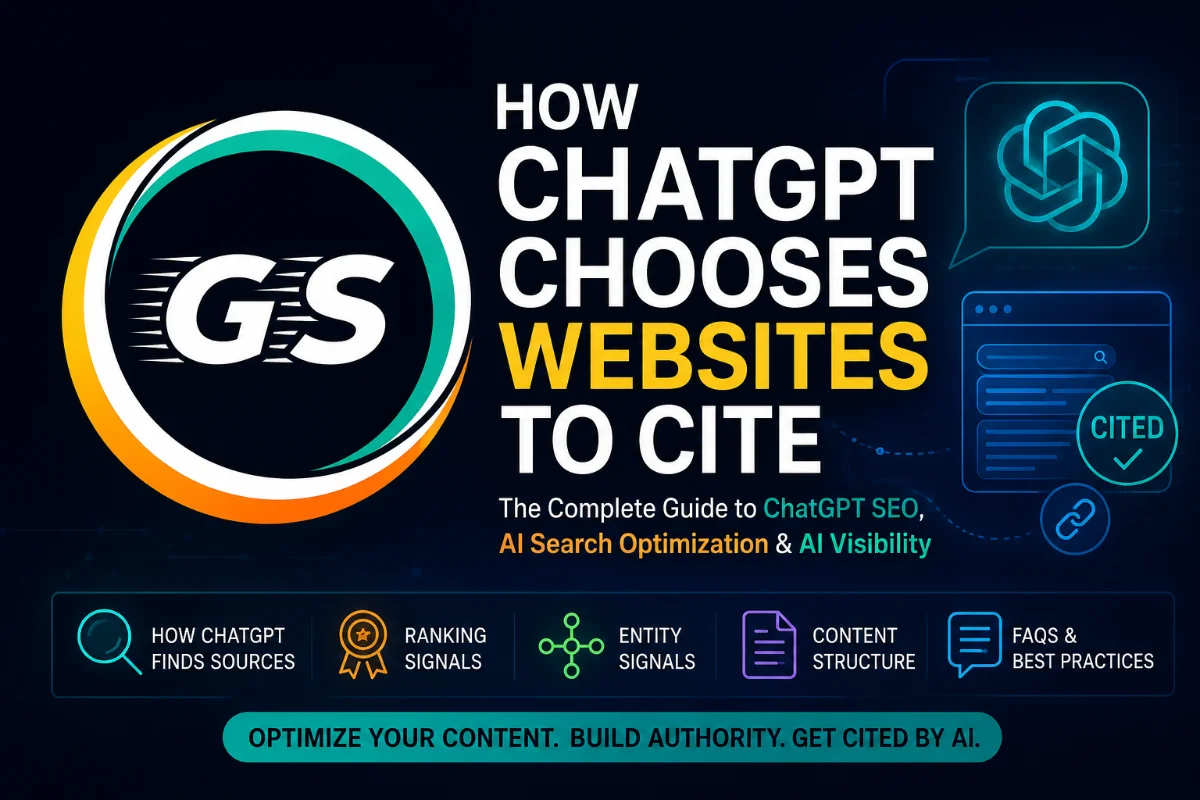
Artificial Intelligence is transforming how people discover information online. Instead of clicking through multiple search results, users increasingly rely on AI assistants like ChatGPT to provide direct answers. This shift has created a new challenge for marketers, businesses, and content creators: How does ChatGPT choose which websites to cite?
Understanding the factors behind ChatGPT citations is essential for improving ChatGPT SEO, increasing AI Visibility, and building a strong AI Search Optimization strategy.
Why ChatGPT Citations Matter ?
When ChatGPT references a website, it can:
- Increase brand visibility
- Drive qualified traffic
- Improve authority and trust
- Strengthen entity recognition
- Enhance AI search presence
As AI-powered search becomes mainstream, earning citations may become just as valuable as ranking on page one of traditional search engines.
How ChatGPT Finds Sources ?
ChatGPT can generate responses using its trained knowledge and, when web access is available, retrieve information from live web sources.
When selecting sources, AI systems typically evaluate:
1. Authority and Trustworthiness
Websites with strong reputations are more likely to be referenced.
Examples include:
- Government websites
- Educational institutions
- Industry-leading publications
- Well-known organizations
High-authority domains often provide reliable information that AI systems can trust.
2. Content Relevance
The source must directly answer the user's query.
For example:
If someone asks:
"What is AI Search Optimization?"
ChatGPT is more likely to cite pages that clearly explain AI Search Optimization rather than broad digital marketing content.
3. Information Quality
AI systems favor content that is:
- Accurate
- Updated
- Well-structured
- Factually consistent
- Supported by evidence
Poor-quality or misleading pages are less likely to receive citations.
4. Entity Recognition
Modern AI relies heavily on entities rather than keywords alone.
Entities include:
- People
- Brands
- Products
- Locations
- Organizations
- Concepts
A website that clearly establishes entity relationships has a greater chance of being cited.
The Ranking Signals Behind ChatGPT SEO
Although AI systems do not use Google's ranking algorithm directly, several familiar SEO signals influence AI visibility.
Content Depth
Comprehensive content performs better because it helps AI understand the topic completely.
Strong content should include:
- Definitions
- Examples
- Statistics
- Case studies
- FAQs
- Related concepts
Topical Authority
AI prefers sources that consistently publish high-quality content within a specific niche.
For example:
A website with 100 articles about AI SEO will generally be viewed as more authoritative than a general website with only one AI-related article.
Freshness
Updated content helps AI systems provide accurate answers.
Regularly update:
- Statistics
- Examples
- Industry trends
- Best practices
User Engagement Signals
While AI may not directly measure engagement, highly useful content often attracts:
- Backlinks
- Mentions
- Shares
- Discussions
These signals contribute to authority and visibility.
Why Entity Signals Are Becoming More Important ?
Entity optimization is one of the biggest shifts in modern SEO.
What Are Entity Signals?
Entity signals help AI understand:
- Who you are
- What your brand represents
- Which topics you own
- How you relate to other entities
For example: A brand discussing:
- AI SEO
- GEO SEO
- AI Search Optimization
- LLM Optimization
creates a semantic relationship between these concepts.
Over time, AI systems become more confident in associating that brand with those topics.
Strong Entity Signals Include
- Consistent brand mentions
- Author profiles
- Structured data markup
- Knowledge graph connections
- Industry citations
- Social proof
- Expert contributions
The stronger the entity profile, the greater the chance of AI recognition and citation.
Content Structure That Improves AI Visibility
Well-structured content is easier for AI systems to understand.
Use Clear Headings
Organize content with:
H1, H2, H3
This creates a logical hierarchy.
Answer Questions Directly
Place concise answers near the beginning of each section.
Example:
Question: What is AI Search Optimization?
Answer: AI Search Optimization is the practice of improving content so AI-powered systems can easily understand, retrieve, and cite it.
Add FAQ Sections
FAQs help AI identify common user questions and direct answers.
Use Lists and Tables
Structured formats improve readability and information extraction.
Include Original Insights
Unique research, data, and expert opinions increase citation potential.
Best Practices for ChatGPT SEO
To improve your chances of being cited by AI systems:
Create Topic Clusters
Build interconnected content around core subjects.
Example: Main Topic: ChatGPT SEO
Supporting articles:
- AI Search Optimization
- Entity SEO
- GEO SEO
- AI Visibility
- LLM Optimization
Build Brand Authority
Become known for a specific area of expertise.
Use Schema Markup
Implement:
- Article schema
- Organization schema
- FAQ schema
- Author schema
Earn High-Quality Mentions
Mentions from trusted websites strengthen entity recognition.
Keep Content Updated
AI systems favor current, accurate information.
Common Mistakes That Reduce AI Visibility
Avoid:
- Thin content
- Keyword stuffing
- Duplicate content
- Outdated information
- Weak author profiles
- Poor site structure
- Lack of entity optimization
These issues make it harder for AI systems to trust and reference your content.
The Future of AI Search Optimization
The future of search is moving from:
Keywords → Entities → Authority → Trust
Traditional SEO remains important, but AI-driven discovery increasingly rewards:
- Expertise
- Credibility
- Context
- Brand authority
- Structured information
Businesses that invest in AI Search Optimization today will be better positioned for the next generation of search experiences.
FAQs
What is ChatGPT SEO?
ChatGPT SEO is the process of optimizing content so AI systems can understand, reference, and potentially cite it in generated answers.
How does ChatGPT choose websites to cite?
ChatGPT typically prioritizes relevance, authority, trustworthiness, content quality, entity recognition, and structured information when selecting sources.
What are entity signals in SEO?
Entity signals help AI understand relationships between brands, people, organizations, and topics, improving recognition and visibility.
Does traditional SEO still matter?
Yes. Traditional SEO provides the foundation, but AI visibility increasingly depends on authority, entities, and content quality.
How can I improve AI visibility?
Focus on:
- High-quality content
- Strong entity optimization
- Topic authority
- Structured data
- Brand mentions
- Consistent expertise
Is AI Search Optimization different from SEO?
AI Search Optimization expands traditional SEO by focusing on how AI systems retrieve, understand, and cite information rather than only ranking web pages.
Geo SEO Lab — Built for the AI Search Era.
Don’t just rank on Google. Get cited by AI engines too.
Try the GEO SEO Analyzer for free today → geoseolab.com
Tags
About the Author

Aman Kesharwani
SEO Expert & Content Creator
Experienced digital marketing professional specializing in SEO strategies, content optimization, and data-driven marketing solutions. Passionate about helping businesses grow their online presence and achieve better search rankings.
Related Articles
View all posts
Why Different AI Platforms Recommend Different Brands
Why Different AI Platforms Recommend Different BrandsSame Question, Four Answers, Almost Zero OverlapA GEO SEO Lab ReportEditorial Disclosure: This re...
How AI Answers “Best Business Near Me” in 2026 | Local AI Search
How AI Answers "Best Business Near Me"Inside the Shortlist That Decides Who Gets the CallA GEO SEO Lab ReportEditorial Disclosure: This report introdu...
How to Improve AI Visibility in 2026 : 5 Fixes You Can Make Today
5 Things You Can Fix Today for Better AI Visibility No Redesign, No New Budget, Just Real Fixes You Can Ship This Afternoon Introduction Most GEO advice ...