Google AI Search May Be Changing Local SEO Forever
Google AI Search May Be Changing Local SEO ForeverWhy Your Google Business Profile, Reviews and Local Entity Signals Could Matter More in the AI Search...
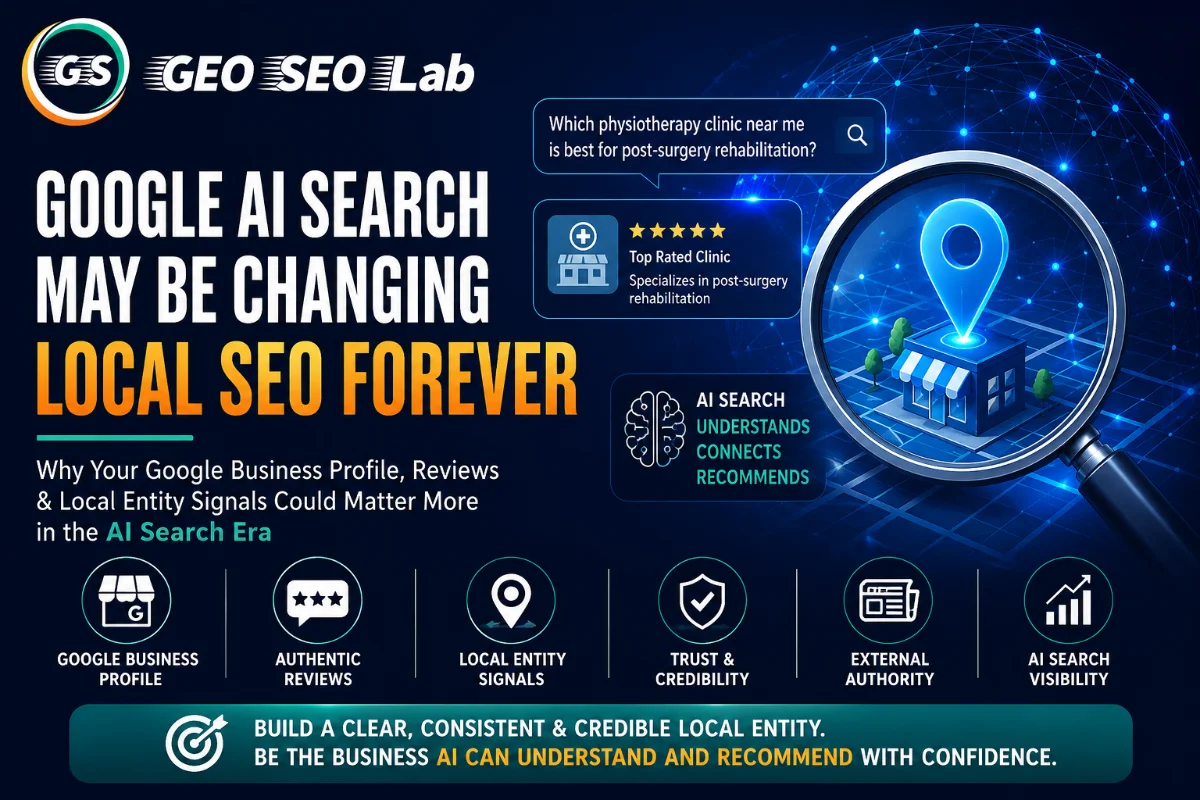
Google AI Search May Be Changing Local SEO Forever
Why Your Google Business Profile, Reviews and Local Entity Signals Could
Introduction: Local Search Is Entering a New Phase
For many years, local SEO was relatively easy to understand. A business wanted to appear when people searched for services in a particular area. The main goals were to maintain a strong Google Business Profile, collect genuine customer reviews, keep business information accurate, build local citations, improve website rankings and appear in Google Maps. These activities still matter, but the way people discover local businesses is changing.Imagine a restaurant that has been operating in the same neighborhood for more than ten years. It has a verified Google Business Profile, hundreds of customer reviews and a basic website. It has done reasonably well with traditional local SEO. Now imagine another restaurant that opened only recently. It has fewer reviews and may not have the same traditional search authority, but its online information is extremely consistent. Its website clearly explains its menu, its Google Business Profile describes its services accurately, its social profiles provide similar information, customers regularly mention its specialties in reviews and local publications have talked about the restaurant.Now imagine someone asking an AI search system a detailed question such as, "What is a good restaurant near me for a quiet dinner with vegetarian options and a comfortable atmosphere?"
The answer may not simply depend on which restaurant has the highest review count or which business appears first in a traditional search result. The AI system needs to understand what each restaurant actually offers, where each one is located, what customers say about the experience and whether independent sources support the information.
This is where local entity understanding becomes important.The business that has created a clearer digital identity may have an advantage because the AI system has more reliable information from which to construct its answer.
This does not mean traditional local SEO is disappearing. Google Maps, rankings, reviews, proximity, relevance and Business Profile optimization remain extremely important. The change is that local businesses now need to think beyond individual ranking factors.They need to think about the complete picture that exists around their business.
That complete picture can be called the local entity.A local entity is the digital understanding of a business that develops from information available across its website, Google Business Profile, review platforms, directories, social profiles, media coverage, industry sources, community references and other online sources.When those sources tell the same accurate story, the business becomes easier to understand.When those sources contradict each other, the business becomes harder to understand.This distinction could become increasingly important as search engines and AI systems move from simply displaying results toward generating answers.
How AI Is Changing Local Business Discovery
From Search Results to Direct Answers
Traditional search usually gives users a collection of results. A person searches for a dentist, restaurant, hotel, lawyer, clinic or repair service and receives a combination of map listings, organic results, advertisements and business profiles.
The user then has to compare the options.AI powered search changes this process because the system can interpret the question and produce a synthesized answer. Instead of simply showing ten websites, an AI system may explain which businesses appear relevant and why.Consider a query such as, "Which physiotherapy clinic near me is suitable for someone recovering from knee surgery?"This query contains several pieces of information. The user wants a local business. The business needs to provide physiotherapy. The user has a specific recovery need. The recommendation should therefore be based on more than distance.The AI system needs to connect location, service, specialization, reputation and potentially customer experience.This is very different from a simple search such as "physiotherapy near me."The more conversational search becomes, the more important business understanding becomes.
Why Traditional Rankings Are Not Enough
A strong traditional ranking is valuable, but ranking does not automatically mean an AI system understands every aspect of the business.A business might rank highly for "dentist in Bhopal" but have very little useful information about its specific treatments, practitioner expertise or customer experience.Another business might rank slightly lower but have detailed service information, consistent listings, strong professional references and reviews that repeatedly mention specific treatments.For a simple keyword search, both businesses may compete primarily through ranking signals.
For a detailed AI query, the second business may provide a clearer information profile.
This does not mean lower ranking businesses will automatically outperform higher ranking businesses in AI search. It means the two concepts should not be treated as identical.Traditional SEO asks whether a page or business can rank for a query.AI search increasingly asks whether a business can be understood as a suitable answer to a more complex request.
That difference is important for local businesses.
The Rise of Conversational Local Queries
People do not always search using short keywords anymore. They increasingly ask complete questions.
Someone may ask, "Where can I find a good family dentist near downtown?"
Another person may ask, "Which dermatology clinic nearby has experience with adult acne?"
Someone else may ask, "What is the best Indian restaurant around me for a quiet family dinner?"
These queries contain intent that traditional keyword matching does not fully represent.
The AI system needs to understand the meaning behind the query.
This makes detailed business information more valuable.
A business that clearly explains its services, location, expertise, customer experience and areas of specialization gives AI systems more useful information to work with.
Understanding the Local Entity
Your Business Is More Than Your Website
A common mistake in local SEO is thinking of the website as the complete digital identity of the business.
It is not.Your website is one important part of your identity, but your business also exists across many other platforms.
Your Google Business Profile contains structured information about your business. Review platforms contain customer experiences. Local directories provide additional business information. Industry websites can establish professional relevance. Local newspapers and community websites can provide independent recognition. Social media profiles can reinforce services, location and brand identity.All of these sources contribute to the broader understanding of your business.Imagine an AI system trying to understand a local dental clinic.It may find the clinic website, Google Business Profile, customer reviews, local directories, professional association information and local media references.
If all of these sources describe the clinic consistently, the system receives a relatively clear picture.
If one source says the clinic specializes in cosmetic dentistry, another says it focuses mainly on pediatric dentistry and another lists a different address, the overall picture becomes less clear.
This is why entity consistency matters.
Entity Clarity and Information Confidence
AI systems depend on information. When information is incomplete or contradictory, the system has to deal with uncertainty.A clear business entity reduces that uncertainty.The business name should be consistent.
The address should be accurate.The phone number should be current.The website should connect correctly.
The category should accurately represent the business.Services should be described consistently.
Important expertise should be supported by relevant information.Customer experiences should provide independent evidence.External references should reinforce the identity.This does not guarantee AI visibility, but it creates a stronger information foundation.
The Six Core Areas of Local Entity Strength
A strong local entity can be understood through six connected areas.The first is identity consistency.The second is topical relevance.The third is customer experience evidence.The fourth is external authority.The fifth is geographical relevance.The sixth is profile completeness and freshness.These areas work together rather than independently.
A business can have a complete Google Business Profile but weak external recognition.It can have excellent reviews but inconsistent business information.It can have a strong website but poor local relevance.The goal is not perfection in one area. The goal is coherence across the entire ecosystem.
Identity Consistency Is the Foundation
Why Basic Information Still Matters
The most basic business information is often the most important place to start.
Business name, address, phone number and website information should be accurate wherever the business appears online.This sounds simple, but businesses frequently accumulate inconsistencies over several years.
A business may move to a new location but forget to update an old directory.
A phone number may change while several third party websites still display the previous number.
A business name may appear differently on social media, directories and the website.
These differences can create uncertainty.
Business Name Consistency
The business name should be represented accurately and consistently.
A business should not create unnecessary variations simply because it believes different versions might help SEO.
If the official business name is "ABC Dental Clinic," the business should not randomly use "ABC Best Dental Clinic," "ABC Dental Centre" and "ABC Dental Specialists" across different platforms unless those names genuinely represent separate entities or official branding.
Consistency makes the identity easier to connect.
Address Consistency
Address information is particularly important for local businesses.
The complete address should be accurate and should correspond with the real business location.
Different formatting is not always a serious problem, but significant differences can create confusion.
Businesses should review old listings after relocation and update information that is no longer correct.
Phone Number Consistency
The primary customer phone number should be current.
Old numbers should be removed where possible.
If different departments use different phone numbers, the relationship between those numbers should be clear rather than creating conflicting information about the business.
Website Consistency
All important profiles should connect to the correct website.
Old domains, outdated pages and broken URLs should be reviewed.
If the business changed domains, the old references should be updated where possible.
A consistent connection between business profiles and the official website helps reinforce identity.
Topical Relevance Tells AI What Your Business Does
Being Known for the Right Services
A business should not only establish who it is. It should clearly communicate what it does.This is where topical relevance becomes important.Consider a dental practice.If the only service information available is "Dental Care," an AI system receives limited information.If the business clearly describes dental implants, root canal treatment, cosmetic dentistry, orthodontic services and preventive care, the system receives a more detailed picture.The same principle applies to almost every industry.A hotel can communicate family accommodation, business travel facilities, conference rooms and local tourism support.A law firm can communicate its practice areas.A restaurant can explain cuisine, dietary options, dining style and specialties.A healthcare clinic can describe relevant treatments and practitioner expertise.
Alignment Across Platforms
The strongest topical signals are not created by repeating keywords everywhere.They are created when different sources naturally support the same business description.The website might explain a service in detail.The Google Business Profile may list that service.Customers may mention that service in reviews.A local publication may discuss the business in relation to that service.An industry directory may categorize the business accordingly.When these signals align, the business becomes easier to understand.
Avoiding Overstatement
There is an important difference between clarifying expertise and exaggerating expertise.A business should not claim services it does not actually provide just because those services have search demand.AI visibility should be built around factual information.False claims can damage trust and create inaccurate entity associations.The strongest long term strategy is to make the online identity reflect the real business.
Why Reviews Matter in Local AI Search
Reviews Are Independent Evidence
Reviews are different from website content because businesses do not fully control what customers say.A business can describe itself as professional, friendly and experienced.A customer can independently describe what actually happened.
That makes reviews valuable evidence.Reviews can communicate service quality, staff behavior, expertise, atmosphere, convenience and specific experiences.They can also reveal language that businesses themselves might not use.
Specific Reviews Provide Stronger Context
A review saying "Great service" provides positive sentiment but limited detail.A review describing a specific service, the reason the customer visited and the experience they had provides much richer information.For example, a customer might explain that a physiotherapy clinic helped them recover after knee surgery.Another customer might mention treatment for a sports injury.Another might discuss the clinic's approach to elderly patients.These reviews create a broader picture of the business.
Review Themes Can Improve Content Strategy
Businesses should not only count reviews.They should read them.If customers repeatedly mention a particular service, that information can help identify an important business strength.If customers repeatedly praise a particular practitioner, that may indicate expertise worth explaining on the website.If customers frequently mention convenience or accessibility, those qualities may deserve clearer communication.Reviews can therefore become a source of business intelligence as well as reputation evidence.
Never Manufacture Reviews
Buying reviews, creating fake reviews or manipulating customers into producing misleading feedback creates serious risks.
The objective should be authentic customer feedback.A business should focus on delivering a strong experience and making it easy for customers to share honest opinions.That approach is more sustainable and more credible.
External Authority Makes the Entity Stronger
Why Independent Recognition Matters
A business naturally speaks positively about itself.That is expected.Independent sources can provide another level of credibility.When a respected local publication discusses a business, a professional association lists it or a community organization references it, those sources contribute external confirmation.This is especially important for businesses operating in trust sensitive industries.
Local Media Recognition
Local newspapers, magazines, community websites and respected local publications can provide useful recognition.
A business should not approach media only with the goal of obtaining a link.It should have something genuinely useful to contribute.A healthcare professional can provide expert commentary.A restaurant owner can contribute to a local food story.A technology company can explain an important technology trend.A local business can participate in community initiatives.Real contributions create stronger relationships than artificial promotional activity.
Professional Associations
Professional associations can strengthen the credibility of businesses and professionals.Membership information, professional participation, speaking opportunities and published contributions can all contribute to the wider entity picture.The important factor is genuine involvement.Simply adding a logo to a website is less meaningful than actually participating in the professional ecosystem.
Community Participation
Local businesses are part of communities.Sponsoring local events, supporting educational programs, participating in community activities and contributing expertise can create genuine local recognition.This is not only an SEO activity.
It can improve the real reputation of the business while also creating external references.
Geographical Signals Become More Important
Local SEO Is About Place
Local businesses depend on geography.A customer does not simply want a dentist. They want a dentist they can realistically visit.They do not simply want a restaurant. They want a restaurant in a particular area.This makes geographical information extremely important.
Location Should Be More Than a City Name
Simply adding a city name to every page does not create strong local relevance.Useful local content should demonstrate actual knowledge of the area.A restaurant can discuss local dining habits.A healthcare clinic can provide information relevant to the community.A local service company can explain common problems experienced by customers in the area.The content should be genuinely useful rather than artificially optimized.
Service Area Businesses
Businesses that serve multiple locations need to communicate their service areas carefully.The website should make it clear where the business actually operates.Each location should have accurate information when dedicated location pages are used.Businesses should avoid creating large numbers of nearly identical location pages with only city names changed.
Useful local information is more valuable than repetitive location content.
Google Business Profile Remains Foundational
The Profile Is a Major Local Information Source
Google Business Profile remains one of the most important structured sources of information about a local business.
Businesses should treat the profile as a living representation of the organization rather than a form that is completed once and forgotten.
Categories Matter
The primary category should accurately represent the core nature of the business.Secondary categories can provide additional context when they genuinely apply.Businesses should not select unrelated categories simply because they appear to have search demand.Accurate classification is more useful than aggressive classification.
Services Should Be Complete
Every genuine service should be represented where appropriate.Service information should use clear language that customers understand.The website should provide deeper information when a service requires explanation.
This creates a connection between structured business information and detailed website content.
Business Description
The business description should explain what the organization does, who it serves and what makes its offering relevant.
It should provide useful information rather than simply repeating promotional phrases.A clear description gives users and systems a better understanding of the business.
Photos and Visual Information
Photos can help customers understand a business before visiting.For a restaurant, this might include the dining area, food and exterior.For a clinic, it might include the facility and professional environment.For a hotel, it might include rooms and common areas.For a retail store, it might include products and the physical location.Fresh and accurate visual information can make the profile more useful.
Questions and Answers
The Q and A area can address common customer questions.Businesses should ensure that information provided there is accurate and current.Questions about services, appointments, parking, accessibility, payment methods and other practical matters can be useful depending on the business.
Building the Website for Local Entity Understanding
The Website Provides Depth
A Business Profile provides structured information.The website can provide depth.This is where businesses can explain services, expertise, processes, customer questions and local knowledge in much greater detail.A strong local website should not simply contain one generic service page.It should provide useful information around the services the business genuinely offers.
Service Pages
Each important service can have dedicated content when there is enough useful information to justify it.A healthcare practice may explain different treatments.A legal firm may explain different practice areas.A home service company may explain different types of repairs.A restaurant may explain its menu categories and dining experience.The goal is not to create pages simply for keywords.The goal is to answer real questions.
Practitioner and Team Information
For professional services and healthcare organizations, people matter.Customers often want to know who will provide the service.Practitioner profiles can explain qualifications, professional experience, areas of expertise and relevant credentials.
This can help users understand the organization beyond its brand name.
Local Questions and Useful Information
A strong local website should answer the questions customers actually have.A patient may want to know what happens during a consultation.A restaurant customer may want to know whether vegetarian dishes are available.A traveler may want to know about parking and check in.A legal client may want to understand how an initial consultation works.
This type of information can make a website useful while also strengthening the overall entity picture.
Healthcare and Other High Trust Local Categories
Why Healthcare Is Different
Healthcare searches often involve higher levels of trust.When someone searches for a restaurant, a poor recommendation may result in an inconvenient meal.When someone searches for a doctor or clinic, the decision can have much greater consequences.This means users may ask more detailed questions.They may want information about specialization, experience, location, patient feedback and professional credentials.AI systems also need enough reliable information to provide responsible answers.
Healthcare Entity Signals
A healthcare practice should clearly communicate its services, practitioners, qualifications, location and patient experience.
Relevant professional directories and licensing information can also be important.The website should provide useful information without making unsupported medical claims.Reviews should remain authentic and should not be manipulated.
Detailed Healthcare Queries
Imagine a user asking, "Which dermatologist near me has experience treating adult acne?"The AI system must understand the location, medical specialty and specific treatment need.A clinic that clearly communicates its dermatology services and relevant expertise across several trustworthy sources creates a stronger information profile than a clinic whose online presence only says "Dermatology Clinic."This is one reason high trust local businesses should think carefully about entity clarity.
Conducting a Local AI Entity Audit
Start With an Audit
Before creating more content or building more listings, businesses should understand their existing digital footprint.
An audit identifies what is correct, what is missing and what is contradictory.
This prevents businesses from investing time in creating new signals while old problems remain unresolved.
Identity Audit
Begin by searching for the business name.
Review Google Business Profile, website, social profiles, directories, review websites, industry websites and local publications.Compare the business name, address, phone number, website and category information.
Any significant inconsistency should be documented.
Topical Audit
Next, examine what the business is known for online.Review services on the website.Review services in the Business Profile.Read customer reviews.Review external descriptions.Look for missing services, conflicting descriptions and unclear areas of expertise.
Authority Audit
Search the business name across the wider web.Identify respected publications, industry references, community websites and professional sources.Assess whether these references are accurate and relevant.The objective is not to collect hundreds of low quality mentions.The objective is to understand the quality of independent recognition.
Reputation Audit
Read customer reviews carefully.Look for recurring themes.Customers may repeatedly mention specific services, staff members, outcomes, convenience factors or problems.These patterns can reveal how the business is actually perceived.
AI Visibility Audit
Finally, test the business directly in AI search environments.Ask realistic questions that customers might use.
For example, ask which businesses provide a particular service in a particular area.Ask which business might be suitable for a particular need.Ask comparison questions.Ask what customers say about a particular business.
Then record what the AI system says.The goal is to identify whether the business appears, how accurately it is described and which sources appear to influence the answer.
Fixing Entity Problems
Correct Accuracy Problems FirstThe first priority should always be factual accuracy.
Incorrect addresses, phone numbers, business hours and business categories should be corrected before investing heavily in additional marketing.There is little value in creating more information if the foundation remains inaccurate.
Resolve Major Inconsistencies
After accuracy issues are fixed, resolve conflicting descriptions.Make sure important platforms communicate the same basic business identity.The objective is not to make every sentence identical.The objective is to make sure the underlying facts agree.
Complete Important Profiles
Business profiles should contain the information customers need.Services, hours, descriptions, photos and relevant attributes should be reviewed.Incomplete profiles represent missed opportunities to communicate useful information.
Improve Topical Depth
Once the foundation is accurate, strengthen website content around real services and expertise.This may involve improving existing pages or creating new pages where genuine information exists.
Build External Recognition Over Time
External authority cannot usually be created overnight.It develops through relationships, expertise, community participation, professional involvement and useful contributions.This should therefore be treated as a long term strategy.
Review Management the Right Way
Reviews Are a Business Feedback System
Reviews should not be treated only as a ranking number.They provide information about what customers appreciate and what they dislike.A business that studies reviews can identify opportunities for improvement.
Encourage Honest Feedback
Businesses can politely invite customers to leave honest reviews after a completed service.The request should not manipulate the customer into writing only positive feedback.The objective should be genuine feedback.
Respond Professionally
Businesses should respond to reviews in a professional manner.Positive reviews can receive appreciation.
Negative reviews should be handled calmly and constructively.A thoughtful response can demonstrate that the business listens and takes customer concerns seriously.
Learn From Repeated Complaints
If several customers mention the same issue, the problem should not be treated simply as a reputation problem.
It may be an operational problem.Improving the actual customer experience is often more valuable than trying to manage the appearance of the reviews.
Part Fourteen: Building Local Authority Through Real Contributions
Give the Community Something Useful
Local authority grows when businesses contribute something meaningful.A healthcare provider can educate the community.A lawyer can explain changes in relevant laws.A restaurant can participate in local food events.A technology company can provide useful information to local businesses.These activities create genuine relationships and can naturally lead to external recognition.
Work With Local Publications
Businesses can build relationships with journalists and editors.Instead of asking only for promotional coverage, they can provide useful expertise when relevant stories appear.This creates a more sustainable media relationship.
Participate in Professional Events
Speaking at professional events, contributing to industry publications and participating in associations can strengthen professional recognition.These activities are useful beyond SEO because they also build credibility with customers and peers.
Support Community Activities
Local businesses can participate in community programs, educational activities and local events.
When those activities are genuinely connected to the business and community, they can produce meaningful local recognition.
Measuring AI Visibility
Traditional Metrics Still Matter
Businesses should continue monitoring organic rankings, Google Maps visibility, Business Profile interactions, website traffic, calls, direction requests and conversions.
AI search does not make these metrics irrelevant.
It adds another layer.
AI Query Monitoring
Businesses can maintain a set of important customer queries and test them regularly across relevant AI search systems.
The queries should reflect actual customer intent rather than artificial keyword variations.
For example, a business may test service and location questions, specific need questions, comparison questions and reputation questions.
Track Accuracy
Visibility alone is not enough.
A business may appear in an AI answer but be described incorrectly.Perhaps the system says it provides a service that it does not offer.Perhaps an important specialization is missing.Perhaps the address is outdated.These errors should be documented.
Track Competitors
Businesses should also observe how competitors appear in AI responses.This can reveal gaps in the market.
If competitors are repeatedly mentioned for a particular service and your business is not, the issue may be lack of topical clarity, weak external evidence or simply stronger competitor recognition.The purpose is not to copy competitors.
It is to understand the information environment.
The Future of Local Search
Search Is Becoming More Conversational
The direction of search is increasingly conversational.People want answers rather than lists of links.They want recommendations rather than only rankings.They want search systems to understand context.This trend creates new opportunities for businesses with strong information ecosystems.
Entity Strength Can Compound
A business that consistently builds accurate information, authentic reviews, professional recognition and useful content over several years can create a stronger reputation than a business that starts only after competitors have already built substantial recognition.This is why early investment matters.Entity development is not normally an overnight activity.
Local SEO and Local GEO Will Work Together
Local GEO should not be viewed as a replacement for local SEO.Traditional local SEO remains the foundation.
Google Business Profile optimization remains important.Reviews remain important.Website quality remains important.
Local relevance remains important.The difference is that businesses now need to consider how all of these signals work together to create an understandable entity.
The Complete Local GEO Checklist
Entity Foundation
The business name should be accurate and consistent across important platforms.The address should be current and consistently represented.The phone number should be correct.The website URL should point to the official website.
The business category should accurately represent the organization.Old information should be identified and corrected.
Google Business Profile
The Business Profile should be claimed and verified.The primary category should accurately represent the business.
Relevant services should be listed.The business description should be useful and accurate.Business hours should be current.Special hours should be updated when necessary.Photos should represent the real business.Relevant attributes should be completed.Questions and answers should contain accurate information.
Website
Important services should have useful content.Location information should be clear.Business information should match the Business Profile.Practitioner and team information should be accurate.Customer questions should be answered.
Internal links should connect related information.Relevant structured data should be implemented correctly.
Reviews
Customers should be encouraged to provide honest feedback.Reviews should be monitored regularly.Reviews should be answered professionally.Recurring themes should be analyzed.Review insights should inform business and content decisions.Fake or manipulated reviews should never be used.
External Authority
Important industry directories should contain accurate information.Professional memberships should be represented accurately.Local media relationships should be developed.Community participation should be documented when appropriate.Professional contribution opportunities should be explored.
AI Visibility
A realistic customer query set should be created.Queries should be tested regularly.Competitor visibility should be monitored.Incorrect AI descriptions should be documented.Changes in AI visibility should be compared with traditional local SEO performance.
Conclusion: Local Search Is Becoming an Understanding Economy
Local search has always been connected to trust.A customer looking for a local business wants to know whether that business can solve a specific problem in a specific location.Traditional local SEO helped businesses communicate that information through rankings, maps, reviews and business profiles.AI powered search introduces another layer.The system may now need to understand the business before recommending it.That makes the complete digital identity of the business increasingly important.The strongest local businesses will not treat their online presence as a collection of disconnected profiles.They will treat it as one connected identity.Their website will explain what they actually do.
Their Business Profile will provide accurate structured information.Their reviews will provide genuine customer evidence.Their professional profiles will reinforce expertise.Their local media coverage will provide independent recognition.Their community participation will strengthen local relevance.Their content will answer real customer questions.
All of these signals will contribute to a clearer understanding of the organization.The most important question for local businesses is therefore changing.It is no longer only, "Can people find my business?"The larger question is, "Does the information ecosystem around my business make it easy for search engines and AI systems to understand who I am, what I do, where I operate and why customers should trust me?"That is the core idea behind local GEO.It does not replace local SEO.It expands the way businesses think about local visibility.Businesses that start building this clarity today may be better positioned as AI mediated discovery becomes a larger part of how customers find local services.The future of local search may not belong simply to the business with the highest ranking.It may increasingly belong to the business with the clearest, most consistent and most credible entity.
Frequently Asked Questions
Find answers to common questions about this topic
About the Author

Aman Kesharwani
SEO Expert & Content Creator
Experienced digital marketing professional specializing in SEO strategies, content optimization, and data-driven marketing solutions. Passionate about helping businesses grow their online presence and achieve better search rankings.
Related Articles
View all posts
PR Is Becoming Part of GEO: Why Earned Media May Matter More in AI Search
PR Is Becoming Part of GEO: Why Earned Media May Matter More in AI SearchWhy the Brands That Win in AI Discovery Will Be the Ones the Entire Web Vouch...

How to Turn FAQ Content Into GEO Content
How to Turn FAQ Content Into GEO ContentThink about the last time you searched for a complex product or a nuanced troubleshooting step. Did you type a...
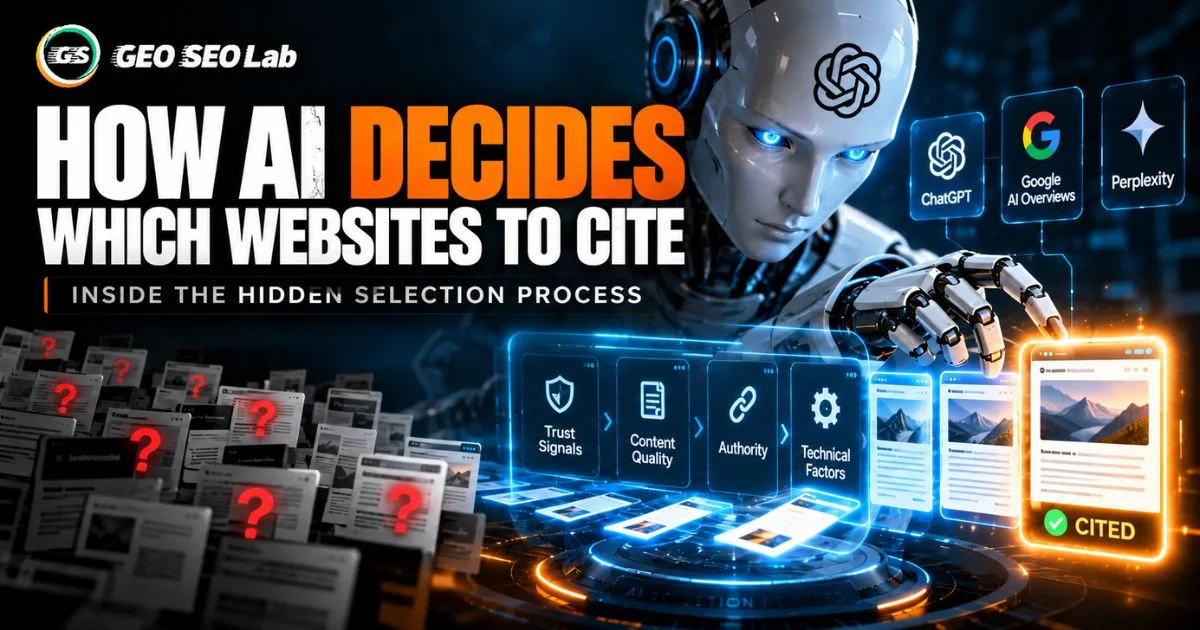
How AI Decides Which Websites to Cite: Inside the Hidden Selection Process
Introduction: The New Gatekeepers of VisibilityPicture this. Someone types a question into ChatGPT, Perplexity, or Google's AI Overview box. Within se...