The EU AI Transparency Rules Explained: What Every Business Needs to Know in 2026
Discover how the EU AI Transparency Rules are reshaping AI governance, digital marketing, SEO, and AI search visibility. Learn why businesses should prioritize responsible AI, transparency, and trust to stay competitive in the AI era.

The EU's New AI Transparency Rules: Why Every Business Needs to Prepare for the Next Era of AI Trust
Why AI Transparency Is Becoming More Important Than Ever
Artificial intelligence is changing the way businesses create content, communicate with customers, and build their online presence. Only a few years ago, AI tools were viewed mainly as productivity boosters that could help teams write articles faster, generate marketing campaigns, answer customer questions, and automate repetitive work. Today, AI has become a core part of business operations across almost every industry.At the same time, another major shift is taking place. Governments, technology companies, search engines, and consumers are all beginning to ask the same question: how can people trust content created with artificial intelligence?That question has become one of the biggest challenges of the digital age. Businesses are no longer judged only by how quickly they publish content or how effectively they use AI. They are increasingly judged by how responsibly they use it.The latest transparency requirements introduced under the European Union's AI Act represent an important milestone in this journey. While the regulation applies within a legal framework, its influence reaches far beyond Europe because global businesses, AI platforms, and digital publishers are all moving toward higher standards of accountability.This is no longer simply a legal discussion reserved for compliance teams. It is becoming a business conversation involving marketers, content creators, SEO professionals, executives, developers, customer support teams, and every department that uses artificial intelligence in its daily workflow.
For organizations investing heavily in digital marketing, search visibility, and AI-powered content creation, understanding these developments is becoming essential for long-term growth.
The Digital World Is Entering a New Trust Economy
The internet has changed dramatically over the past decade. Earlier, websites competed mainly on keywords, backlinks, technical SEO, and content volume. Businesses focused on publishing more pages, targeting more search terms, and increasing rankings through traditional optimization strategies.Today, that environment looks very different.Millions of AI-generated articles are published every single day. Images can be created within seconds. Videos can be generated without cameras. Customer conversations are handled by intelligent assistants. Product descriptions are written automatically. Marketing emails are produced instantly.While these innovations offer enormous advantages, they also introduce a new challenge.If almost anyone can create unlimited amounts of convincing content using AI, how do users know which information deserves their trust?This question affects everyone involved in the digital ecosystem.Consumers want reliable information.Businesses want to protect their reputation.Search engines want accurate answers.AI assistants want trustworthy sources.Governments want responsible AI adoption.Although each group approaches the issue differently, they all arrive at the same destination. Trust has become the most valuable asset in the AI era.That is exactly why AI transparency has moved from being a technical discussion into a strategic business priority.
From AI Innovation to AI Accountability
The journey of artificial intelligence in business has evolved remarkably quickly.
Only a few years ago, organizations were experimenting with AI simply to discover what it could accomplish. Teams tested content generation, customer service automation, coding assistance, data analysis, and image creation. The focus was almost entirely on capability.As confidence in these tools increased, businesses shifted toward implementation. AI became part of everyday workflows. Marketing departments relied on it for blogs and advertisements. Sales teams used it to prepare proposals. Human resource departments explored recruitment automation. Developers accelerated software production with coding assistants.
The conversation centered on productivity.Now another transition is taking place.Organizations are asking completely different questions.Who reviews AI-generated content before publication?How accurate is the information produced?
Who takes responsibility if the content contains errors?Should readers know when AI contributed to an article?
How should businesses document their AI usage?These questions are no longer theoretical. They influence business reputation, customer confidence, regulatory readiness, and long-term brand credibility.
Artificial intelligence is no longer judged only by what it can create. It is increasingly evaluated by how responsibly it is managed.
Why the EU AI Act Matters Beyond Europe
Many organizations assume that regulations introduced in Europe only affect European companies.
That assumption overlooks how modern digital platforms operate.A business located anywhere in the world can publish content that reaches European users. AI-powered software developed outside Europe may still serve customers within European markets. Digital marketing campaigns frequently cross national borders without businesses even realizing it.
Because online services are global, expectations around responsible AI usage also become global.
History provides an excellent example.When GDPR introduced stronger privacy standards several years ago, companies around the world adjusted their websites, privacy policies, cookie banners, and data handling practices. Even businesses with limited European operations adopted many of those standards because customers everywhere began expecting greater transparency.The same pattern is emerging with AI governance.
As large technology companies update their AI systems, disclosure practices, content labeling methods, and internal governance policies, these changes naturally spread across international markets.
Customers also carry expectations with them.
Someone who becomes accustomed to transparent AI disclosures while using digital services in one country is likely to expect similar openness from companies elsewhere.
For that reason, many organizations view the latest AI transparency requirements not simply as legal obligations but as indicators of where the global digital economy is heading.
Preparing early often proves easier than reacting later when customer expectations have already changed.
Understanding AI Transparency Without the Legal Complexity
Many people hear the phrase "AI transparency" and immediately imagine complicated legal documents filled with technical terminology.The practical idea is actually much simpler.Transparency means helping users understand when artificial intelligence has played a meaningful role in creating or modifying content, particularly when that information could influence how people interpret what they see.The goal is not to discourage AI adoption.The objective is to encourage responsible use.Businesses should not feel that AI itself is something to hide. Modern organizations benefit enormously from AI-powered tools, and these technologies will continue expanding across industries.
What matters is maintaining honesty about how those tools are used while ensuring that human oversight remains part of important decisions.
Transparency also encourages stronger editorial standards.When organizations know they must stand behind AI-assisted content, they naturally invest more time reviewing facts,verifying claims, checking accuracy, and maintaining quality.In that sense, transparency becomes more than compliance.It becomes a competitive advantage built around credibility.
Why Marketing Teams Are at the Center of This Transformation
Few departments have embraced artificial intelligence faster than marketing.
Modern marketers use AI to brainstorm headlines, write articles, generate product descriptions, create social media campaigns, produce advertising copy, personalize emails, analyze customer behavior, and improve workflow efficiency.
The technology saves countless hours while allowing teams to focus on creativity and strategy.
However, because marketing produces public-facing content, it also becomes one of the first areas where AI governance matters.Every published article represents a brand.Every product page shapes customer perception.Every email influences trust.Every landing page contributes to business credibility.If AI contributes significantly to these materials, organizations need clear internal processes that ensure quality remains high regardless of how the first draft was created.
Human editors continue playing an essential role.Reviewing factual accuracy, improving clarity, verifying statistics, checking tone, and ensuring brand consistency cannot become optional simply because AI generated an initial version.
Successful organizations increasingly treat AI as a powerful assistant rather than an independent author.
That distinction makes an enormous difference when building long-term trust with audiences.
How AI Transparency Is Influencing SEO and AI Search
Search engine optimization has changed significantly over the past few years. Traditional SEO focused on helping web pages rank higher by improving keywords, backlinks, page speed, internal linking, and technical performance. Those factors are still important, but they are no longer the complete picture.
Today, AI-powered search experiences are changing how people discover information. Instead of clicking through multiple websites, users increasingly receive direct answers generated from trusted sources. This means content is no longer competing only for search rankings. It is competing to become a reliable source that AI systems choose to reference.
That shift places greater importance on credibility.
Search visibility is becoming closely connected to trust signals. Websites that consistently publish accurate information, maintain expert oversight, update outdated content, and demonstrate real experience naturally become stronger candidates for AI-generated answers.
The growing emphasis on transparency follows the same direction. Businesses that document responsible AI usage and maintain editorial quality create stronger foundations for long-term visibility because both search platforms and users value information they can confidently rely upon.
Instead of asking how much content can be produced every week, successful organizations are beginning to ask a better question.
Can people trust what we publish?
That single question now influences content strategy more than ever before.
Why Human Expertise Still Matters in an AI-Driven World
Artificial intelligence can organize information remarkably quickly.
It can summarize reports, rewrite articles, generate ideas, improve grammar, and explain complicated topics within seconds.
Despite those impressive abilities, AI still depends on information created by people.
Original research comes from experts.Real case studies come from businesses.Professional experience comes from years of practical work.Customer success stories come from actual projects.Industry insights come from people who spend years solving real-world problems.This distinction becomes increasingly important as AI-generated content becomes more common.If thousands of websites simply publish slightly different versions of information already available online, very little new knowledge is being created.Search platforms recognize this difference.
AI systems also recognize it.Organizations that invest in genuine expertise naturally create stronger digital authority because they contribute something unique rather than repeating existing information.
That is why original thinking has become one of the strongest competitive advantages available in content marketing.
Artificial intelligence may help organize ideas, but authentic experience continues to create the knowledge that truly matters.
Editorial Review Is Becoming More Valuable Than Content Production
For many years, digital marketing rewarded speed.Publishing more blogs often meant attracting more traffic.
Creating more landing pages increased keyword coverage.Posting more frequently helped maintain visibility.
Artificial intelligence made this process even faster.However, speed alone no longer guarantees success.Publishing inaccurate information quickly can damage credibility much faster than publishing high-quality information slowly.
This is why editorial review is becoming one of the most valuable stages in modern content creation.
An effective review process involves much more than correcting spelling mistakes.
Editors verify statistics.They evaluate whether claims are supported by evidence.They improve clarity.They remove misleading statements.They ensure articles reflect genuine expertise instead of sounding generic.Most importantly, they protect the reputation of the organization publishing the content.AI can produce a strong first draft, but thoughtful human editing transforms that draft into something readers can genuinely trust.Businesses that understand this difference usually produce fewer mistakes, stronger customer confidence, and better long-term visibility across search platforms.
Why Businesses Need Clear AI Governance
Many organizations adopt artificial intelligence gradually.One team starts using AI for blog writing.Another begins generating marketing emails.Customer support experiments with AI assistants.Developers introduce coding tools.
Sales representatives automate proposals.Before long, AI becomes integrated into nearly every department.
The challenge is that these changes often happen independently.Without shared guidelines, different teams may follow completely different standards.Some review every AI-generated document carefully.Others publish content with minimal oversight.Some document AI usage.Others never record it.This inconsistency creates unnecessary risks.
A clear AI governance framework brings everyone onto the same page.Instead of limiting innovation, governance creates confidence.Employees know which tools are appropriate.Managers understand review responsibilities.
Leadership gains visibility into AI adoption.Customers benefit from higher quality content.Good governance is not about slowing down innovation.It is about ensuring innovation remains responsible as organizations continue expanding their use of artificial intelligence.
AI Search Rewards Organizations That Build Trust
Traditional search engines primarily ranked web pages.AI-powered search increasingly evaluates organizations.This difference is significant.AI systems attempt to understand who created the information, whether that organization has expertise in the topic, whether its content remains accurate over time, and whether multiple trusted sources support similar conclusions.Because of this, organizational reputation has become just as important as individual articles.
Businesses that consistently publish expert insights build stronger recognition across AI platforms.
Organizations that maintain updated information strengthen confidence.
Companies that invest in transparent communication naturally become easier for AI systems to understand.
Trust grows gradually.Every accurate article contributes.Every verified case study helps.Every expert interview adds credibility.Every updated page reinforces reliability.None of these actions produce overnight success, but together they create an ecosystem of trust that becomes increasingly valuable as AI-powered search continues evolving.
Why Original Knowledge Will Always Stand Out
The internet already contains enormous amounts of information.
Artificial intelligence can summarize that information within seconds.
If every business simply republishes existing knowledge using AI, very little value is added for readers.That is why original content is becoming more important than ever.Original knowledge takes many forms.A company may publish research collected from thousands of customers.An industry expert may share practical lessons learned over years of experience.
A software company may analyze performance data unavailable anywhere else.
A healthcare organization may document successful treatment approaches based on real outcomes.
These examples contribute something genuinely new.AI systems appreciate unique information because it expands available knowledge rather than repeating existing material.Readers appreciate it because it offers insights unavailable elsewhere.Businesses appreciate it because competitors cannot easily duplicate years of practical experience.
The future belongs to organizations that combine AI efficiency with authentic human expertise instead of relying on automation alone.
Transparency Builds Stronger Customer Relationships
Trust rarely appears overnight.It develops through consistent actions.Customers notice when businesses communicate honestly.They appreciate accurate information.They remember brands that admit uncertainty instead of pretending to know everything.Transparency strengthens those relationships.
If artificial intelligence assists with internal processes while experienced professionals continue reviewing important content, many customers view that positively because it combines efficiency with accountability.
The opposite approach often creates unnecessary skepticism.Trying to hide AI usage or publishing low-quality automated content usually damages credibility once readers recognize obvious mistakes.Modern audiences are becoming increasingly familiar with AI-generated writing.
They can often recognize repetitive language, unsupported claims, exaggerated promises, and generic advice.
Organizations that prioritize transparency naturally differentiate themselves because they focus on delivering genuine value instead of simply producing larger quantities of content.
That reputation becomes increasingly valuable as AI adoption continues growing across every industry.
Why AI Governance Is Becoming a Business Advantage
Some businesses still view governance as an additional expense.
Others see it as an investment.The difference between those perspectives often determines long-term success.
Organizations that establish clear review processes today will adapt more easily as AI regulations continue evolving.
Employees will already understand quality standards.
Leadership will already know how AI is used across departments.Documentation practices will already exist.
Content quality will already benefit from stronger oversightMeanwhile, businesses that delay governance may eventually need to redesign entire workflows under greater pressure.
Preparing early offers flexibility.It also strengthens brand reputation before competitors recognize the importance of responsible AI management.
The strongest organizations rarely wait until regulations force change.
They recognize emerging trends early and build systems that continue supporting growth for years to come.
The Future of AI Marketing Will Be Built on Trust
Digital marketing has always evolved alongside technology. Search engines transformed how businesses reached customers. Social media changed the way brands communicated. Mobile devices reshaped consumer behavior. Artificial intelligence is now creating another major transformation, but this one is different because it affects nearly every stage of the customer journey.AI is no longer limited to writing blog posts or generating social media captions. It helps businesses understand customer behavior, personalize recommendations, automate support, analyze large datasets, and improve decision-making. Because AI touches so many parts of an organization, the quality of its governance becomes increasingly important.
The companies that thrive in the coming years will not necessarily be the ones using the most AI tools. They will be the organizations that use AI responsibly while maintaining strong editorial standards, clear accountability, and genuine expertise.
Customers are becoming more selective about the information they trust. They expect businesses to communicate honestly, provide accurate answers, and demonstrate real knowledge instead of relying entirely on automation.
This growing expectation is reshaping digital marketing from the inside out. Successful campaigns will continue using AI for efficiency, but the foundation of every strategy will remain human judgment, originality, and credibility.
AI Visibility Is Becoming More Valuable Than Traditional Rankings Alone
Ranking on search engines remains an important business objective, but AI-powered discovery introduces a new layer of visibility that many organizations are only beginning to understand.
When someone asks an AI assistant for recommendations, explanations, or comparisons, the response often combines information from multiple trusted sources instead of directing users toward a single webpage.
This changes how businesses earn attention.
Instead of competing only for the first page of search results, organizations are competing to become reliable knowledge sources that AI systems confidently reference.
That requires more than technical optimization.
Content must demonstrate expertise.
Information should remain current.
Claims should be supported by evidence whenever possible.
Authors and organizations should establish credibility over time through consistent publishing and responsible communication.
Businesses that focus only on rankings may overlook these broader signals, while organizations that build authority naturally strengthen both traditional SEO performance and AI visibility.
The future of online discovery rewards businesses that consistently contribute valuable knowledge rather than simply optimizing for algorithms.
Enterprise AI Governance Is No Longer Optional
Artificial intelligence rarely stays within a single department.Marketing teams use AI for campaigns.Developers use it for coding.Human resources apply AI during recruitment.Finance teams analyze reports with intelligent tools.
Customer service departments automate conversations.Because AI spreads across organizations so quickly, managing it becomes an enterprise-wide responsibility rather than the job of one department.
Every team should understand the same quality standards.Everyone should know when human review is required.Leaders should understand which AI systems are being used and why.Without coordination, organizations often end up with disconnected workflows, inconsistent quality standards, and unnecessary operational risks.
A shared governance framework creates consistency across departments while allowing innovation to continue.
Instead of slowing teams down, good governance provides confidence that AI is supporting business goals without compromising quality, accuracy, or customer trust.Organizations that establish these practices early often adapt much more smoothly as technology continues evolving.
Why Knowledge Management Has Become a Competitive Advantage
Many businesses think about content only as a marketing asset.
In reality, knowledge has become one of the most valuable resources an organization owns.
Every customer success story.Every research report.Every technical guide.Every case study.Every expert interview.
Every documented process contributes to an organization's collective knowledge.Artificial intelligence increases the importance of these assets because AI systems depend on structured, reliable information.
Organizations with well-managed knowledge bases create stronger content, answer customer questions more effectively, and establish clearer authority across digital platforms.
Knowledge management is therefore becoming closely connected with AI visibility.
The better an organization documents its expertise internally, the easier it becomes to share that expertise externally through trustworthy content.Companies that continuously improve their knowledge ecosystem create lasting advantages that competitors cannot easily replicate.Technology changes quickly, but accumulated expertise continues growing over time.
Businesses Should Focus on Long-Term Credibility Instead of Short-Term Content Volume
Artificial intelligence makes publishing easier than ever before.A single person can now generate dozens of articles in a single day.While this speed appears impressive, quantity alone rarely creates lasting authority.
Readers remember quality.Customers remember useful advice.
Search platforms reward trustworthy information.AI systems reference reliable sources.Businesses therefore benefit more from publishing fewer high-quality resources than producing hundreds of generic articles that offer little original value.Every article should solve a real problem.Every guide should teach something meaningful.Every insight should help readers make better decisions.This philosophy naturally creates stronger relationships with audiences because people return to sources that consistently provide valuable information.Long-term credibility grows one publication at a time.There are no shortcuts that permanently replace expertise, thoughtful editing, and genuine experience.
Organizations that recognize this principle often outperform competitors despite publishing less frequently because every piece of content strengthens their overall reputation.
Building a Culture of Responsible AI
Technology alone cannot create responsible AI practices.People create them.Employees need training that helps them understand both the strengths and limitations of artificial intelligence.
Managers need processes that define review responsibilities.
Leadership needs visibility into how AI supports business operations.
Organizations also benefit from encouraging open conversations about AI rather than treating it as a hidden productivity tool.When teams understand why governance matters, they are far more likely to follow consistent standards.
Responsible AI culture develops gradually through everyday decisions.
Teams verify important facts.
Editors question unsupported claims.
Writers add original insights.Managers review critical communications carefully.Executives promote transparency across departments.These habits eventually become part of the organization's identity.
Businesses with strong internal cultures usually produce stronger external reputations because responsible practices naturally influence every customer interaction.
The Most Successful Organizations Will Continue Learning
Artificial intelligence changes faster than almost any previous business technology.
New language models appear regularly.Search platforms introduce new features.Customer expectations evolve.
Governments update regulations.Business strategies that work today may require adjustment tomorrow.
For this reason, successful organizations treat AI governance as an ongoing process rather than a one-time project.
They regularly review internal policies.They evaluate new AI tools carefully.They update older content.They improve documentation.They monitor changes across search platforms and digital marketing trends.
Continuous learning becomes one of the strongest competitive advantages available.
Organizations willing to adapt consistently remain prepared for future developments instead of reacting only after major industry changes occur.Flexibility has become just as valuable as technical expertise in the AI era.
The Relationship Between AI Governance and Brand Reputation
Brand reputation has always depended on trust.
Artificial intelligence simply raises the importance of maintaining that trust.
A single inaccurate article can spread quickly.
Misleading AI-generated information can damage customer confidence.
Poor editorial oversight can affect both reputation and visibility.
On the other hand, businesses that consistently publish accurate, well-reviewed, and transparent content gradually build stronger relationships with customers.
Trust influences recommendations.Trust influences purchasing decisions.Trust influences partnerships.
Trust influences long-term loyalty.AI governance supports all of these outcomes because it encourages organizations to create systems that prioritize quality over convenience.
Rather than viewing governance as a regulatory burden, forward-thinking companies increasingly recognize it as a practical way to protect one of their most valuable assets: their reputation.
Once trust is established, every future interaction becomes easier because customers already believe in the reliability of the organization behind the content.
Looking Ahead
Artificial intelligence will continue transforming how businesses create content, communicate with audiences, and compete online. New technologies will emerge, search experiences will evolve, and customer expectations will become even higher.
The organizations that succeed over the long term will not simply produce more AI-generated content. They will combine the speed of intelligent tools with the judgment of experienced professionals. They will invest in original knowledge, maintain strong editorial standards, document responsible AI practices, and continuously improve the quality of everything they publish.
As AI-powered search becomes more influential, credibility will become one of the strongest ranking signals an organization can earn. Trust, transparency, expertise, and accountability will shape how businesses are discovered, recommended, and remembered.
The future of digital marketing belongs to organizations that create real value for people while using artificial intelligence as a tool to enhance human expertise rather than replace it. Businesses that embrace this approach today will be better prepared for tomorrow's search landscape, stronger customer relationships, and a more trustworthy digital ecosystem.
Why AI Governance Should Become Part of Everyday Business Operations
Many organizations still treat AI governance as a project that belongs only to legal or compliance teams. In reality, responsible AI use should become part of everyday business operations. Every department that creates content, communicates with customers, analyzes information, or automates decisions should understand how AI fits into its workflow.
Marketing teams should know how AI assists content creation. Sales teams should understand when AI-generated proposals require human review. Customer support teams should verify that automated responses remain accurate and helpful. Leadership should have visibility into how AI tools are being used across the organization so that every department follows consistent quality standards.
Making governance part of daily operations creates long-term stability. Employees become more confident when they understand expectations, managers can monitor quality more effectively, and customers receive more reliable information. Instead of slowing innovation, good governance creates an environment where businesses can continue adopting AI with greater confidence because strong processes already exist to support responsible growth.
Why Transparency Strengthens Brand Authority
Brand authority is built over time through consistent actions rather than marketing slogans. Customers trust organizations that communicate honestly, publish accurate information, and demonstrate genuine expertise. AI transparency supports these goals because it encourages businesses to maintain higher editorial standards instead of focusing only on production speed.
When readers believe a company values accuracy, they become more willing to return for future information. They are also more likely to recommend that company to colleagues, friends, and business partners. Trust spreads naturally when every interaction reinforces credibility.
Businesses sometimes worry that being transparent about AI use could reduce customer confidence. In practice, responsible transparency often has the opposite effect. People generally appreciate organizations that openly explain their processes while demonstrating that qualified professionals continue reviewing important work before publication.
Over time, this openness contributes to stronger brand recognition, better customer relationships, and a reputation for reliability that competitors cannot easily imitate.
The Role of Leadership in Responsible AI Adoption
Technology strategies succeed only when leadership actively supports them. Executives play an important role in creating an organizational culture where responsible AI use becomes a shared responsibility instead of an isolated initiative.
Leaders should encourage collaboration between departments, provide training opportunities, establish realistic quality expectations, and allocate time for proper editorial review. They should also encourage employees to ask questions whenever they are uncertain about how AI should be used within specific projects.
Strong leadership also recognizes that responsible AI is not simply about reducing risk. It is about protecting the long-term reputation of the organization while creating better experiences for customers, employees, and business partners.
Companies with engaged leadership generally implement governance more effectively because expectations remain consistent throughout the organization. Every department understands that quality, transparency, and accountability are priorities supported from the highest level rather than temporary compliance requirements.
Common Mistakes Businesses Should Avoid
As AI adoption accelerates, many organizations repeat similar mistakes. The most common problem is relying entirely on AI-generated drafts without meaningful human review. Even advanced AI systems can misunderstand context, introduce factual inaccuracies, or produce overly generic content that offers little value to readers.
Another mistake involves prioritizing publishing speed over information quality. While AI enables businesses to create content quickly, readers remember usefulness rather than quantity. Publishing large volumes of repetitive material rarely builds long-term authority.
Some organizations also fail to update existing content. Information changes rapidly, especially in technology, digital marketing, and artificial intelligence. Articles that remain untouched for years gradually lose relevance, making regular content maintenance an important part of responsible publishing.
Finally, businesses sometimes overlook internal documentation. Without clear records describing how AI tools are used and reviewed, maintaining consistent quality becomes much more difficult as organizations grow. Avoiding these common mistakes helps businesses build stronger foundations for future AI adoption.
Preparing for the Future of AI Search
Search technology is evolving rapidly, and artificial intelligence will continue influencing how people discover information online. Instead of typing simple keywords, users increasingly ask detailed questions and expect complete answers within seconds.
This trend means businesses should think beyond traditional SEO metrics alone. Visibility in AI-powered search depends heavily on the quality, reliability, and originality of published information. Organizations that consistently create trustworthy resources naturally improve their chances of becoming reliable references for future AI systems.
Preparing for this future requires patience. Authority develops gradually through accurate content, expert contributions, ongoing maintenance, and genuine engagement with industry developments. Businesses that continuously improve these areas will remain competitive regardless of how search technology evolves over the coming years.
Why Original Research Creates Lasting Value
Original research remains one of the strongest ways for organizations to distinguish themselves in an increasingly crowded digital environment. Surveys, industry reports, customer insights, product benchmarks, and real-world case studies contribute information that cannot simply be copied from existing sources.
AI systems benefit from this kind of material because it expands available knowledge rather than repeating information already published elsewhere. Readers also appreciate original findings because they provide practical insights unavailable from generic articles.
Organizations that regularly invest in research gradually establish themselves as trusted knowledge leaders. Journalists reference their reports, industry professionals cite their findings, and customers begin viewing the company as a reliable source of expertise.
While original research requires greater effort than rewriting existing information, its long-term value often exceeds the investment because unique knowledge continues generating authority long after publication.
Trust Will Define the Next Generation of Digital Marketing
Every major shift in digital marketing eventually rewards businesses that create genuine value. Search engines evolved to reduce spam. Social platforms increasingly prioritize meaningful engagement. Artificial intelligence is following a similar path by rewarding information that demonstrates credibility, expertise, and accountability.
Businesses should therefore focus less on trying to outsmart algorithms and more on becoming genuinely trustworthy organizations. Strong editorial processes, transparent communication, expert knowledge, and responsible AI usage create advantages that remain valuable regardless of future technological changes.
The companies that invest in trust today are preparing for tomorrow's digital economy. Their reputation becomes stronger with every accurate article, every helpful customer interaction, and every responsible use of artificial intelligence. Those investments continue delivering value long after individual marketing campaigns have ended because trust compounds over time.
Rather than viewing AI governance as a temporary trend, organizations should recognize it as an important step toward building stronger relationships with customers, improving content quality, and creating sustainable digital growth.
Final Thoughts
Artificial intelligence is transforming business at an extraordinary pace, but technology alone will never determine long-term success. The organizations that stand out will be those that combine innovation with responsibility, efficiency with accuracy, and automation with genuine human expertise.
The latest AI transparency requirements highlight a broader transformation taking place across the digital world. Businesses are entering an era where credibility influences search visibility, customer loyalty, and competitive advantage more than ever before. Every article, every marketing campaign, every customer interaction, and every AI-assisted workflow contributes to the reputation an organization builds over time.
Companies that invest in clear governance, thoughtful editorial review, continuous learning, and original knowledge creation will be better prepared for future changes in AI technology and digital marketing. These organizations will not simply adapt to evolving expectations—they will help shape them.
In the years ahead, artificial intelligence will continue changing how information is created and discovered, but one principle is unlikely to change. People will always value organizations they can trust. Businesses that make trust the foundation of their AI strategy will be better positioned to earn lasting visibility, stronger customer relationships, and sustainable growth in an increasingly AI-driven world.
Tags
Frequently Asked Questions
Find answers to common questions about this topic
About the Author

Aman Kesharwani
SEO Expert & Content Creator
Experienced digital marketing professional specializing in SEO strategies, content optimization, and data-driven marketing solutions. Passionate about helping businesses grow their online presence and achieve better search rankings.
Related Articles
View all posts
How to Turn FAQ Content Into GEO Content
How to Turn FAQ Content Into GEO ContentThink about the last time you searched for a complex product or a nuanced troubleshooting step. Did you type a...
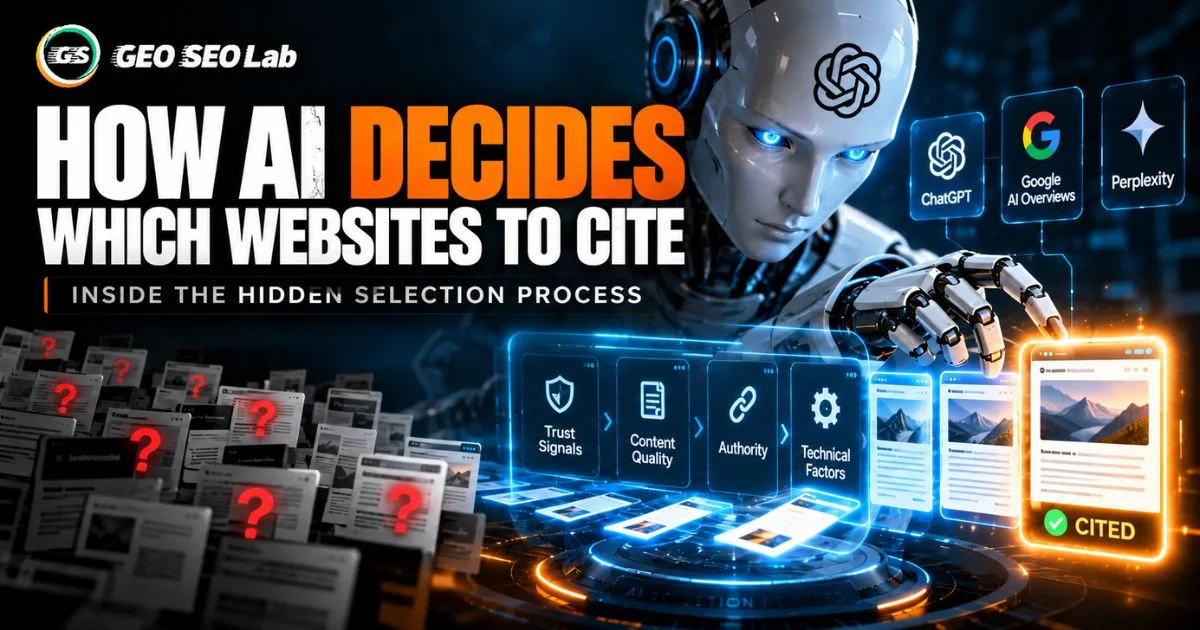
How AI Decides Which Websites to Cite: Inside the Hidden Selection Process
Introduction: The New Gatekeepers of VisibilityPicture this. Someone types a question into ChatGPT, Perplexity, or Google's AI Overview box. Within se...
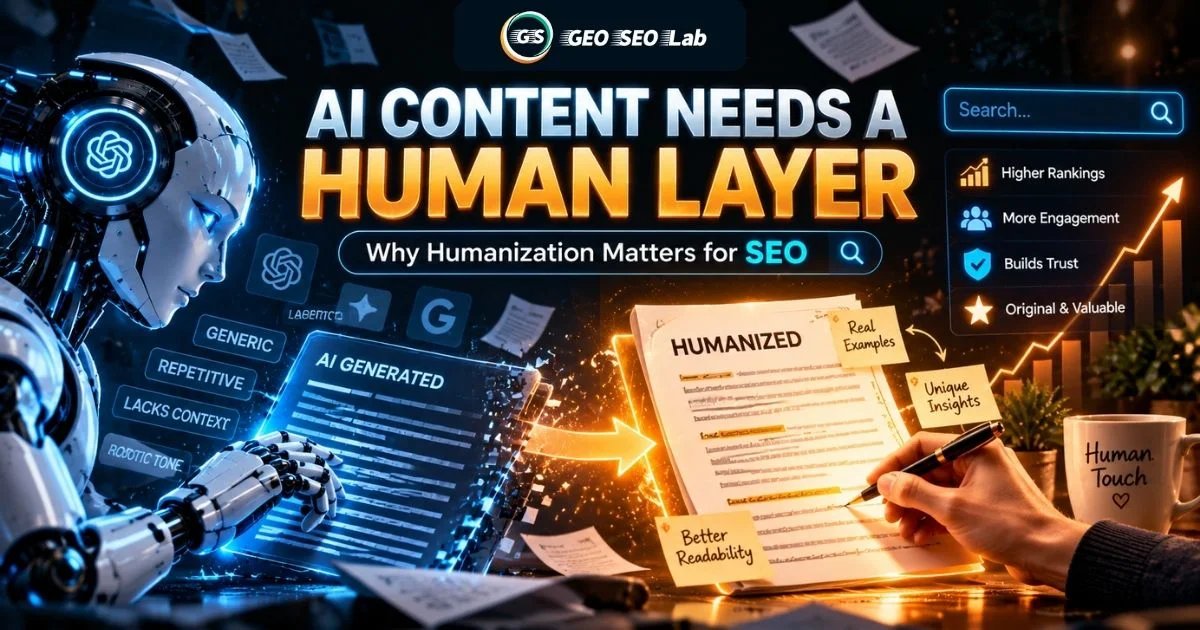
Why Does AI-Generated Content Need Humanization for SEO?
Why Does AI-Generated Content Need Humanization for SEO?The Real Reason Raw AI Drafts Underperform, and What Actually Fixes ItA GEO SEO Lab ReportEdit...