Enterprise AI Memory Architecture: The Complete Guide to Building AI-Ready Organizational Memory
Enterprise AI Memory Architecture helps organizations preserve institutional knowledge, improve AI readiness, accelerate decision-making, and build scalable knowledge systems that support long-term business growth. Learn how to create an AI-ready organizational memory strategy from the ground up.
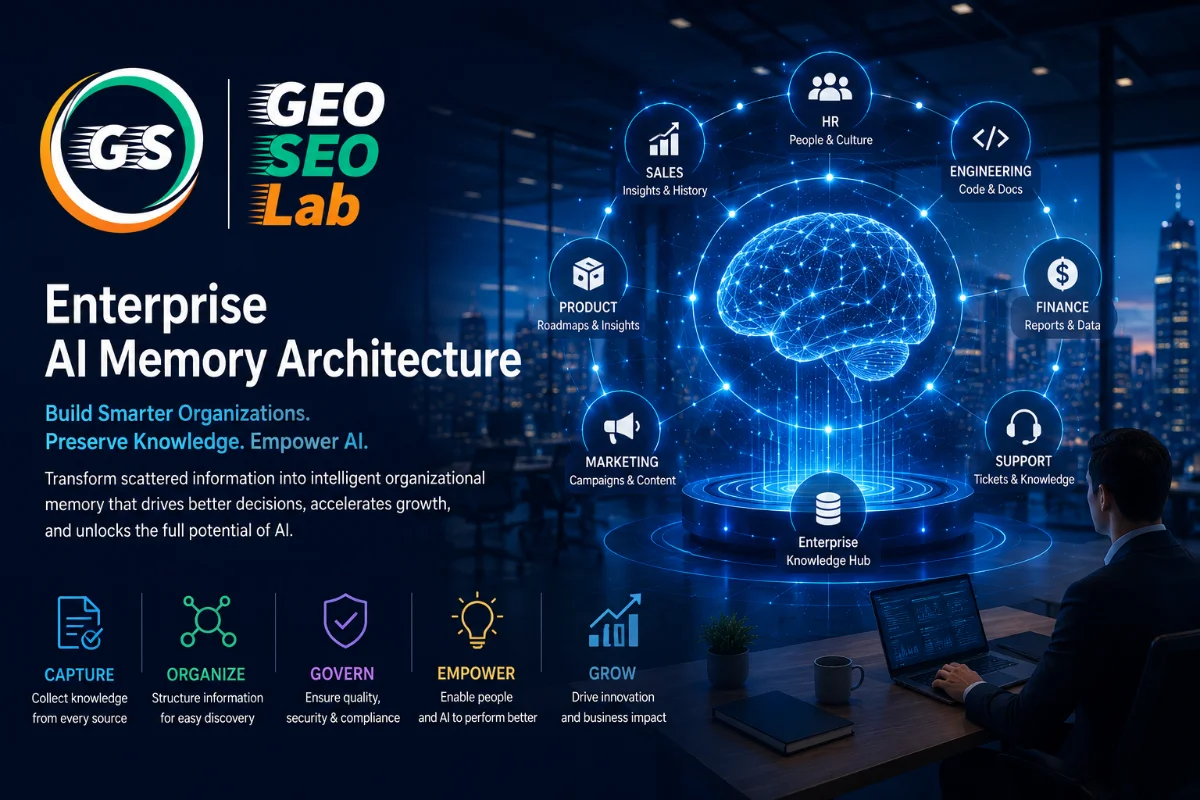
Enterprise AI Memory Architecture: Why Organizational Memory Will Become the Most Valuable Asset in the AI Era
Modern businesses are investing billions in artificial intelligence, automation, cloud platforms, and advanced analytics. Yet many organizations continue to overlook one of the most valuable assets they already possess: their collective knowledge. Every project, customer interaction, product launch, and strategic decision generates insights that can shape future success. Unfortunately, much of this knowledge disappears when employees change roles, leave the company, or simply forget the reasoning behind past decisions. In the AI era, preserving organizational memory is no longer optional. It has become a strategic requirement for companies that want to make faster decisions, improve productivity, and build AI systems capable of delivering meaningful business outcomes.Artificial intelligence is only as intelligent as the information it can access. If an organization's historical knowledge is scattered across emails, chat messages, disconnected documents, and individual employees, even the most advanced AI model will struggle to provide accurate answers. Companies that build strong organizational memory create an environment where both people and AI can learn continuously from previous experiences instead of repeatedly solving the same problems.
What Is Enterprise AI Memory Architecture?
Building a Knowledge System That Never Stops Learning
Enterprise AI Memory Architecture is a structured approach to capturing, organizing, maintaining, and continuously improving organizational knowledge. Instead of treating documentation as a one-time task, this approach views knowledge as a living business asset that grows stronger over time. Every important decision, lesson learned, customer insight, and operational improvement becomes part of a connected memory system that supports future work across the organization.
Unlike traditional document storage, organizational memory focuses on preserving context. It records not only what happened but also why decisions were made, which alternatives were considered, what assumptions influenced the outcome, and what lessons emerged afterward. This deeper level of documentation allows future employees and AI systems to understand the complete story rather than isolated facts.As AI becomes integrated into daily business operations, companies need reliable knowledge that machines can understand and employees can trust. Enterprise AI Memory Architecture creates that foundation by ensuring information remains accessible, connected, and relevant regardless of staff changes or organizational growth.
Why Businesses Are Rethinking Knowledge Management
Many organizations already use platforms such as internal wikis, shared drives, project management software, or collaboration tools. These systems are useful for storing files, but storage alone does not create organizational intelligence. Documents become outdated, duplicate information appears across departments, and valuable insights remain buried inside conversations that are never documented.The challenge is no longer collecting information. Most companies already have more information than they can manage effectively. The real challenge is transforming scattered knowledge into a reliable organizational memory that employees and AI systems can use confidently.Businesses that recognize this shift are moving beyond simple documentation. They are building knowledge ecosystems where every important insight becomes part of an evolving network of organizational intelligence instead of remaining an isolated document.
Why Organizational Memory Has Become a Competitive Advantage
The Hidden Cost of Forgotten Knowledge
Every organization experiences knowledge loss, but very few calculate its true business impact. When experienced employees leave, they often take years of practical expertise with them. While project files may remain available, the reasoning behind important decisions frequently disappears. New employees must spend weeks or months rediscovering information that once existed inside someone's experience.This invisible cost affects nearly every department. Engineering teams repeat technical investigations that were completed years earlier. Marketing teams test campaigns that previously failed because historical insights were never documented. Sales representatives rebuild customer relationships without understanding previous negotiations. Leadership teams revisit strategic discussions that had already been resolved by earlier management.These repeated efforts consume time, reduce productivity, and slow innovation. Instead of building upon previous knowledge, organizations repeatedly restart from the beginning.
Why Employee Turnover Makes Memory More Important
Modern workplaces are more dynamic than ever before. Employees change companies more frequently, remote work has expanded globally, and cross-functional teams constantly evolve. This creates tremendous opportunities for innovation but also increases the risk of losing valuable institutional knowledge.Organizations can no longer depend on long-serving employees to preserve company history. Knowledge must exist independently of individuals. When important expertise becomes part of a structured organizational memory, business continuity improves regardless of staff changes.
Companies that preserve institutional knowledge reduce onboarding time, improve decision-making, and create more consistent customer experiences because valuable insights remain available long after the original contributors have moved on.
The Difference Between Information, Knowledge, and Organizational Memory
Information Explains What Happened
Every business generates enormous amounts of information each day. Reports, meeting notes, emails, customer records, financial statements, technical documentation, and project updates all represent valuable information. These records capture events as they occur and provide a historical reference for future work.However, information alone rarely explains the complete picture. A project document may record that a feature was canceled, but it may not explain why leadership made that decision or what customer feedback influenced the outcome.Without context, information becomes difficult to interpret correctly, especially for employees who were not involved in the original work.
Knowledge Connects Experience With Facts
Knowledge develops when information is combined with practical experience. It explains relationships between events, identifies patterns, and helps people understand why certain actions produced specific results.Experienced employees naturally build knowledge over time because they observe repeated situations and recognize what consistently works. Unfortunately, much of this expertise remains inside individual minds instead of becoming part of organizational learning.
Businesses that actively capture employee experience create a stronger knowledge base capable of supporting better decisions across every department.
Organizational Memory Preserves Business Intelligence
Organizational memory represents the highest level of knowledge maturity. It preserves valuable business intelligence in a structured way that remains accessible for years. Instead of documenting isolated events, organizational memory connects decisions, lessons, outcomes, customer insights, and operational improvements into one continuous learning system.
This approach allows organizations to improve continuously because each new experience strengthens future decision-making. AI systems also benefit significantly because they gain access to richer, more reliable context instead of disconnected documents.As companies continue adopting generative AI, organizational memory will become one of the strongest competitive advantages available.
Why AI Depends on High-Quality Organizational Memory
Artificial Intelligence Can Only Learn From Available Knowledge
Many executives believe implementing AI automatically makes their organization smarter. In reality, AI cannot invent organizational knowledge that has never been documented. It analyzes existing information, identifies patterns, and generates responses based on available context.If customer policies exist in five different versions, AI cannot reliably determine which version is correct. If important strategic decisions were discussed verbally but never documented, AI has no access to that reasoning. When organizational knowledge is incomplete, inconsistent, or outdated, AI produces weaker recommendations regardless of how advanced the underlying model may be.
This is why knowledge quality matters more than document quantity.
Better Memory Produces Better AI Decisions
Organizations with well-maintained memory systems consistently achieve better AI outcomes because their knowledge is accurate, connected, and regularly updated. AI assistants answer questions with greater confidence, internal search becomes more useful, and employees spend less time verifying information manually.
Strong organizational memory also improves automation. AI workflows become more reliable because they reference trusted knowledge instead of conflicting documents. Customer support becomes more consistent because responses reflect accumulated organizational experience rather than isolated articles.
Over time, every improvement made to organizational memory increases the effectiveness of every AI application connected to it.
Moving Beyond Traditional Knowledge Management
Documentation Alone Is No Longer Enough
For many years, organizations believed creating more documentation would solve knowledge management problems. Teams wrote longer manuals, produced additional process documents, and created larger internal knowledge bases. Despite these efforts, employees often continued struggling to find accurate information.The reason is simple. Documentation without structure eventually becomes digital clutter. Multiple versions of the same process appear across different departments, outdated information remains searchable, and important context disappears beneath thousands of disconnected files.Modern organizations need something far more intelligent than document storage. They need systems capable of organizing knowledge according to relationships, business context, and continuous learning.
Creating a Living Business Memory
Successful organizations treat knowledge as a living resource rather than a completed project. Every customer interaction, product improvement, operational challenge, and strategic discussion becomes an opportunity to strengthen organizational memory.Instead of asking employees to document information only after projects finish, leading businesses integrate knowledge capture into daily workflows. Lessons learned become part of normal operations, ensuring valuable insights remain available for future employees and AI systems alike.
The Four Types of Organizational Memory Every Business Should Build
Not every piece of organizational knowledge serves the same purpose. Some information helps employees complete daily tasks, while other knowledge influences long-term business strategy or future innovation. Companies that treat all knowledge the same often struggle to organize, maintain, and retrieve information effectively.
Building a strong organizational memory starts with understanding that different types of knowledge require different levels of context, ownership, and maintenance. When these categories are managed properly, businesses create a knowledge ecosystem that supports every department instead of isolated teams.
Operational Memory Creates Consistent Business Execution
Preserving Everyday Business Processes
Operational memory includes everything employees need to perform daily work consistently. Standard operating procedures, internal policies, workflow documentation, onboarding guides, quality standards, and process instructions all belong to this category.When operational knowledge is well maintained, new employees learn faster, teams make fewer mistakes, and business operations become more predictable. Instead of depending on experienced colleagues for routine guidance, employees can confidently access reliable documentation whenever they need it.
Organizations with strong operational memory also reduce business risk because important processes remain available even when key employees leave.
Why Process Documentation Needs Context
Many companies document procedures but forget to explain why those procedures exist. This creates a problem whenever business conditions change.A process created five years ago may have solved a specific challenge that no longer exists. Without documenting the original reasoning, future employees cannot determine whether the process still provides value or simply continues because nobody questioned it.Adding business context alongside operational procedures allows organizations to improve intelligently rather than blindly following outdated instructions.
Strategic Memory Protects Long-Term Business Decisions
Capturing the Reasoning Behind Major Decisions
Every organization makes strategic decisions that shape its future. Leadership selects markets to enter, products to launch, pricing strategies to adopt, partnerships to pursue, and investments to prioritize.
Unfortunately, many of these decisions are discussed in meetings and presentations without preserving the reasoning behind them. Months or years later, new leaders often revisit the same discussions because the original logic was never documented.
Strategic memory ensures future decision-makers understand the evidence, assumptions, opportunities, and risks that influenced earlier choices.
Preventing Repeated Strategic Mistakes
Organizations frequently repeat expensive mistakes because historical decisions disappear over time. A product feature may have been rejected after extensive customer research, but if that research is forgotten, another team may unknowingly repeat the same investigation years later.
Strong strategic memory allows leadership teams to build upon previous thinking rather than restarting every major discussion from the beginning. This shortens decision cycles while improving confidence in long-term planning.
Experiential Memory Turns Everyday Work Into Organizational Learning
Every Project Generates Valuable Lessons
Some of the most valuable organizational knowledge comes from experience rather than formal planning. Product launches, software implementations, customer onboarding, marketing campaigns, and operational improvements all reveal practical lessons that cannot be predicted in advance.These insights often emerge during retrospectives, internal discussions, or customer feedback sessions. Unfortunately, they are also among the easiest forms of knowledge to lose.
When experiential learning is consistently documented, organizations gradually develop a growing library of practical business intelligence that improves future performance.
Learning From Success and Failure Equally
Many organizations only document successful projects. However, unsuccessful initiatives often produce even greater learning opportunities.Understanding why a product launch underperformed, why a sales opportunity was lost, or why a technical migration encountered unexpected problems provides valuable guidance for future teams.
Companies that preserve both successes and failures create a culture where learning becomes more important than avoiding mistakes.
Innovation Memory Fuels Long-Term Growth
Preserving Ideas Beyond Current Projects
Innovation rarely happens because of a single brilliant idea. It usually develops from years of experimentation, research, customer conversations, competitive analysis, and creative exploration.
Many promising ideas never become immediate products, but they often become valuable later as market conditions change.
Innovation memory ensures these concepts remain available instead of disappearing inside archived presentations or forgotten brainstorming sessions.
Turning Research Into Future Opportunity
Research reports, prototype evaluations, market observations, technology experiments, and customer interviews all contribute to organizational innovation.When these insights remain connected inside a structured memory system, future teams can identify patterns that individual projects may never reveal. This cumulative intelligence allows businesses to innovate faster while avoiding repeated exploration of ideas that were already evaluated.Organizations with strong innovation memory rarely start from zero because every new initiative benefits from previous learning.
Why Context Is More Valuable Than Documentation
Information Without Context Creates Confusion
Imagine finding a document stating that your company changed its pricing model in 2024. The document confirms the decision but explains nothing else.
Future employees immediately begin asking questions. What customer problem motivated the change? Which pricing models were considered? What financial risks did leadership identify? Was the transition successful? Were unexpected challenges discovered afterward?
Without answers to these questions, the document provides limited value.
True organizational memory always includes context alongside information.
Context Makes Knowledge Reusable
The primary purpose of preserving organizational knowledge is not historical record keeping. It is enabling future decisions.
When context accompanies every significant decision, employees understand not only what happened but also when similar thinking may apply again.
This dramatically improves business learning because teams adapt previous experience instead of copying outdated decisions without understanding their original purpose.
AI systems benefit from this additional context as well, generating recommendations that better reflect organizational priorities and historical experience.
Building Memory Systems That Employees Actually Use
Simplicity Encourages Participation
Many knowledge management initiatives fail because documentation becomes too complicated.
If employees need thirty minutes to record a simple lesson learned, most will postpone the task until it is forgotten entirely.
Effective organizational memory systems prioritize simplicity. Capturing valuable knowledge should feel like a natural extension of daily work rather than an additional administrative responsibility.
The easier it becomes to preserve knowledge, the more consistently employees contribute.
Searchability Matters More Than Storage
Knowledge has little value if nobody can find it.
Employees rarely search using document titles. Instead, they search by asking questions.
They want answers such as why a product decision was made, how a customer issue was resolved, or which process solved a similar problem previously.
Modern organizational memory systems organize knowledge around business questions rather than file locations, making retrieval significantly faster for both employees and AI assistants.
The Organizational Memory Lifecycle
Memory Begins With Capture
Every business activity generates knowledge.Customer meetings reveal buying behavior.Support conversations identify product weaknesses.Engineering projects uncover technical improvements.Marketing campaigns expose audience preferences.Capturing these insights while they remain fresh prevents valuable experience from disappearing.
Organizations that delay documentation often lose critical details because human memory naturally fades over time.
Organization Creates Long-Term Value
Captured knowledge becomes far more useful when organized consistently.
Related information should remain connected across departments instead of scattered among isolated systems.
For example, customer feedback collected by support may also influence product development, sales messaging, marketing content, and onboarding materials.Connecting these insights allows organizational learning to spread naturally throughout the business.
Validation Protects Knowledge Quality
Not every piece of information should immediately become part of organizational memory.
Documentation requires verification to ensure accuracy.Processes change.Products evolve.Policies receive updates.
Without regular validation, knowledge gradually becomes outdated, reducing trust across the organization.Employees quickly stop using systems they believe contain inaccurate information.
Continuous Improvement Keeps Memory Relevant
Organizational memory should evolve continuously.
Every time knowledge is accessed, employees should have opportunities to improve it by correcting outdated information, adding missing context, or connecting related resources.This ongoing refinement allows knowledge quality to improve naturally as organizations grow.Instead of becoming obsolete, the memory system becomes increasingly valuable each year.
Why More Documents Do Not Create Better AI
Volume Is Not the Goal
A common misconception is that AI performs better simply because organizations upload more documents.
Quantity alone rarely improves intelligence.If employees create multiple versions of the same policy, AI encounters conflicting information instead of greater clarity.Likewise, outdated documentation often reduces answer quality because the system cannot easily determine which version remains accurate.
Knowledge quality always matters more than document quantity.
Connected Knowledge Produces Better Results
Artificial intelligence performs best when information exists within meaningful relationships.
Instead of isolated documents, AI benefits from connected knowledge that links decisions, customer feedback, technical documentation, policies, lessons learned, and historical outcomes.These relationships provide the context necessary for intelligent reasoning.Organizations that invest in structured organizational memory consistently achieve stronger AI performance than businesses that simply expand document libraries.
Organizational Memory Is Becoming Business Infrastructure
Knowledge Is Now a Strategic Asset
For decades, businesses invested heavily in physical infrastructure, software platforms, cybersecurity, and cloud technology.Today, organizational memory deserves similar attention.Knowledge has become one of the few assets capable of increasing in value every time it is used.Each documented lesson improves future decisions.Each customer insight strengthens future products.Each successful project creates guidance for future teams.
Unlike physical assets that depreciate, organizational memory compounds over time.
AI Will Reward Organizations That Preserve Knowledge
As AI becomes central to business operations, organizations with stronger memory systems will consistently outperform competitors.Their employees will make faster decisions.Customer service will become more consistent.New hires will contribute sooner.Leadership will avoid repeating historical mistakes.
Operating Organizational Memory as a Business Capability
Building an organizational memory system is only the beginning. The real challenge starts after the first documents are created. Many organizations launch an internal knowledge platform with great enthusiasm, only to discover months later that employees have stopped updating it. Information becomes outdated, duplicate content appears, and confidence in the system gradually disappears.Successful companies understand that organizational memory is not a one-time project. It is an ongoing business capability that requires continuous attention. Just as finance manages budgets and human resources manages talent, organizational memory also needs ownership, regular maintenance, and clear processes to remain valuable.When businesses treat memory as an active operation instead of a digital archive, knowledge continues to evolve alongside the organization rather than becoming frozen in time.
Why Memory Operations Matter More Than Documentation
A Knowledge Base Can Become Outdated Overnight
Business environments change constantly. New products are launched, customer expectations evolve, regulations are updated, and internal processes improve every month. Documentation that was completely accurate last year may already be misleading today.Without continuous maintenance, even the best knowledge repository slowly loses credibility. Employees begin questioning whether the information they find is still correct. Eventually, they stop relying on the system altogether and return to asking colleagues for answers.This cycle creates unnecessary delays because valuable knowledge exists but is no longer trusted.
Continuous Improvement Keeps Knowledge Alive
Organizations with mature memory practices regularly review important knowledge instead of waiting until problems appear. Every update improves the overall quality of the system and ensures employees continue finding reliable information.Instead of treating documentation as finished once it is published, leading businesses consider every document a living resource that should evolve as experience grows. New lessons are added, outdated assumptions are corrected, and related information is connected whenever new insights emerge.Over time, this process creates a knowledge ecosystem that becomes increasingly accurate rather than gradually deteriorating.
Creating a Culture That Values Knowledge Sharing
Technology Alone Cannot Preserve Organizational Memory
Many companies assume purchasing better software will automatically solve their knowledge management challenges. While technology certainly helps, software alone cannot create organizational memory.
People create knowledge.People validate knowledge.People improve knowledge.If employees do not see value in sharing their expertise, even the most advanced knowledge platform will remain underused.
Building organizational memory therefore begins with culture before technology.
Knowledge Sharing Should Be Part of Everyday Work
Employees often hesitate to document their experience because they believe it adds extra work to already busy schedules.
Organizations that overcome this challenge integrate knowledge sharing directly into normal workflows.Project completion naturally includes documenting lessons learned.Customer meetings generate reusable insights.Engineering decisions automatically include design reasoning.Marketing campaigns record performance observations immediately after launch.
When knowledge capture becomes part of existing work instead of an additional responsibility, participation increases dramatically.
Governance Builds Trust Across the Organization
Every Knowledge Area Needs Clear Ownership
One of the biggest reasons organizational knowledge becomes outdated is uncertainty about responsibility.
If nobody knows who owns product documentation, process guidelines, customer policies, or technical standards, updates rarely happen consistently.Clear ownership eliminates this confusion.Every important knowledge area should have someone responsible for reviewing information, approving changes, and ensuring continued accuracy.
Ownership creates accountability, while accountability creates trust.
Trust Determines Whether Employees Use Knowledge
Employees naturally return to resources they trust.If they repeatedly encounter outdated instructions or conflicting information, confidence declines quickly.Once trust disappears, rebuilding it becomes far more difficult than maintaining it from the beginning.Organizations that prioritize governance protect knowledge quality before problems become widespread. Regular reviews, clear responsibilities, and consistent quality standards help employees rely on organizational memory with confidence.
Why Connected Knowledge Is More Valuable Than Isolated Documents
Business Knowledge Exists Across Every Department
No department works entirely independently.Sales learns why customers hesitate before buying.Marketing understands which messages generate interest.Customer success discovers why clients remain loyal.Support identifies recurring product issues.Engineering develops technical solutions.Leadership defines strategic direction.Each department holds valuable information that can improve decisions elsewhere.When this knowledge remains isolated inside departmental systems, opportunities for organizational learning are lost.
Relationships Create Business Intelligence
True organizational memory connects information across functions.A customer complaint should influence product improvements.A successful marketing campaign should support future sales conversations.Engineering lessons should improve onboarding documentation.Leadership decisions should provide context for operational changes.
These relationships transform isolated documents into organizational intelligence because every piece of knowledge contributes to broader business understanding.The stronger these connections become, the more useful organizational memory becomes for both employees and AI systems.
Measuring Knowledge Quality Instead of Document Quantity
More Content Does Not Mean Better Knowledge
Many organizations celebrate the size of their internal knowledge base.Thousands of documents may appear impressive, but quantity rarely reflects quality.Large repositories often contain duplicate articles, outdated policies, incomplete documentation, and inconsistent terminology.Employees spend more time searching while finding less reliable answers.Knowledge quality always matters more than document volume.
Valuable Knowledge Shares Common Characteristics
High-quality organizational memory is accurate, current, complete, easy to understand, and connected to related information.Employees should quickly understand not only what happened but also why decisions were made and how similar situations should be handled in the future.Knowledge becomes significantly more valuable when it answers follow-up questions instead of forcing employees to search through multiple unrelated documents.Organizations focusing on quality rather than quantity create systems that employees actively trust and reuse every day.
Organizational Learning Creates Long-Term Competitive Advantage
Every Experience Should Improve Future Performance
Organizations generate valuable learning opportunities every single day.Customer conversations reveal changing market expectations.Internal projects expose operational strengths and weaknesses.Sales meetings uncover new competitive insights.Technical implementations reveal more efficient ways of working.When these experiences disappear after the project ends, organizations lose opportunities to improve.Companies that consistently preserve learning gradually become smarter with every completed activity.
Small Lessons Create Big Results Over Time
One documented improvement may appear insignificant.Perhaps a support engineer discovers a faster troubleshooting method.A salesperson identifies a new customer objection.A project manager develops a more efficient workflow.
Individually these lessons seem minor.Collectively they become a powerful source of organizational intelligence that continuously improves productivity across the business.This cumulative effect explains why strong organizational memory creates advantages that competitors struggle to replicate.
Breaking Down Knowledge Silos
Departmental Knowledge Limits Organizational Growth
Many organizations unknowingly create information silos.Departments build their own documentation, maintain separate systems, and develop independent processes without connecting them to the rest of the business.While this may improve local efficiency, it limits organizational learning.Important customer insights remain inside support teams.Engineering discoveries never reach marketing.Sales observations fail to influence product strategy.These missed connections reduce innovation across the organization.
Collaboration Begins With Shared Knowledge
Breaking knowledge silos requires more than sharing documents.Organizations must encourage departments to contribute knowledge that benefits the entire company.Customer feedback should support product planning.Financial insights should guide pricing decisions.Operational improvements should influence training materials.Leadership strategy should provide context across every department.Shared organizational memory creates shared organizational understanding.
This alignment helps employees make better decisions regardless of their specific role.
AI and Organizational Memory Work Best Together
AI Needs Reliable Business Context
Artificial intelligence performs remarkably well when reliable context exists.
Instead of producing generic answers, AI can generate responses based on an organization's unique products, customers, policies, processes, and historical experience.Without this business context, AI relies primarily on general knowledge that may not reflect organizational reality.This is why memory quality directly influences AI performance.
Human Expertise Remains Essential
Although AI accelerates knowledge retrieval, humans continue providing judgment, creativity, ethics, and strategic thinking.
Employees determine which lessons deserve preservation.Managers validate important decisions.
Subject matter experts provide the context machines cannot automatically infer.Rather than replacing human expertise, organizational memory amplifies it by ensuring valuable experience remains available across the business.
The combination of human knowledge and AI assistance creates significantly better outcomes than either could achieve independently.
Preparing for the Future of Intelligent Organizations
Organizational Memory Will Continue Growing in Importance
As AI becomes integrated into every business function, organizational memory will influence almost every important decision.Companies with strong memory systems will onboard employees faster, resolve customer issues more consistently, improve products more efficiently, and make strategic decisions with greater confidence.Businesses that neglect knowledge preservation may invest heavily in AI yet struggle to realize meaningful results because their institutional knowledge remains fragmented.The gap between these two approaches is likely to widen significantly over the coming years.
Building Memory Is an Investment in Long-Term Success
Unlike many business initiatives that produce short-term results, organizational memory continues creating value year after year.Every documented lesson strengthens future projects.Every preserved decision improves future planning.
Every connected insight expands organizational intelligence.This compounding effect makes organizational memory one of the few business assets that grows stronger every time it is used.
Enterprise Memory Maturity: How Organizations Grow Over Time
Building organizational memory does not happen overnight. Every company begins at a different stage depending on how knowledge is currently managed. Some organizations rely almost entirely on individual employees, while others have already established structured documentation and governance processes.
Understanding your current level of maturity helps prioritize improvements without trying to transform everything at once. The goal is steady progress rather than immediate perfection.
Stage One: Knowledge Exists Mostly Inside People
Experience Drives Daily Decisions
In many organizations, the most valuable knowledge lives inside experienced employees rather than documented systems. Teams depend on senior staff for answers because important information has never been formally captured.
While this approach may work in smaller organizations, it becomes increasingly risky as businesses grow. Employee turnover, departmental expansion, and remote work make informal knowledge sharing less reliable over time.
The organization becomes vulnerable whenever key people leave or move into different roles.
Growth Exposes Knowledge Gaps
As companies scale, undocumented expertise quickly becomes a bottleneck.New employees struggle to learn.Projects move more slowly.Departments repeat previous mistakes.Leadership spends valuable time answering questions that should already have documented answers.Recognizing these challenges is often the first step toward building a stronger organizational memory system.
Stage Two: Documentation Begins Supporting Daily Work
Creating a Central Knowledge Resource
Organizations at this stage begin documenting important processes, policies, and procedures inside shared platforms.
Employees gain access to standardized information instead of depending entirely on experienced colleagues.
This significantly improves consistency across teams and reduces onboarding time for new hires.
Although valuable, documentation alone does not yet create complete organizational memory because much of the business context remains undocumented.
Standardization Improves Collaboration
Once documentation standards become consistent, departments begin working from the same information.
Teams experience fewer misunderstandings because policies, workflows, and responsibilities become easier to understand.
This creates a stronger operational foundation while preparing the organization for more advanced knowledge management practices.
Stage Three: Knowledge Becomes Organizational Memory
Context Transforms Documentation Into Intelligence
At this stage, organizations move beyond recording facts.Important business decisions include reasoning.Projects capture lessons learned.Customer feedback influences future planning.Historical knowledge becomes connected across departments instead of existing independently.Employees gain access not only to information but also to the thinking behind previous decisions.This significantly improves organizational learning.
AI Begins Delivering Better Business Value
Artificial intelligence becomes more effective because organizational knowledge contains meaningful context.
Instead of retrieving isolated documents, AI understands relationships between projects, customers, operational processes, and strategic decisions.Employees receive recommendations that better reflect organizational priorities rather than generic responses.Knowledge quality becomes a direct driver of AI performance.
Stage Four: Organizational Memory Supports Continuous Improvement
Learning Never Stops
Organizations reaching this level no longer treat documentation as a completed task.
Knowledge continuously evolves.Employees contribute improvements.Departments share lessons.Leadership reviews strategic decisions.Historical information receives regular updates.The memory system becomes increasingly accurate because it reflects current business reality instead of outdated assumptions.
Business Decisions Become Faster
Reliable organizational memory reduces unnecessary research and repeated discussions.Employees spend less time searching for answers.Managers make decisions with greater confidence.Projects benefit from accumulated experience rather than beginning from scratch.This improvement affects productivity across every department.
Stage Five: Memory Becomes a Strategic Business Asset
Knowledge Powers Every Function
At the highest level of maturity, organizational memory supports every major business activity.Sales teams understand historical customer behavior.Marketing builds campaigns using previous performance insights.Engineering develops products based on accumulated technical experience.Customer success benefits from years of implementation knowledge.
Leadership evaluates opportunities using historical business intelligence.Knowledge becomes deeply integrated into everyday operations.
Competitive Advantage Continues Growing
Unlike technologies that competitors can purchase immediately, organizational memory cannot be copied quickly.
Years of accumulated customer insights, operational experience, strategic reasoning, and business learning create a unique asset that becomes increasingly valuable over time.Organizations reaching this stage develop advantages that are difficult for competitors to replicate because those advantages are built upon years of preserved organizational experience.
Implementing Enterprise AI Memory Architecture Successfully
Start With Assessment Instead of Technology
Many organizations begin by selecting software before understanding their actual knowledge challenges.A better approach starts with assessment.Identify where important knowledge currently exists.Understand which information employees struggle to find.Discover which business processes depend heavily on undocumented expertise.Evaluate how AI currently accesses organizational information.These insights provide a stronger foundation for future improvements.
Build Strong Standards Early
Documentation quality depends on consistency.Organizations should establish clear expectations for how knowledge will be captured, reviewed, updated, and connected across departments.Simple standards reduce confusion while improving long-term quality.Employees contribute more confidently when they understand exactly how knowledge should be recorded.
Expand Gradually Across the Business
Trying to document everything immediately often overwhelms employees.Successful organizations expand systematically.
Critical business knowledge receives priority.High-impact departments contribute first.Lessons learned improve future documentation practices.Gradual implementation produces higher-quality organizational memory than attempting massive documentation projects all at once.
Leadership Plays a Critical Role
Organizational Memory Requires Executive Support
Knowledge management initiatives often fail because leadership views them as administrative tasks rather than strategic investments.Executive support changes organizational priorities.When leaders actively encourage documentation, participate in knowledge sharing, and reference organizational memory during decision-making, employees recognize its importance.
Culture always follows leadership behavior.
Recognition Encourages Participation
Employees are more likely to share valuable knowledge when organizations recognize those contributions.Knowledge sharing should be viewed as professional expertise rather than additional paperwork.Celebrating employees who improve organizational learning strengthens participation across every department.
A culture that values learning naturally builds stronger organizational memory over time.
Measuring the Business Impact of Organizational Memory
Better Decisions Produce Better Results
The value of organizational memory extends far beyond documentation.
Organizations often experience shorter onboarding periods, faster project delivery, fewer repeated mistakes, improved customer experiences, and stronger collaboration.
These operational improvements eventually translate into measurable business performance.
Knowledge becomes an investment rather than an expense.
AI Performance Improves Alongside Memory Quality
As organizational memory improves, AI systems produce more accurate and context-aware responses.Employees spend less time verifying answers.Internal search becomes more useful.Automation becomes more reliable.Customer-facing AI delivers better support because it understands organizational knowledge instead of relying only on general information.
This relationship makes organizational memory one of the most valuable long-term AI investments available.
Common Mistakes That Limit Organizational Memory
Focusing Only on Documentation
Many organizations believe writing more documents automatically creates better knowledge.
Unfortunately, quantity without quality often creates confusion.Duplicate content, inconsistent terminology, outdated information, and missing context reduce trust across the organization.Quality always produces greater value than volume.
Ignoring Continuous Maintenance
Knowledge naturally becomes outdated.
Organizations that rarely review documentation eventually create systems employees no longer trust.
Regular updates, validation, and improvements keep organizational memory reliable as business conditions evolve.
Maintenance should be viewed as an ongoing responsibility rather than an occasional cleanup exercise.
Treating Knowledge as an IT Responsibility
Technology enables organizational memory, but people create it.Every department contributes valuable expertise.Sales, marketing, engineering, finance, operations, customer success, leadership, and support all generate insights worth preserving.Organizational memory succeeds when knowledge sharing becomes a company-wide responsibility instead of an isolated technology project.
The Future Belongs to Memory-Driven Organizations
AI Will Reward Organizations That Preserve Knowledge
Artificial intelligence will continue transforming how businesses operate, but AI alone cannot replace organizational experience.Companies that preserve customer insights, strategic thinking, operational improvements, and historical decisions create a foundation that allows AI to deliver significantly greater value.
Organizations with fragmented knowledge will continue struggling regardless of how advanced their AI technology becomes.Knowledge quality remains the strongest predictor of successful AI adoption.
Organizational Memory Creates Sustainable Growth
Business success increasingly depends on learning faster than competitors.
Organizations that continuously preserve, improve, and reuse knowledge avoid repeated mistakes while accelerating innovation.Every completed project becomes preparation for future success.Every customer interaction contributes to better products.Every lesson strengthens future decisions.This continuous learning cycle creates sustainable growth that compounds over time.
Final Thoughts
Enterprise AI Memory Architecture is not simply about creating better documentation. It is about building an organization that never stops learning.Every business already possesses valuable knowledge generated through experience, customer relationships, operational improvements, innovation, and strategic decision-making. The difference between average organizations and industry leaders is how effectively that knowledge is preserved, connected, and reused.
As artificial intelligence becomes a permanent part of modern business, organizational memory will determine how useful those AI systems actually become. Strong memory provides context. Context improves decisions. Better decisions drive stronger business performance.
Organizations that begin investing in structured organizational memory today are preparing for a future where knowledge becomes one of the most valuable competitive assets they own.
Rather than allowing expertise to disappear with employee turnover or forgotten projects, forward-thinking businesses are creating living knowledge systems that grow stronger every year. Those systems support employees, improve collaboration, strengthen customer experiences, accelerate innovation, and enable AI to operate with greater accuracy and confidence.
Tags
Frequently Asked Questions
Find answers to common questions about this topic
About the Author

Aman Kesharwani
SEO Expert & Content Creator
Experienced digital marketing professional specializing in SEO strategies, content optimization, and data-driven marketing solutions. Passionate about helping businesses grow their online presence and achieve better search rankings.
Related Articles
View all posts
How to Turn FAQ Content Into GEO Content
How to Turn FAQ Content Into GEO ContentThink about the last time you searched for a complex product or a nuanced troubleshooting step. Did you type a...
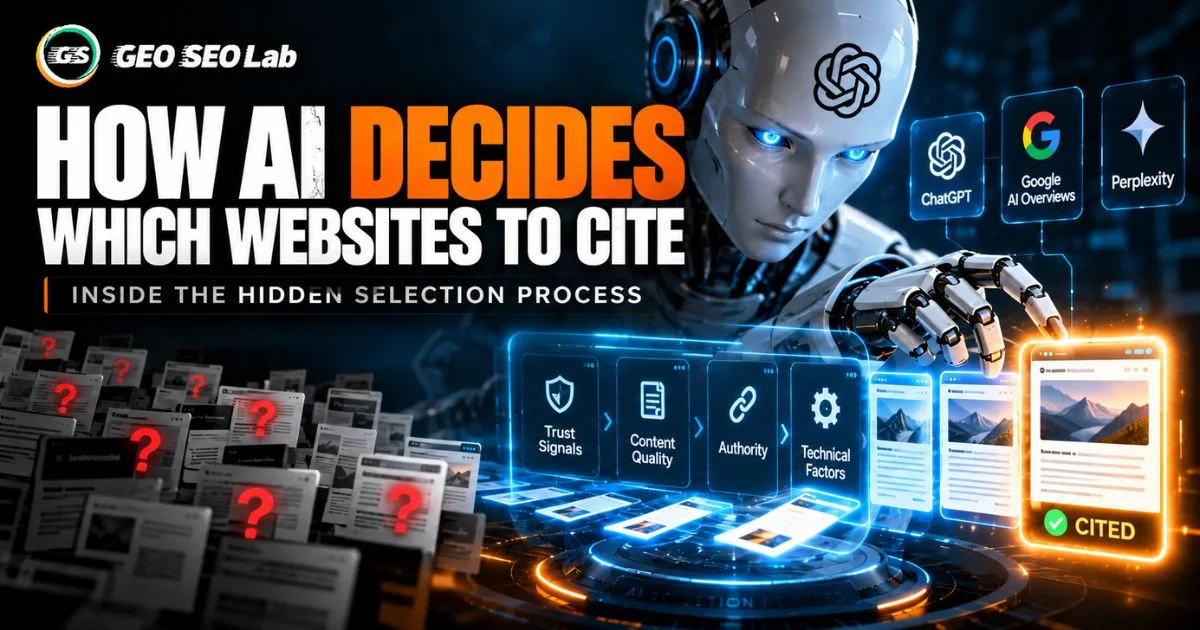
How AI Decides Which Websites to Cite: Inside the Hidden Selection Process
Introduction: The New Gatekeepers of VisibilityPicture this. Someone types a question into ChatGPT, Perplexity, or Google's AI Overview box. Within se...
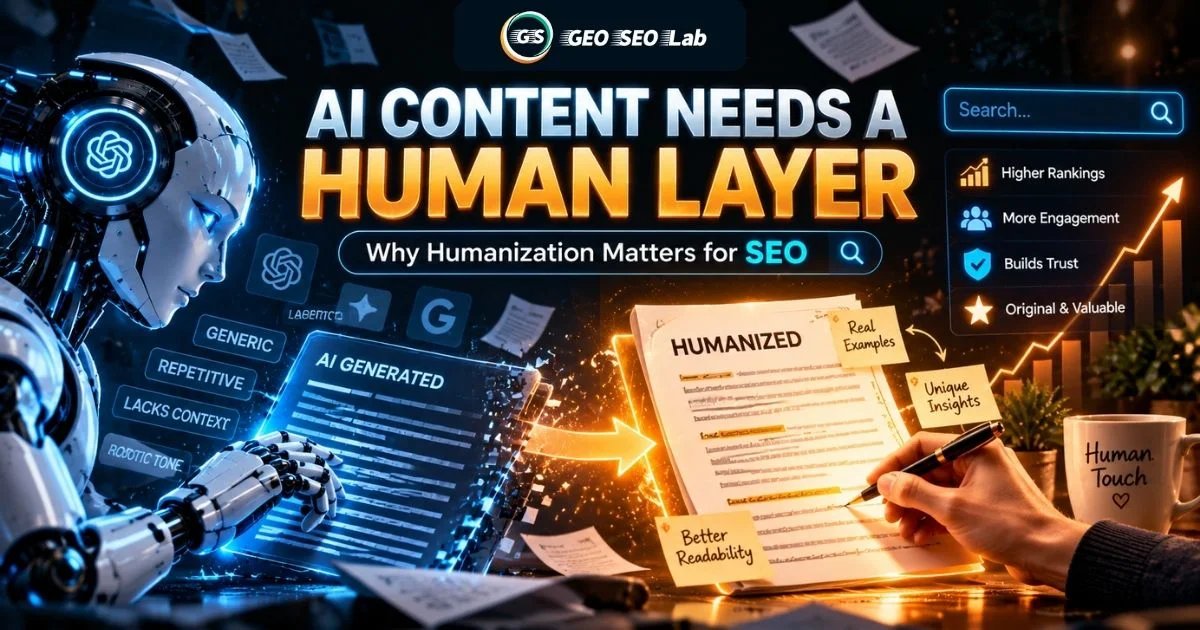
Why Does AI-Generated Content Need Humanization for SEO?
Why Does AI-Generated Content Need Humanization for SEO?The Real Reason Raw AI Drafts Underperform, and What Actually Fixes ItA GEO SEO Lab ReportEdit...