The Complete Guide to Retrieval-Augmented Generation (RAG): How Modern AI Search Actually Works
Learn how Retrieval-Augmented Generation (RAG) powers modern AI search by combining external knowledge retrieval with large language models. This comprehensive guide explains RAG architecture, vector search, semantic retrieval, AI visibility, SEO impact, and how businesses can optimize content for AI-powered search engines like ChatGPT, Gemini, Claude, and Perplexity.
Why This Moment in Search History Matters?
Something significant shifted in how people search for information, and most businesses have not fully caught up yet.
Not long ago, searching the internet meant typing fragmented phrases into a box and hoping one of the ten blue links on the results page held the answer. Users were expected to do the interpretive work — clicking through pages, scanning paragraphs, piecing together information from multiple sources.
Today, people ask full questions and expect complete answers.
"What is the best AI visibility strategy for a healthcare company?"
"How does Google AI Mode differ from traditional search?"
"Explain how vector search works without the technical jargon."
AI-powered systems now field these questions and respond with synthesized, conversational answers. For the average user, the experience feels almost magical — instant, intelligent, contextual.
But behind every one of those answers is a set of technical decisions happening in milliseconds. Decisions about which sources to trust, which passages to retrieve, which information to include, and how to assemble it all into something coherent and accurate.
Understanding those decisions is not just interesting from a technical standpoint. It has become one of the most strategically important things a digital marketer, content strategist, or business leader can learn right now.
That technology is called Retrieval-Augmented Generation, or RAG — and this guide covers everything you need to know about it.
What RAG Actually Is?
Let us start with a clean, direct definition before going deeper.
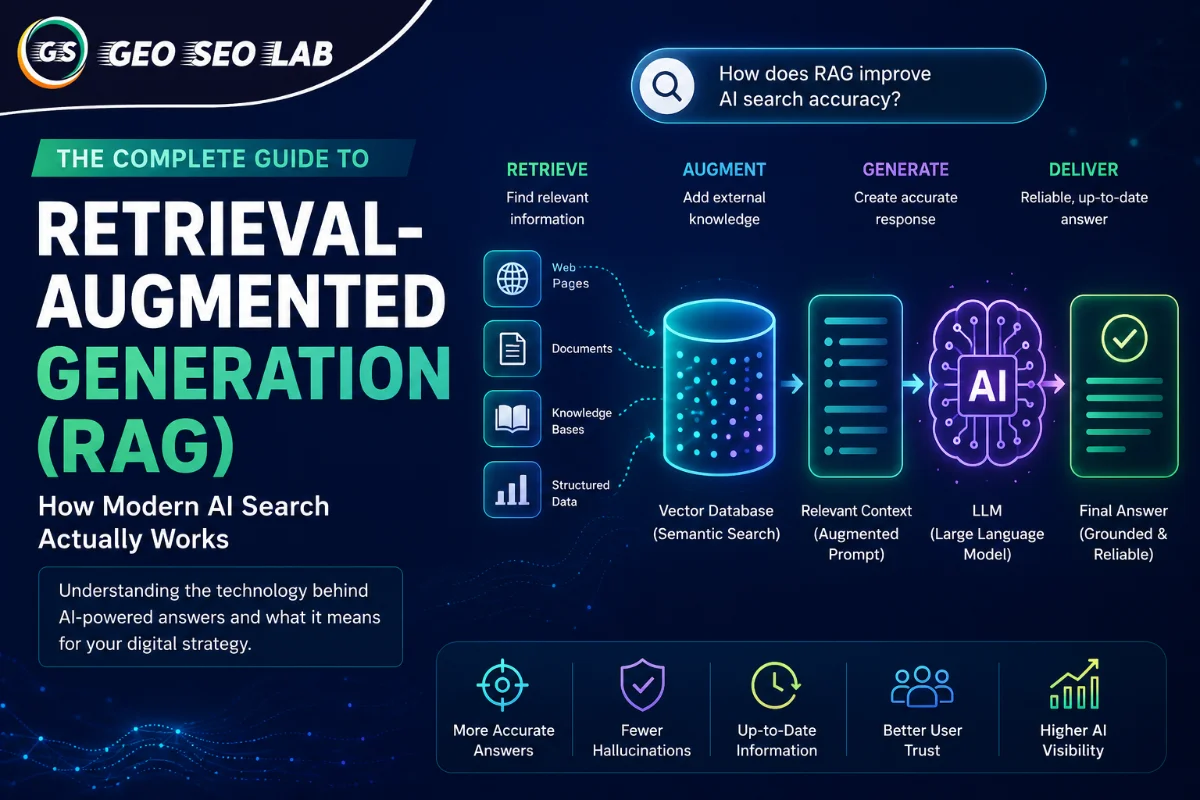
Retrieval-Augmented Generation (RAG) is an AI system architecture that retrieves relevant external information before a language model generates a response.
Rather than relying only on knowledge absorbed during training, a RAG-powered system performs an additional step. It goes out and finds information. Then it uses that information as context when composing its answer.
Three words capture the essence of it:
- Retrieval — finding relevant knowledge from external sources
- Augmented — enhancing the model's reasoning with that knowledge
- Generation — producing a response grounded in both retrieved information and learned capabilities
The Library Analogy That Actually Makes Sense
Imagine two experienced consultants working at the same firm.
Consultant A answers every question entirely from memory. She is brilliant, well-read, and thoroughly trained. But she has not left the office in six months, and the world has changed in ways she may not know about yet.
Consultant B also answers from a strong knowledge base. But before responding to any significant question, he briefly steps away, checks the latest research, reviews updated documentation, and consults primary sources. Then he comes back and gives you an answer informed by both his expertise and current reality.
Which consultant would you trust more when the answer actually matters?
Most people choose Consultant B. That distinction — reasoning supported by current, external knowledge — is essentially what RAG enables AI systems to do.
Memory vs. Retrieval: Why This Distinction Matters
One of the most common misconceptions about AI is that bigger models simply memorize more information. While larger training sets do expand a model's internal knowledge, there are hard limits to how much information can be reliably embedded in parameters — and none of that information updates automatically once training ends.
Under the Hood: How RAG Actually Works Step by Step
Most explanations of RAG stop after saying "the AI retrieves information and then generates an answer." That description is technically accurate but deeply incomplete. A great deal happens between a user typing a question and receiving a response.
Ranking Is Necessary But No Longer Sufficient
A page must be discoverable to be retrieved. So rankings still matter — if AI systems cannot find your content, they cannot retrieve it.But ranking alone does not guarantee contribution to AI-generated answers.
Consider two hypothetical articles:Article A ranks first. It is 5,000 words long. Topics shift every few paragraphs. Definitions are vague. Headings are broad. It contains minimal supporting examples.
Article B ranks fifth. Every section answers one clear question. Definitions appear immediately. Headings are specific. Examples are concrete. Structure is consistent.
Under traditional SEO thinking, Article A wins. Under retrieval-oriented AI systems, Article B may prove far more useful and far more likely to be incorporated into generated answers.
Visibility now depends on two things working together: being discovered, and being understood.
GEO SEO Lab's Knowledge Chunk Framework™
Every section of a well-structured article should function as an independently useful knowledge unit. The framework below describes the six elements that make a chunk retrieval-friendly.
text
The Future of AI Retrieval
The following section reflects GEO SEO Lab's perspective based on observable industry trends. It does not represent official roadmaps from any AI platform.
RAG is not a finished technology. It is a rapidly evolving approach to connecting language models with the world's knowledge. Several developments are likely to shape how retrieval works over the coming years.
More Personalized Retrieval
Early RAG systems retrieve based primarily on the semantic content of a query. Future systems will likely incorporate much richer context about the person asking.
What has this user asked before? What industry do they work in? What level of technical detail did they respond best to in previous interactions? What time zone are they in, and does that affect the relevance of certain information?
Personalized retrieval will not only find relevant information — it will find relevant-to-you information. Organizations that structure knowledge for different audience segments will have natural advantages in this environment.
Multimodal Understanding
Current retrieval systems work primarily with text. That is already expanding.
Images, diagrams, charts, videos, audio recordings, and interactive content are increasingly being incorporated into retrieval pipelines. An AI system asked to explain a manufacturing process may soon retrieve the most useful video demonstration rather than the most useful written paragraph.
Organizations that invest in explaining concepts through multiple formats — written explanations accompanied by diagrams, comparison tables supplemented with visual summaries, technical concepts supported by clear infographics — will become more discoverable as multimodal retrieval matures.
Greater Emphasis on Trust Signals
As AI systems grow more sophisticated, they are likely to place increasing weight on trustworthiness signals. Not just authority in the traditional link-based sense, but demonstrated expertise evidenced through:
- Clear authorship with verifiable credentials
- Transparent sourcing and citation practices
- Consistent organizational identity across platforms
- Original reporting and primary source documentation
- Regular updates demonstrating active knowledge maintenance
Organizations that invest in these signals now are building foundations that will become more valuable as retrieval systems evolve.
The Rise of Continuous Knowledge
Static content libraries — publish once, never update — will become less competitive in the long run. The most valuable knowledge will increasingly be knowledge that stays current.
This suggests a shift in how content teams allocate time. Rather than directing most effort toward publishing new pages, organizations will increasingly allocate meaningful resources toward maintaining, refining, and expanding their most important knowledge assets.
A guide published three years ago and updated quarterly may ultimately provide more retrieval value than twenty new articles published in the same period.
text
About GEO SEO Lab
GEO SEO Lab helps organizations build visibility across Google Search, Google AI Mode, Google Maps, ChatGPT, Gemini, Claude, Perplexity, Grok, and other AI-powered discovery platforms. Through Generative Engine Optimization (GEO), AI Visibility strategy, Technical SEO, Entity SEO, AI Content Engineering, Local SEO, and original research, GEO SEO Lab enables businesses to build structured knowledge ecosystems that are discoverable, understandable, and trustworthy in the AI search era.
Tags
Frequently Asked Questions
Find answers to common questions about this topic
About the Author

Aman Kesharwani
SEO Expert & Content Creator
Experienced digital marketing professional specializing in SEO strategies, content optimization, and data-driven marketing solutions. Passionate about helping businesses grow their online presence and achieve better search rankings.
Related Articles
View all posts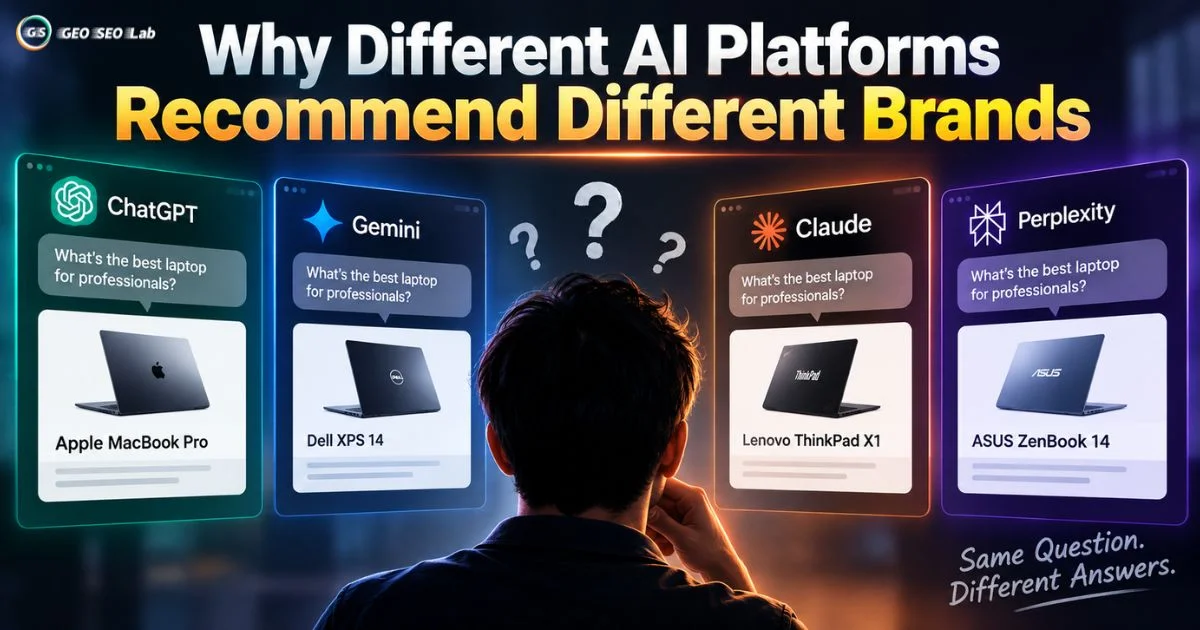
Why Different AI Platforms Recommend Different Brands
Why Different AI Platforms Recommend Different BrandsSame Question, Four Answers, Almost Zero OverlapA GEO SEO Lab ReportEditorial Disclosure: This re...
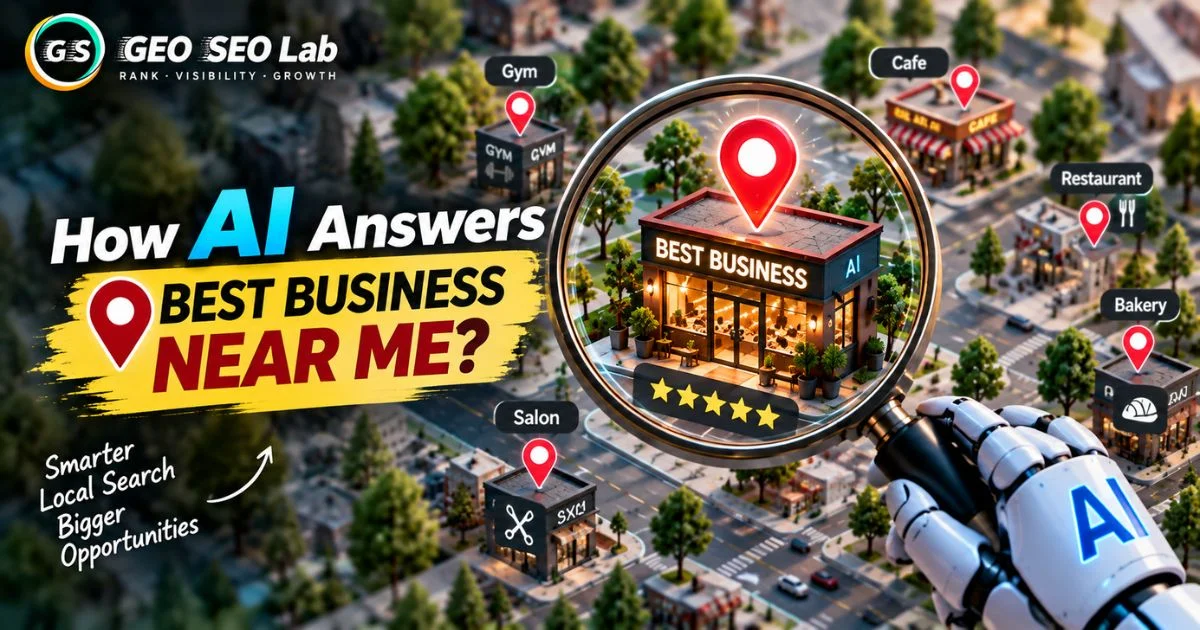
How AI Answers “Best Business Near Me” in 2026 | Local AI Search
How AI Answers "Best Business Near Me"Inside the Shortlist That Decides Who Gets the CallA GEO SEO Lab ReportEditorial Disclosure: This report introdu...
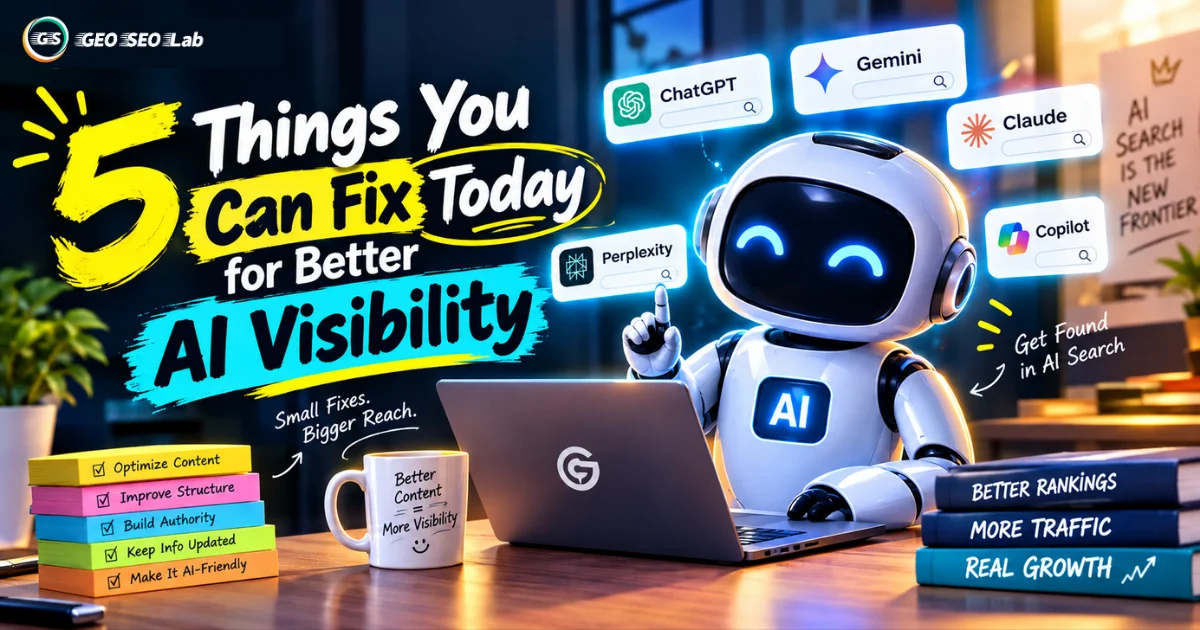
How to Improve AI Visibility in 2026 : 5 Fixes You Can Make Today
5 Things You Can Fix Today for Better AI Visibility No Redesign, No New Budget, Just Real Fixes You Can Ship This Afternoon Introduction Most GEO advice ...