Building a Citation-Worthy Brand: How to Become AI's Trusted Source in Search
Learn why some businesses become the default sources cited by AI platforms like ChatGPT, Gemini, Claude, and Perplexity while others remain invisible. Discover practical strategies to build digital authority, create original knowledge assets, and earn lasting AI search visibility.
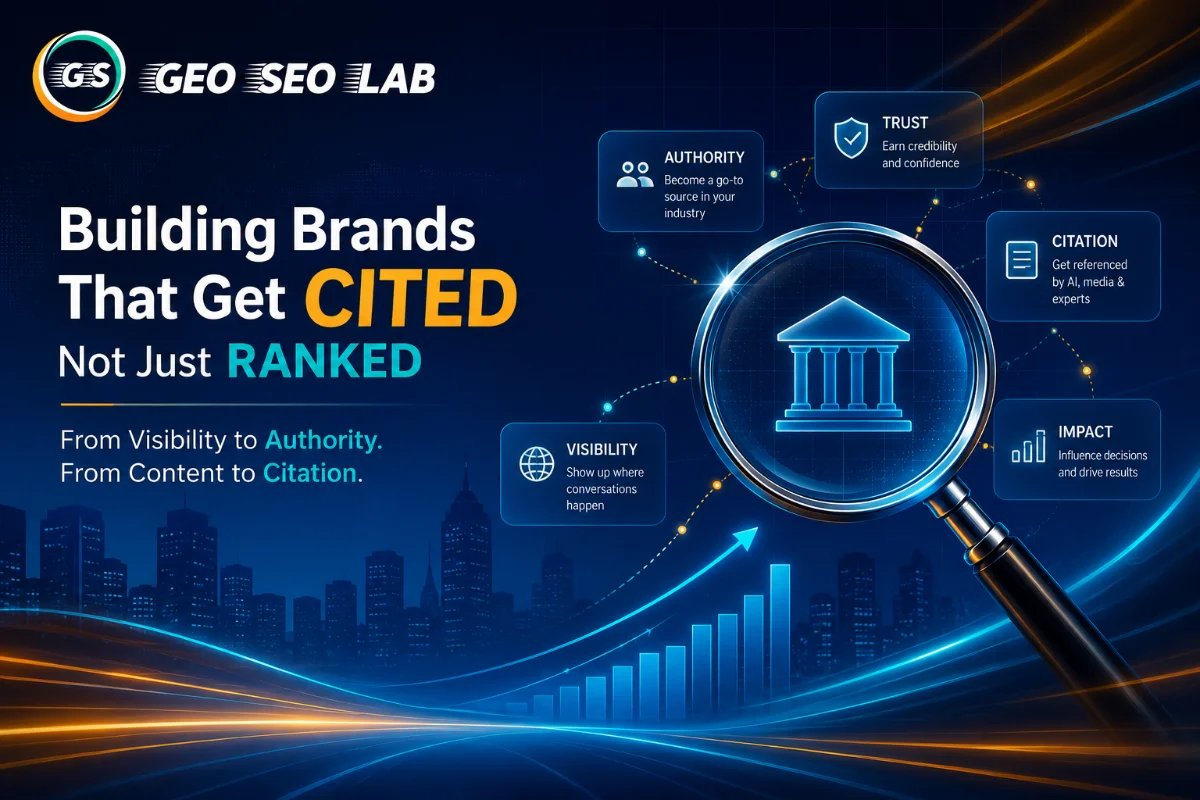
The Competition Has Shifted — And Most Businesses Haven't Noticed Yet
There is a particular kind of frustration that has become increasingly common among marketing teams in the past two years. It goes something like this.A company has invested heavily in SEO. Their rankings are solid. Their content is consistent. Their technical foundation is clean. By any conventional measure, their digital marketing program is working. And then someone in a strategy meeting asks a question that nobody quite knows how to answer.
"Why does our competitor keep showing up when people ask AI assistants about our industry?"
The question reveals something important. The competition for visibility has quietly changed its character. It is no longer purely about ranking higher on a list of results. It is increasingly about something more fundamental — becoming the kind of organization that gets mentioned when the topic comes up, whether in a human conversation, a journalistic piece, an academic reference, or an AI-generated summary.Some companies have become the default sources. When someone asks a sophisticated question about cybersecurity, certain names come up consistently. When someone researches healthcare technology options, specific organizations appear repeatedly. When a journalist needs an expert perspective on fintech trends, particular companies get the call.The rest are visible in the sense that their websites exist and their pages rank. But they are not referenced. They are not cited. They are not the organizations that shape how other people understand the topic.That gap — between being visible and being cited — is what this article is about. Understanding why it exists, what produces it, and what any organization can do to close it.
Part One: The New Race Isn't for Rankings — It's for Recognition
How the Goal Posts Actually Moved?
For the first two decades of commercial search, the logic of digital marketing was straightforward enough that it could be summarized in a few sentences. Higher rankings produced more clicks. More clicks generated more traffic. More traffic created more opportunities for conversion. Therefore, the objective was to rank higher.This logic was not wrong. It reflected how search worked and how users interacted with it. The ten blue links model created a competition for position, and SEO was the discipline of winning that competition.What has changed is not that rankings no longer matter — they do — but that rankings have become an insufficient description of what digital visibility means. A new layer has been added to the competitive landscape, and most businesses have not fully reckoned with what it requires.Consider the difference between these two search behaviors. A user in the old model might search "best project management software," receive a list of results, open several tabs, and eventually navigate to a vendor's website. The competitive question was: does your page appear in that list?A user in the emerging model might ask an AI assistant: "I run a construction company with about 40 employees. We've been using spreadsheets for project tracking and it's getting unwieldy. What project management software would actually work for a company our size in the trades?" The AI synthesizes a response that might name specific products, explain relevant features, describe implementation considerations, and suggest evaluation criteria.
In that second scenario, the competitive question is not just whether your page ranks. It is whether your organization, your product, and your perspective are part of the understanding the AI is drawing on to construct that answer. The two questions are related — pages need to rank and be indexed before they can contribute to AI synthesis — but they are not identical. And the second question rewards something that the first question never demanded.
Recognition Builds Through Evidence, Not Exposure
One of the things that makes building citation-worthy authority feel counterintuitive is that it does not work the way traditional marketing does. Traditional marketing is largely about exposure — getting your message in front of as many relevant people as possible, as frequently as possible. The assumption is that exposure creates familiarity, and familiarity eventually creates preference.Recognition in the sense we are discussing here — the kind that makes an organization a default reference point — works differently. It builds through evidence, not exposure.Think about how you develop genuine trust in a source of information. It rarely happens because you saw the source's name frequently. It happens because you encountered the source's work, found it accurate and useful, encountered it again, found it useful again, perhaps saw it referenced by other sources you already trusted, perhaps found it when you needed specific help and it actually delivered. Each of those experiences is an encounter with evidence — evidence that this source knows what it is talking about and can be relied upon.AI systems, for all the ways they differ from human reasoning, benefit from a similar kind of accumulated evidence. When a source consistently appears across many credible contexts — cited in other reputable sources, referenced in discussions by knowledgeable practitioners, associated with specific expertise through repeated, coherent signals — that accumulation of evidence supports confident representation of the source in relevant contexts.
The practical implication is that building citation-worthy recognition requires thinking about what evidence you are creating, not just what content you are publishing. Content is the output. Evidence is what the content produces — or fails to produce — in the broader information ecosystem.
The Difference Between Being Found and Being Referenced
There is a useful mental distinction worth making explicit here, because it clarifies what citation-worthy authority actually means in practice.Being found is about discoverability. Your content appears when someone searches for relevant terms. This is the traditional SEO objective, and it remains important. Discoverability is the prerequisite for everything else. An organization that cannot be found cannot become a reference point.
Being referenced is different. It is about influence. When someone — a journalist, a researcher, a practitioner, another writer, an AI system synthesizing information for a user — references your organization, they are drawing on your work to support their own understanding or communication. They are using you as a source rather than just acknowledging your existence.The distinction maps onto a familiar human experience. You probably know of many companies in any given industry. You are aware they exist. But the companies you actually reference — that you mention when explaining something to a colleague, that you cite when you need to support a claim, that you think of when you want to understand a topic better — that is a much smaller group. Those are the companies that have moved from discoverability into genuine authority.What separates the second group from the first is not marketing budget or content volume. It is consistently having something worth referencing. That observation points toward the strategic work that actually produces citation-worthy status.
Why AI Systems Specifically Benefit From Strong Sources?
Understanding why AI-assisted search would give preferential weight to genuinely authoritative sources requires thinking about what these systems are actually trying to accomplish.When an AI system generates a response to a complex question, it is attempting to produce an answer that is accurate, useful, and trustworthy. It is drawing on retrieved information and using it as grounding evidence for what it generates. The quality of that grounding directly affects the quality of the response.This creates a genuine interest in the quality and reliability of sources. A source that consistently provides clear, accurate, specific, well-documented information is more useful as grounding evidence than a source that provides vague, general, or internally inconsistent information. A source whose expertise is well-established and independently corroborated is a more reliable grounding anchor than a source whose credibility rests only on its own claims.This is not about favoritism toward certain brands. It is about evidence quality. The organizations that have done the work of becoming genuinely authoritative sources — through consistent, accurate, specific, well-documented knowledge contribution — are the ones whose information is most useful as the evidence base for high-quality AI responses.
That dynamic rewards the same qualities that have always distinguished authoritative sources from noise. What is new is the scale and consistency with which those qualities matter, because AI-assisted search is actively synthesizing from available sources rather than just ranking them.
Part Two: What Actually Makes a Brand Citation-Worthy
The Hierarchy of Mentions
Not every mention carries equal weight. This is a point that seems obvious when stated directly but is frequently overlooked in how businesses measure their digital authority.
There is a significant difference between appearing in a generic directory, being mentioned in an industry blog post, and being cited as the source of a specific insight or data point in a respected publication. All three are mentions. Only one is evidence of genuine authority.The strongest citations exist because the organization contributed something that genuinely helped someone else explain, support, or understand a topic. A research finding that a journalist needed to support a story. A framework that a practitioner used to structure their thinking. A benchmark figure that an analyst cited to establish context. These citations are functional — they are doing work in someone else's communication — which is why they carry meaningful signals about the source's value.Understanding this hierarchy changes how businesses should think about their content goals. The question is not "how do we get mentioned?" The better question is "how do we create something that helps others explain important things?" Those are different orientations, and they produce different kinds of work.
Why Original Knowledge Has Become the Scarce Asset?
One of the paradoxes of the current information environment is that the same technology making it easier to generate content has made original knowledge more valuable. This deserves some unpacking.
The web is currently experiencing an extraordinary proliferation of content that says familiar things in slightly varied ways. Explanations of well-established concepts. Summaries of publicly available information. Guides that cover the same ground as hundreds of other guides. Much of this content is competently produced. Very little of it contributes anything that was not already available.AI systems working with this information landscape already have access to abundant versions of familiar explanations. Publishing another version of the same explanation adds very little to the evidence base they are drawing from. It creates content that competes for attention without differentiating the source.Original knowledge is different in kind. Not different in the sense of a surprising take on a familiar topic, but genuinely different — based on information that does not exist in any other source. An annual benchmark study using your organization's proprietary data. A survey of practitioners in your industry that generates findings nobody has published before. Case study documentation detailed enough to reveal implementation lessons that generic advice cannot provide. A framework developed through actual practice that organizes a domain of knowledge in a way other frameworks do not.
This kind of content is genuinely scarce, and its scarcity makes it valuable in ways that generic content can never match. When a journalist needs a statistic to support a story, they cannot use a statistic that every publication has already used — they need something that adds to the story. When an AI system is synthesizing information about a topic, sources that contribute unique evidence are more useful than sources that repeat what other sources have already said. The scarcity of original knowledge in a dense information environment has made it one of the highest-value forms of content investment.
Organizations That Teach Become Organizations That Are Remembered
There is a consistent pattern across industries in how organizations develop lasting authority. The companies that become default reference points are almost never the ones that were most aggressively self-promotional. They are the ones that taught.This is worth examining carefully because it runs against some deeply ingrained marketing instincts. Marketing training often emphasizes promoting your product, communicating your value proposition, and converting prospects. These objectives are legitimate. But they are downstream of trust, and trust is built through a different mechanism.
Think about the sources you personally return to for understanding in a domain you care about. They probably publish educational content that helps you understand something, not just promotional content trying to sell you something. They probably share what they know generously, trusting that demonstrating genuine expertise will build the kind of relationship that eventually produces commercial outcomes. They probably spend as much attention on helping you understand as on persuading you to buy.This orientation produces authority as a byproduct. When an organization consistently publishes work that helps practitioners understand their domain better, those practitioners naturally become advocates. They reference the organization's work in their own writing and conversations. They recommend the organization's resources to colleagues. They think of the organization when a topic comes up. Over time, the organization becomes part of the shared knowledge infrastructure of its field.The same dynamic applies in the context of AI-assisted search. Organizations whose digital presence is primarily educational — whose body of published work is genuinely helpful rather than primarily promotional — create a more valuable and more consistently useful information ecosystem than organizations focused narrowly on conversion.
Expertise That Is Not Visible Contributes Nothing
One of the most common sources of wasted competitive advantage is expertise that remains inside an organization rather than becoming public. Many businesses employ remarkable specialists — doctors, engineers, researchers, analysts, strategists — whose knowledge is genuinely differentiated and whose insights could establish real authority. That knowledge remains invisible because nobody thought to make it public.
Search engines cannot evaluate expertise they cannot access. AI systems cannot draw on knowledge that was never published. Potential customers cannot be impressed by credentials they never encounter. The most brilliant team in an industry, if they never share their thinking publicly, contributes exactly as much to the organization's external authority as a team with no expertise at all.Making expertise visible is not the same as self-promotion. It does not require boasting or exaggeration. It means creating contexts in which genuine knowledge can be expressed and shared. Articles where practitioners explain their actual thinking, not just their conclusions. Presentations where experts walk through their reasoning in enough detail that audiences learn something. Research publications that document what the team discovered through actual investigation. Educational resources that reflect the depth of knowledge that comes from direct experience.The practical goal is ensuring that the knowledge your organization possesses exists somewhere in the public information ecosystem, in a form that allows others to encounter, evaluate, and reference it. Expertise that exists only internally is a private asset. Expertise that exists publicly is a competitive moat.
The Compound Value of First-Party Evidence
There is a category of knowledge that only your organization can produce, and it is worth investing significant attention in developing and publishing it.First-party evidence means information derived from your organization's unique access to data, situations, or experience. Your customer behavior analytics. Your implementation lessons from hundreds of client engagements. Your product performance data across different contexts. Your survey findings from your specific practitioner community. Your research using your proprietary methodology.This category of evidence is inherently non-replicable. A competitor can publish another article about a topic you have covered, but they cannot publish your data. They cannot reproduce your survey. They cannot replicate your longitudinal study. First-party evidence creates a form of intellectual property that is genuinely exclusive.The organizations that have built the strongest authority in their fields have almost universally done so by consistently publishing first-party evidence. Annual state-of-the-industry reports using proprietary survey data. Benchmark studies comparing performance across their customer base. Research findings from original investigations using their own methodology.These assets become reference points specifically because they are unique. Journalists need them because they cannot find the same information elsewhere. Researchers cite them because no other source has done the same study. AI systems incorporate them because they contribute evidence that is not already saturated across thousands of competing sources. The uniqueness is the value.
Why Consistency Beats Virality in the Long Run?
There is a persistent temptation in digital marketing to optimize for peaks — the piece of content that goes viral, the report that gets widespread media attention, the article that generates a sudden surge of backlinks. These events feel good and their effects are real. They are also not the foundation on which lasting authority is built.
Authority is cumulative. It develops through repeated encounters with reliable quality over an extended period. The organization that has published thoughtful, accurate, useful research every year for five years has done something that no single viral moment can replicate. They have created a record — a body of evidence that spans enough time to demonstrate consistency rather than capability.This is how human trust works. We extend deep trust to sources that have proven reliable over many encounters, not to sources that produced one impressive thing. The source that was brilliant once might be brilliant again, but we cannot count on it. The source that has been consistently excellent across dozens of encounters has demonstrated something we can depend on.The same principle applies to how organizations build citation-worthy authority. Consistency produces a track record. Track records build confidence. Confidence enables reliable reference. The organization that consistently contributes quality knowledge over years is building an asset that compounds — each new contribution adds to a foundation of accumulated credibility rather than standing alone.
Part Three: The GEO SEO Lab Framework for Building Citation-Worthy Status
Why This Is a Business Strategy, Not a Marketing Tactic?
Before describing the specific elements of building citation-worthy authority, it is worth being direct about what this work actually requires. It is not a campaign. It is not a quarterly project. It is not an SEO tactic that the marketing team implements in isolation while the rest of the organization continues operating as before.Becoming a citation-worthy brand is a business strategy that involves decisions about what the organization prioritizes, invests in, and values over time. It requires leadership commitment to knowledge contribution as an organizational objective. It requires operational investment in research, expert development, and educational publishing that may not produce immediately measurable returns. It requires patience with a compounding process that rewards years of consistent contribution rather than quarters of intensive activity.Organizations that approach this work with a campaign mentality — sprint to produce some impressive content, measure the impact, move on — will find that the expected results do not materialize. The reason is structural: citation-worthy authority is the outcome of sustained organizational behavior, not concentrated tactical effort.
The organizations that have successfully built this kind of authority have done so by deciding, at a leadership level, that being a trusted source of knowledge in their domain is a strategic objective worth sustained investment. Everything else follows from that decision.
Think Like a Research Organization
One of the most useful mental shifts for organizations trying to build citation-worthy authority is to study how research institutions develop influence and then translate that model to their own context.Universities, major consulting firms, respected think tanks, and leading healthcare institutions have something in common: their authority rests primarily on their record of advancing understanding rather than their record of self-promotion. Their research expands what is known. Their frameworks organize how practitioners think about problems. Their publications become the reference points that others build upon.This model is not exclusive to academic or research institutions. Businesses in every sector can adopt it. The ingredients are the same: genuine expertise applied to genuine questions, documented in ways that help others understand, published consistently over time, and connected to the organization's identity clearly enough that the knowledge contribution strengthens rather than floats free of the brand.
The translation looks different in different contexts. For a software company, it might mean publishing rigorous research on how different implementation approaches affect outcomes for users, using their own customer data. For a law firm, it might mean publishing detailed analyses of how regulatory developments affect specific industries, drawing on their attorneys' actual practice experience. For a healthcare organization, it might mean publishing treatment outcome data with transparent methodology. The form varies. The underlying orientation — advancing understanding rather than just marketing — is consistent.
Building Knowledge Assets Rather Than Content Inventory
There is a useful distinction between content and knowledge assets. Most organizations produce content. Very few build knowledge assets. The difference matters practically.Content serves immediate objectives — addressing a keyword cluster, supporting a campaign, explaining a product feature. It has a natural shelf life tied to the currency of the information and the relevance of the objective. Content produced to support a specific campaign often has little value after that campaign ends.Knowledge assets are different. They continue generating value — in the form of references, citations, educational utility, and brand credibility — long after they were created. A well-designed industry framework, properly attributed to your organization, might be referenced in practitioner discussions for years. An annual benchmark report accumulates value across editions as its historical record grows. A comprehensive guide to a complex topic remains useful as long as the topic remains relevant.The hierarchy of knowledge asset types, roughly ordered by strategic value, runs from basic informational content at the foundation through educational content that helps practitioners solve real problems, up through documented case studies with transparent methodology, into original frameworks that organize domain knowledge in distinctive ways, through benchmark reports using proprietary data, and finally to genuine industry research that expands what is collectively known.Organizations should invest across this hierarchy, but the most strategically valuable investments are in the upper levels — the content types that are hardest to replicate, most likely to generate citations, and most durably associated with organizational authority.
Making the Citation Engine Work: The Six-Stage Model
Think about citation-worthiness as built through six progressive stages, each of which enables the next. Organizations that skip stages consistently find that their efforts in higher stages produce disappointing results because the foundation is incomplete.
Stage One: Technical Accessibility. Before any of the subsequent stages can matter, your content needs to be discoverable. This means maintaining the technical infrastructure that allows search engines to crawl, render, and index your content efficiently. Fast page loading. Clean site architecture. Logical internal linking. Mobile optimization. Crawlability for all important pages. This is table stakes — the absence of technical quality limits the impact of everything built on top of it. Organizations that have allowed technical debt to accumulate in their web infrastructure are undermining their own authority-building efforts at the most basic level.
Stage Two: Content and Entity Clarity. Once content is accessible, it needs to be clearly understandable — both to human readers and to the systems that evaluate and synthesize it. This means clarity in how your organization is described and positioned, consistency across all the places your brand appears, clear attribution of content to identifiable experts within your organization, and coherent descriptions of your products and services that agree across platforms. Ambiguity at this stage reduces the confidence with which your organization can be represented in any downstream context.
Stage Three: Expert Visibility. The knowledge your organization possesses needs to become publicly visible through the people who hold it. This means developing professional profiles for your key contributors that genuinely establish their expertise — not just their names and titles, but their relevant experience, their published work, their professional credentials, their track record of contribution. It means creating contexts in which those experts can share their thinking: articles, presentations, interviews, educational resources. Expert visibility is the bridge between internal knowledge and public authority.
Stage Four: Original Knowledge Creation. This is the stage where organizations genuinely differentiate themselves from the mass of content producers. Creating work that contributes something new — research using proprietary data, frameworks developed from direct practice, case studies documented with enough specificity to be genuinely instructive, benchmark studies that generate findings unavailable elsewhere — is what moves an organization from being a content publisher to being a knowledge source. This stage requires genuine organizational investment and cannot be contracted out to generalist content agencies.
Stage Five: Third-Party Recognition. Authority becomes self-reinforcing when others begin treating your organization as a reference point. Media coverage that quotes your experts for their perspective. Academic or professional publications that cite your research. Industry events that invite your practitioners to speak. Partner organizations that reference your frameworks. Professional communities that recommend your resources. Each instance of independent recognition adds to an evidence base that your organization's expertise is legitimate and valuable. This stage develops as a consequence of the work done in previous stages — it cannot be manufactured through PR campaigns alone, though strategic communications can help legitimate expertise find appropriate audiences.
Stage Six: Trusted Industry Source. At the highest level of citation-worthiness, the organization has become part of the shared knowledge infrastructure of its field. Its research is treated as baseline reference material. Its frameworks are used by practitioners who may not even consciously remember where they encountered them. Its perspectives are expected contributions to important industry conversations. This stage is the outcome of years of consistent, high-quality contribution at the previous stages. It cannot be rushed, but it is eminently achievable for organizations willing to commit to the process.
The Role of Digital PR in Building Citation-Worthy Status
There is a version of digital PR that is about exposure — getting your company's name mentioned as frequently as possible across as many outlets as possible. This version has limited relevance to building citation-worthy authority.
There is another version that is about becoming genuinely useful to journalists, researchers, and community practitioners as an expert source. This version is directly relevant.
The distinction comes down to what you are offering. An organization that contacts journalists primarily when it has something to announce is a press release source. An organization that proactively shares research findings, offers expert perspective on developing industry situations, responds thoughtfully to queries in journalist networks, and publishes work that journalists can draw on for background understanding — that organization is a source.
Sources get cited. Press release distributors get announcements published. These are different outcomes, and they require different orientations.
Building genuine media relationships in this sense requires exactly the same investment in original knowledge and visible expertise that the earlier stages of the Citation Engine require. Journalists cite organizations whose expertise is documented, whose data is proprietary and specific, and whose representatives can speak with genuine depth rather than corporate talking points. The work of becoming a source journalists call is the same work as becoming an organization AI systems reference.
Part Four: Measuring Authority and Preparing for What Comes Next
The Measurement Gap That Most Organizations Have
One of the practical challenges of building citation-worthy authority is that the most important forms of progress are poorly captured by conventional marketing dashboards.
Traditional analytics are designed to measure acquisition — how many people visited the site, where they came from, what they did once they arrived. These metrics remain important for understanding the commercial performance of digital marketing investments. But they systematically miss the kind of influence that citation-worthy authority produces.
An organization's research being cited in a respected industry publication is not captured in Google Analytics. An expert's framework being adopted by practitioners in online communities does not show up in rank tracking reports. A journalist asking for expert commentary because the organization published relevant research does not appear in traffic data. A gradual increase in the frequency with which an organization is mentioned in AI-generated responses is not measured by any standard marketing tool.
This measurement gap can lead organizations to undervalue exactly the kinds of investments that build lasting authority. If the only things measured are the things that standard tools capture, then the only things that get investment are the things that produce measurable results quickly. Authority-building investments produce their most significant results slowly and in forms that require different measurement approaches.
Addressing this gap requires expanding both what is measured and the time horizons over which measurement is evaluated. Some useful additions to conventional dashboards include tracking how frequently the organization's research is cited by other credible sources, monitoring the growth in speaking invitations and media inquiries, assessing the consistency and quality of brand mentions across relevant professional communities, and evaluating the depth and frequency of branded search activity as a proxy for top-of-mind awareness among relevant audiences.
The Citation Maturity Model: Understanding Where You Are
It is useful to have a structured way of assessing where your organization currently sits in the development of citation-worthy authority, both to understand your starting point and to identify the most productive areas for investment.
Think of citation maturity as developing across five levels, each building on the previous.
Level One: Basic Digital Presence. At this level, the organization has a website and perhaps some basic digital profiles, but limited authority signals beyond its own presence. Content primarily describes the organization's products and services. There is minimal educational content and very little that would be independently referenced. Most potential customers who encounter the brand are encountering it for the first time with no prior context to draw on.
Level Two: Developing Expertise. The organization has begun investing in educational content. There are blog posts, guides, and explanatory resources that go beyond product description. The content is competent and useful, but it primarily synthesizes and summarizes existing knowledge rather than contributing new insights. The organization is becoming more visible in relevant search contexts but has not yet developed a distinctive voice or proprietary evidence base.
Level Three: Trusted Authority. Expertise is becoming visible through identifiable experts rather than anonymous publishing. The organization's content demonstrates genuine depth in specific domains. There is a track record of accurate, useful information that has built some measure of independent trust. The organization participates in relevant industry conversations and has some record of external recognition through media mentions or professional community presence. Technical SEO is solid and entity signals are clear.
Level Four: Knowledge Leader. The organization has moved into genuine knowledge contribution. Original research, benchmark reports, and proprietary frameworks appear regularly. Third parties are beginning to reference the organization's work as a source rather than just acknowledging its existence. Journalists occasionally reach out for expert perspective. Industry events include the organization's representatives as speakers. The brand is becoming associated with specific expertise rather than just general capability.
Level Five: Industry Reference. At this level, the organization has become part of the knowledge infrastructure of its field. Its research is treated as baseline material. Its frameworks are in common use. Its perspectives are expected contributions to important conversations. Practitioners who need to understand a topic in the organization's domain naturally encounter its work in the process of doing so. This is where citation-worthy authority reaches its most durable and commercially valuable form.Most organizations reading this article are at Level One or Two. Reaching Level Three requires deliberate investment and typically takes twelve to eighteen months of consistent effort. Levels Four and Five develop over years, not months — but they produce competitive advantages that years-long competitors cannot quickly replicate.
Key Performance Indicators That Actually Capture Authority Development
In addition to conventional digital marketing metrics, organizations building citation-worthy authority should consider tracking indicators that capture the forms of influence that traditional analytics miss.
For knowledge contribution, useful indicators include the number of original research publications per year, the number of proprietary data studies published, the number of frameworks or methodologies developed and documented, and the rate at which these resources are cited by third parties.
For expert visibility, useful indicators include the number of speaking engagements at respected industry events, the frequency of media inquiries received rather than initiated, the growth in professional community engagement where your experts participate, and the development of recognizable individual brands among your key practitioners.
For authority development, useful indicators include the frequency of mentions in relevant professional communities that are not initiated by your marketing team, the rate of growth in backlinks from editorial rather than promotional contexts, the appearance of your organization's work in other organizations' research and publications, and the growth in branded search activity as a proxy for increasing unprompted awareness.
For trust, useful indicators include the quality distribution of customer reviews across platforms, the rate of customer renewal and repeat engagement, the growth in direct and referral traffic as evidence that current customers are recommending the organization, and the net promoter trajectory over time.
None of these indicators are captured cleanly by standard marketing dashboards. Tracking them requires intentional measurement design and the patience to work with metrics that develop slowly. The organizations willing to invest in that measurement discipline will have a clearer picture of where their authority-building investments are working than those relying on conventional analytics alone.
What the Next Five Years Are Likely to Require?
This section reflects GEO SEO Lab's forward-looking analysis and should not be read as confirmed predictions or platform guidance.Several trends appear consistently across what is observable about the direction search and AI-assisted discovery are heading.The premium on original knowledge will likely increase rather than decrease. As AI tools make it easier to generate content that covers familiar topics adequately, the proportion of genuinely original knowledge in the information ecosystem will shrink relative to the overall volume of content. This creates an environment where genuine originality becomes increasingly scarce and therefore increasingly valuable. Organizations investing in original knowledge creation now are building assets that will be more competitively differentiated in three years than they are today.
Expert visibility will continue to matter more. The credibility signals associated with identifiable, demonstrably qualified individuals are not easily replicated by anonymous organizational publishing. As AI-generated content proliferates, the premium on content clearly associated with verifiable human expertise may increase. Organizations that develop genuine public intellectual presence for their key practitioners are building an asset with increasing long-term value.
Digital reputation will be evaluated across broader ecosystems. Search systems and AI platforms are developing increasingly sophisticated understanding of organizations across the full range of their digital presence — not just their primary websites but their representation across review platforms, professional directories, social channels, media coverage, and community participation. Organizations managing only their owned channels while neglecting the rest of their digital footprint will face growing disadvantages.
Trust will become a primary differentiator. Technology changes rapidly and consistently. Trust develops slowly and remains durable. Organizations that have invested consistently in building the kind of trust that comes from years of accurate, reliable, genuinely useful contribution will carry that asset across technological transitions. Algorithm updates change what technical factors matter. They cannot eliminate the advantage of being an organization that professionals in a domain genuinely rely on.
Conclusion: From Competing for Attention to Earning Recognition
The shift from competing for rankings to competing for recognition is not a development that happened all at once. Like most meaningful changes in digital marketing, it accumulated gradually and became undeniable slowly. But the direction of the change is clear enough now that organizations have a real choice about how to respond.
One response is to optimize for whatever the current interface requires. Adjust content for AI Overviews. Implement schemas for structured data. Monitor which prompts produce which citations and adjust accordingly. This response is understandable and not entirely wrong — staying current with platform developments has always been part of effective digital marketing.The other response is to invest in becoming an organization that deserves to be cited. To produce original research rather than summarizing what others have researched. To make genuine expertise visible rather than leaving it inside the organization. To contribute to industry knowledge rather than competing for attention within the existing information landscape. To build trust through the slow accumulation of accurate, useful, expert-grounded contribution over time.These responses are not mutually exclusive, but they are different in priority and in the kind of organizational commitment they require. The first is primarily a marketing function. The second requires leadership-level commitment to knowledge contribution as a strategic objective.The organizations that will be most visible — most referenced, most cited, most reliably present when important topics are discussed — in five years will be those that made the second commitment now. Not because they will have gamed whatever AI systems are doing in 2031, but because they will have built the kind of genuine authority that any sophisticated information system, regardless of its specific architecture, has reason to draw on.
The question is no longer only "how do we get more visibility?" The question is "how do we become the organization that people and intelligent systems cannot explain the topic without mentioning?" Organizations that take that question seriously will earn their visibility rather than chase it — and the visibility they earn will be considerably more durable.
About GEO SEO Lab
GEO SEO Lab works with organizations to improve their visibility across Google Search, Google Maps, ChatGPT, Gemini, Claude, Perplexity, and other AI-assisted discovery platforms. Our approach combines technical SEO, entity optimization, Generative Engine Optimization, local SEO, AI visibility strategy, and original knowledge development to help businesses build digital authority that extends beyond any single algorithm update or platform change.
References and Further Reading
The concepts in this article draw on publicly available research and documentation from multiple sources. Readers seeking foundational material should consult Google Search Central guidance on helpful, people-first content and the Search Quality Evaluator Guidelines; published research on information retrieval and knowledge graph development; academic literature on information quality, source credibility, and Retrieval-Augmented Generation; and research on digital reputation and brand authority from information science and marketing scholarship. These primary sources provide the documented foundation underlying the strategic analysis in this guide.
Tags
Frequently Asked Questions
Find answers to common questions about this topic
About the Author

Aman Kesharwani
SEO Expert & Content Creator
Experienced digital marketing professional specializing in SEO strategies, content optimization, and data-driven marketing solutions. Passionate about helping businesses grow their online presence and achieve better search rankings.
Related Articles
View all posts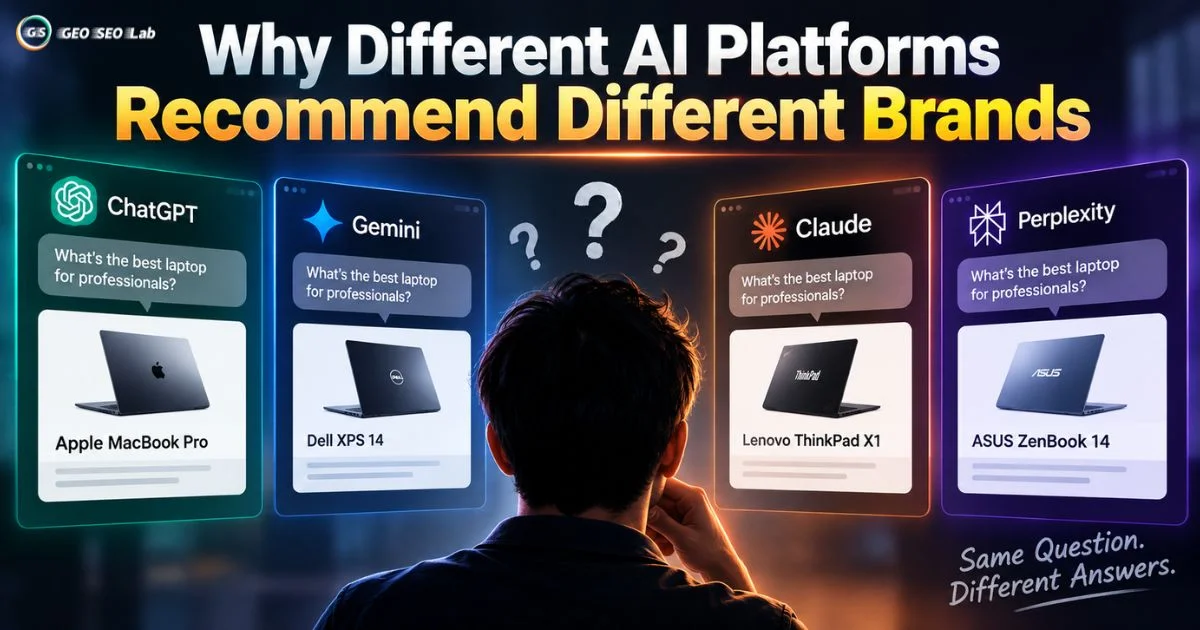
Why Different AI Platforms Recommend Different Brands
Why Different AI Platforms Recommend Different BrandsSame Question, Four Answers, Almost Zero OverlapA GEO SEO Lab ReportEditorial Disclosure: This re...
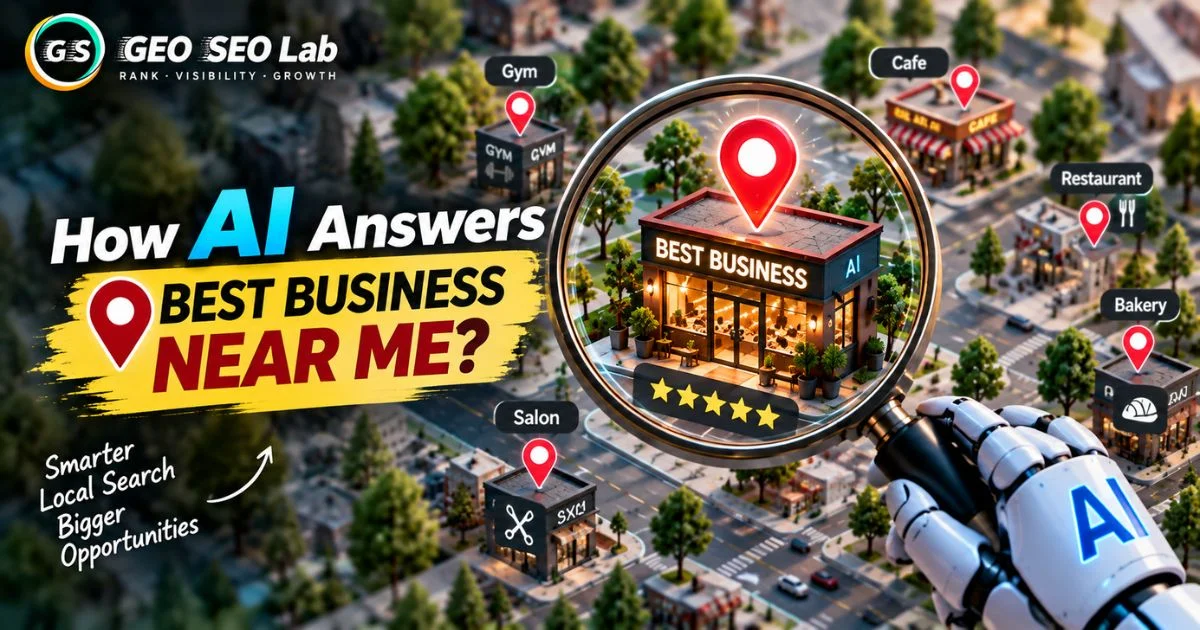
How AI Answers “Best Business Near Me” in 2026 | Local AI Search
How AI Answers "Best Business Near Me"Inside the Shortlist That Decides Who Gets the CallA GEO SEO Lab ReportEditorial Disclosure: This report introdu...
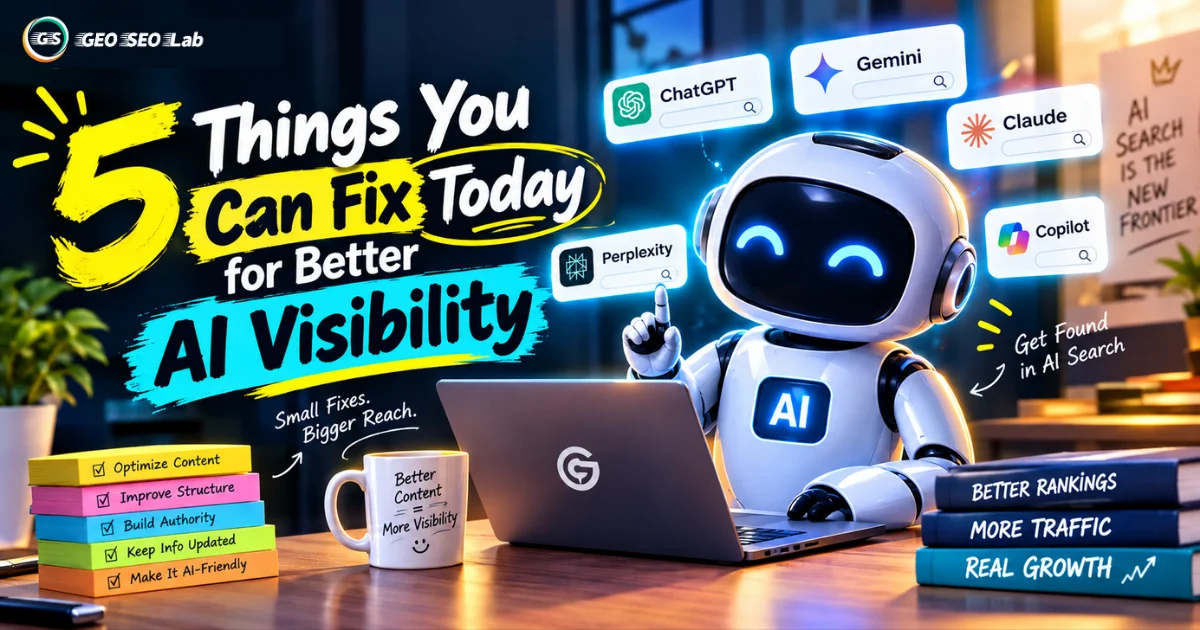
How to Improve AI Visibility in 2026 : 5 Fixes You Can Make Today
5 Things You Can Fix Today for Better AI Visibility No Redesign, No New Budget, Just Real Fixes You Can Ship This Afternoon Introduction Most GEO advice ...