Best AI Visibility Tools for Companies & Agencies in 2026: 10 GEO SEO Platforms
Best AI Visibility Tools for Agencies in 2026: 10 GEO Platforms ComparedPrimary Keyword: best AI visibility tools for agenciesSecondary Keywords: AI v...
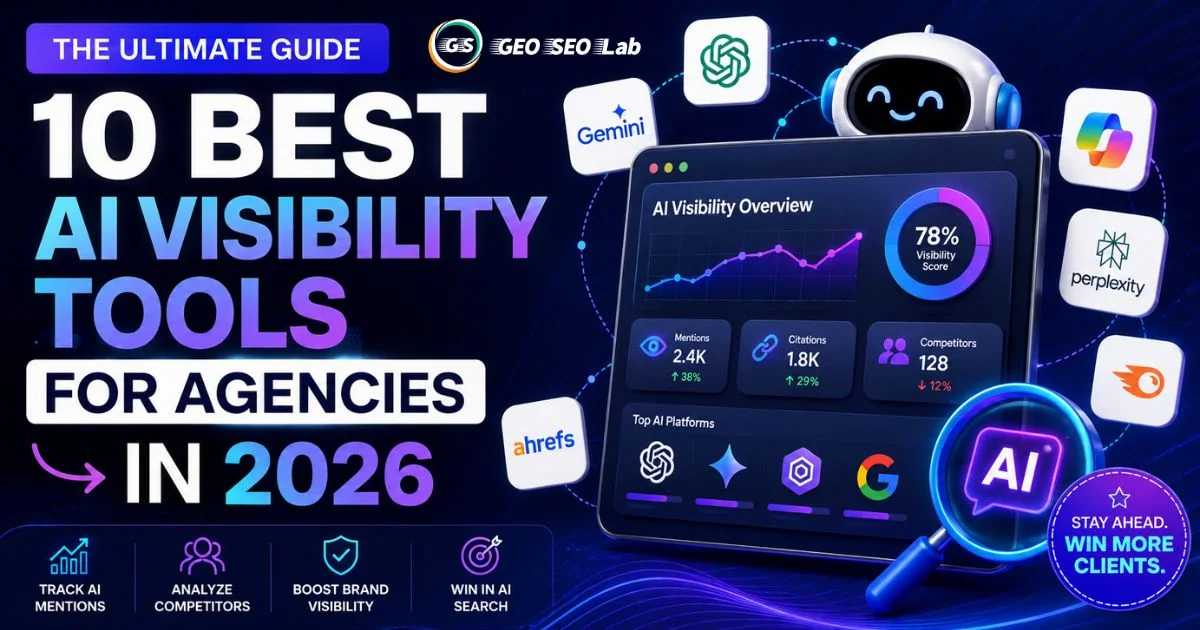
Best AI Visibility Tools for Agencies in 2026
Imagine your client ranks near the top of Google for an important commercial query. Then a potential customer asks an AI assistant a similar question and gets a completely different set of recommendations. Your client may be mentioned. A competitor may be recommended instead. Another company may appear with several citations supporting it, while your client doesn't appear at all. That doesn't mean traditional SEO has stopped working it means search visibility is becoming broader than a traditional ranking report can show. Google itself says the same foundational SEO best practices remain relevant for AI Overviews and AI Mode. At the same time, Google has continued expanding its AI search experiences: in June 2026, Google reported that AI Overviews had surpassed 2.5 billion monthly active users, while AI Mode had crossed one billion monthly users globally.
For agencies, that creates a new measurement question: when potential customers ask AI about a client's category, brand, product, or service, what does the answer look like?
That's where AI visibility tools come in.
These platforms help agencies monitor how brands appear in AI-generated answers, track mentions and citations, compare competitors, discover relevant prompts, and understand how visibility changes across AI search environments. The category is moving quickly, and the tools are not interchangeable some are built primarily for AI visibility analytics, some combine GEO with traditional SEO, and others focus on enterprise intelligence, content execution, technical monitoring, or multi-client workflows.
So rather than asking "What is the single best AI visibility tool?", agencies should ask: which AI visibility platform best fits the service we want to build?
Below, we compare 10 platforms worth considering in 2026.
What Is an AI Visibility Tool?
An AI visibility tool helps you understand how a brand appears inside AI-generated answers.
Traditional SEO usually asks: what position does my page have for this keyword?
AI visibility asks a different question: what happens when someone asks an AI system about this topic?
For example, imagine your agency manages a SaaS company that sells project management software, and a potential customer asks: "What are the best project management tools for a remote startup?"
A traditional SEO platform can help you understand rankings, search demand, backlinks, and organic competitors. An AI visibility platform investigates a different set of signals:
- Is the brand mentioned?
- Which competitors appear?
- How frequently does the brand appear across relevant prompts?
- Where does it appear in the response?
- Which sources or pages are cited?
- Which topics produce visibility?
- Where do competitors appear but the client doesn't?
- How is the brand being described?
- Is visibility changing over time?
That's the basic idea behind the emerging GEO, AEO, and AI-search visibility category. Google itself notes that "GEO" and "AEO" are terms used for work focused on AI search experiences, while also emphasizing that its AI search features remain rooted in core Search systems and SEO fundamentals.
Why AI Visibility Matters So Much for Agencies
AI visibility becomes particularly important when you're managing multiple clients. An in-house team may monitor one brand; an agency might manage 10, 20, or 50 and every account has its own competitors, products, markets, customer questions, search intent, brand positioning, and AI-search opportunities.
Now imagine monitoring 50 tracked prompts for one client, then doing it for 20 clients. That's already 1,000 prompts, before adding competitors, multiple AI platforms, citation analysis, historical tracking, and client reporting.
Manual checking can work as a small experiment. It becomes much harder to maintain as a recurring agency service and that's where software earns its place.
Agencies need more than a visibility score
A single AI visibility number can be a useful headline metric, but clients usually need more context. They want to know:
- Are we appearing more often?
- Which competitors are gaining visibility?
- Which questions are we missing?
- What sources are influencing the answers?
- What should we do next?
That's why the more useful platforms combine multiple signals mentions, citations, position, sentiment, competitors, prompts, and historical trends rather than a single score. Semrush's AI Visibility Toolkit, for instance, includes an AI Visibility Score alongside mentions, cited pages, citations, competitor research, prompt research, and topic gaps. Peec AI similarly centers its analytics around visibility, position, and sentiment, and adds citation and competitive analysis on top.
What Should Agencies Look for in an AI Visibility Tool?
Not every agency needs the same platform. A boutique SEO consultancy may prioritize simplicity and cost; a global agency may need multi-client workspaces, automated reporting, APIs, team access, and integrations. Before choosing a platform, evaluate these eight areas:
- Multi-client management - Can your team manage different clients without constantly switching systems?
- Prompt tracking - Can you build prompt sets that represent actual customer questions rather than generic keywords?
- AI platform coverage - Which AI environments are monitored? Don't assume two platforms measure the same systems or use the same methodology.
- Citation tracking - Can you see which pages and domains are being cited? Citation data connects visibility measurement to content and authority strategy.
- Competitor analysis - Can you see where competitors appear and where your client doesn't?
- Historical trends - Can you compare visibility over time? One AI answer is a snapshot; agency reporting needs patterns.
- Client reporting - Can your team turn complex AI-search data into something a client can understand?
- Actionability - Does the platform only tell you what happened, or does it help you decide what to do next?
10 Best AI Visibility Tools for Agencies in 2026
1. GEO SEO Lab - Best for Agencies Building a Dedicated GEO Service
If your agency wants GEO to become a genuine service line, GEO SEO Lab deserves serious consideration. The platform is positioned around AI and search visibility rather than traditional SEO alone. Its AI Visibility Tracker monitors brands across 20+ AI and search engines, and the broader platform combines visibility tracking with GEO analysis, competitor intelligence, content, local visibility, brand monitoring, and LLM traffic analytics.
That wider scope matters for agencies. The opportunity isn't simply to tell a client "your AI visibility score went up" - a stronger service connects AI visibility with questions like which prompts are producing visibility, which competitors are winning, what content is being surfaced, which citations matter, whether AI-driven traffic is reaching the website, and what to optimize next.
GEO SEO Lab's current product suite - AI Visibility Tracker, Competitor Intelligence, Content Studio, Brand Monitoring, and LLM Traffic Analytics - gives agencies multiple ways to connect measurement with execution, which is particularly appealing for agencies that don't want GEO to exist as an isolated reporting dashboard.
Why it stands out: The platform is built around growth and visibility intelligence for the AI era broadly, rather than treating AI visibility as one small feature inside a traditional SEO product. That makes it easier to package GEO into a client-facing workflow: measure → find gaps → optimize → monitor → report.
Best fit: SEO agencies expanding into GEO, digital agencies adding AI-search services, consultancies building AI visibility programs, and agencies wanting SEO and GEO workflows to work together.
Our take: One of the most interesting choices for agencies that want GEO to become a core service rather than an afterthought - though the smarter strategy is combining it with traditional SEO data rather than replacing it.
2. Profound - Best for Enterprise AEO Programs
Profound has built a broad platform around Answer Engine Optimization and AI-search visibility. Its agency offering includes centralized client management, with the platform covering answer-engine insights, prompt volumes, agent analytics, brand visibility, and competitive analysis. Profound says it monitors major answer engines and supports platforms including ChatGPT, Perplexity, Claude, Gemini, Grok, Microsoft Copilot, DeepSeek, and Google AI Overviews.
For large agencies, breadth matters - enterprise clients may have multiple brands, regions, markets, and large query sets to monitor.
Best fit: Large agencies, enterprise clients, and teams building sophisticated AEO programs.
Our take: Worth considering when an agency needs a broad enterprise AI-search environment with significant analytics and agency infrastructure.
3. Peec AI - Best for Multi-Client Agency Workflows
Peec AI's agency product is built around client workspaces, reporting, dashboards, team access, pitch projects, and AI-search analytics. Agencies can manage multiple client projects from one account, use client-ready dashboards, and create dedicated pitch projects to demonstrate a prospect's AI visibility before a sales meeting. Its core analytics - visibility, position, and sentiment - are paired with citation and competitive insights built into the workflow.
That creates a useful agency flywheel: win the pitch → deliver the service → report the results → renew the retainer.
Best fit: Agencies managing multiple brands, competitive visibility programs, and client-facing reporting.
Our take: Particularly strong for agencies focused on multi-client operations and turning AI visibility data into something clients can see and understand.
4. OtterlyAI - Best for Accessible AI Search Monitoring
OtterlyAI focuses specifically on AI search monitoring and optimization. Its agency offering supports tracking brand mentions and website citations across Google AI Overviews, Google AI Mode, ChatGPT, Perplexity, Gemini, and Microsoft Copilot, alongside agency features such as workspace management, branded reporting, multi-client dashboards, and a Looker Studio connector.
Best fit: Small and growing agencies, SEO teams adding AI-search services, and agencies prioritizing monitoring and reporting.
Our take: A practical option for agencies that want a focused AI-search monitoring workflow without an unnecessarily complicated setup.
5. Semrush AI Visibility Toolkit - Best for SEO Agencies Expanding Into AI Search
For agencies already using Semrush, this is one of the most natural options to evaluate. The AI Visibility Toolkit measures an AI Visibility Score, mentions, cited pages, citations, historical trends, competitor gaps, prompts, topics, and visibility by LLM and country. Semrush also says its AI-analysis prompt database contains more than 317 million prompts and responses across ChatGPT, Gemini, Google AI Overviews, and AI Mode, updated on a rolling basis.
Best fit: Established SEO agencies and teams already reliant on Semrush.
Our take: A strong choice when you want traditional SEO and AI visibility inside one broader search-marketing ecosystem, thanks to tight integration with existing Semrush workflows.
6. Scrunch AI - Best for Multi-Client AI-Search Programs
Scrunch is built specifically around the AI-search environment, with a notable agency focus: multi-client workflows, unified brand management, bulk imports, prospect environments, competitor tracking, persona mapping, and topic generation. For agencies, those workflow capabilities can matter just as much as the visibility metrics themselves - the harder a program is to operate across multiple clients, the more important the workflow layer becomes.
Best fit: Agencies building structured GEO programs and teams managing multiple AI-search projects.
Our take: Worth exploring when agency workflow and AI-search optimization are both important parts of the buying decision.
7. Ahrefs Brand Radar - Best for SEO and Research-Led Agencies
Ahrefs approaches AI visibility from its traditional strength in search intelligence. Brand Radar tracks brand visibility across AI answers using search-backed prompts rather than synthetic ones, covering AI Overviews, AI Mode, ChatGPT, Copilot, Gemini, and Perplexity, alongside other visibility channels such as SEO, YouTube, Reddit, and TikTok.
Best fit: SEO-first agencies, research teams, and agencies already working extensively inside Ahrefs.
Our take: A strong choice when AI visibility needs to sit alongside established SEO and competitive research workflows.
8. Similarweb AI Brand Visibility - Best for Market Intelligence
Similarweb connects AI search with broader digital market and traffic intelligence rather than treating AI visibility in isolation. Its AI Brand Visibility capabilities let teams track brand presence in AI answers, examine sources driving mentions, benchmark competitors, and analyze prompts. In 2026, Similarweb also expanded coverage across additional models and languages, including Gemini, Perplexity, and AI Mode.
Best fit: Enterprise agencies, research-driven teams, and competitive intelligence specialists.
Our take: Makes particular sense when AI visibility needs to be interpreted alongside wider market, traffic, and competitive data.
9. Writesonic GEO - Best for Content-Focused Agencies
Writesonic connects AI visibility with content creation and optimization. Its GEO product tracks brand mentions, benchmarks competitors, identifies cited content, and surfaces visibility gaps, alongside agency-relevant features like Project Hub for multi-brand visibility and a native Looker Studio integration.
That combination supports a clear workflow: find the visibility gap → understand the opportunity → create or improve content → measure the result.
Best fit: Content agencies, SEO content teams, and agencies building AI-assisted content workflows.
Our take: Particularly relevant when content execution and AI visibility need to live close together.
10. Conductor Intelligence - Best for Enterprise SEO + AEO
Conductor treats AI visibility as part of a larger enterprise search and content system, combining AI visibility tracking with SEO intelligence, website performance, content workflows, technical monitoring, and competitive intelligence. Agencies can track client visibility, identify content gaps, connect performance to traffic and revenue, and use APIs or MCP for custom reporting and workflows.
Best fit: Enterprise agencies, large SEO teams, and organizations looking to unify SEO and AEO intelligence.
Our take: Worth considering when enterprise-scale integration and business-performance reporting matter as much as AI visibility itself.
AI Visibility Tools vs. Traditional SEO Tools
This is where agencies should be careful: don't think of it as SEO versus GEO. The better model is traditional SEO + AI visibility. Google explicitly says its AI Overviews and AI Mode are rooted in core Search systems and that established SEO fundamentals remain relevant.
Traditional SEO helps answer questions like which keywords have demand, which pages rank, which competitors win organic visibility, which pages attract backlinks, and how organic traffic is changing.
AI visibility adds questions such as which brands appear in AI-generated answers, which sources are cited, which competitors are appearing more often, which prompts produce visibility, and how the brand is being described.
Google's AI features can also use query fan-out, where multiple related searches are performed to develop an answer and identify supporting pages - which makes understanding conversational topics and source coverage increasingly relevant.
The smartest agency strategy isn't to throw away SEO. It's to extend the measurement layer.
How Agencies Can Turn AI Visibility Into a Sellable Service
Software alone doesn't create a GEO service - the agency needs a repeatable process around it.
1. Start with a baseline. Before changing the client's strategy, measure where the brand currently appears.
2. Build a prompt set around the real buying journey. Don't start with random questions - start with what a potential customer might actually ask. A SaaS company might be asked "best project management software for a startup"; a local business might be asked "best dentist near me"; an ecommerce brand might be asked "best running shoes for beginners." Prompts should reflect the client's actual market and customer intent.
3. Track competitors. Visibility is much more meaningful when you know who you're competing against. Look for competitors appearing repeatedly, topics where competitors dominate, questions where the client is absent, and sources that support competitor mentions. This shifts GEO from reporting into strategy.
4. Analyze citations. A mention tells you the brand appeared; a citation tells you something about the information environment surrounding that answer. Which websites are being referenced? Which pages are repeatedly cited? Which publications appear across competitor answers? Where is the client missing from the conversation? These questions can guide content, PR, digital authority, and third-party visibility strategies.
5. Turn insights into action. AI visibility data should eventually produce a list of actions - improving existing pages, creating comparison content, expanding topical coverage, clarifying brand and product information, strengthening factual consistency, building useful third-party references, and creating original resources worth citing. The exact strategy will differ by client, which is why the best AI visibility platforms should be treated as decision-support systems, not magic ranking buttons.
6. Measure again. AI search is dynamic - prompts change, models change, sources change, and competitors change. GEO should be treated as an ongoing process, not a one-time audit.
AI Visibility Is Not a Simple Yes-or-No Metric
One of the easiest mistakes to make is treating AI visibility as "mentioned = good, not mentioned = bad." Reality is more complicated.
Imagine three brands appear in the same AI response: Brand A is recommended first with a detailed explanation, Brand B is mentioned near the bottom, and Brand C is included in one sentence with no supporting citation. All three are technically visible, but their visibility isn't equivalent.
That's why agencies should look beyond raw mention counts and examine metrics such as visibility, position, share of voice, citations, sentiment, competitor movement, and prompt-level changes. Platforms such as Peec AI, Semrush, and Ahrefs each expose different combinations of these signals.
How Should Agencies Measure GEO Success?
A useful GEO report should answer one simple question: is the client's AI-search presence improving in ways that matter to the business?
A practical dashboard can include:
- AI Visibility - how often does the brand appear in relevant AI answers?
- Share of Voice - how does the client's visibility compare with competitors?
- Position - where does the brand appear when it is mentioned?
- Citations - which sources and pages are being referenced?
- Brand Perception - how is the brand being described?
- Competitive Movement - which competitors are gaining or losing visibility?
- Prompt-Level Performance - which important customer questions are improving?
- AI-Referred Traffic - where measurable, how much traffic and engagement is being generated?
That last layer matters because visibility is ultimately a means to a business outcome. Similarweb reported in June 2026 that users who received an AI recommendation were 2.5 times more likely to visit the recommended brand's website within the following seven days, while also finding that much of the resulting traffic arrived through branded search rather than being directly attributed as an AI referral. That's a useful reminder for agencies: AI visibility and AI traffic are related, but they are not the same metric.
Are AI Visibility Tools Worth It for Agencies?
For a small agency with one client and a handful of prompts, manual tracking may be enough to begin. But scale changes the equation.
Consider: 20 clients × 50 tracked prompts = 1,000 prompts. Now add multiple AI platforms, competitor comparisons, citation analysis, historical tracking, client reporting, and weekly or monthly monitoring. At that point, the question is no longer "can we check this manually?" - it becomes "can we do this consistently enough to deliver it as a professional service?" That's where an AI visibility platform earns its value.
How Much Should an Agency Spend on AI Visibility Software?
Don't judge a platform only by its monthly subscription price - think about cost per client and, more importantly, the service value it enables.
For example, a hypothetical $300-per-month platform used across 15 clients works out to $20 per client per month. That number matters more when the platform helps the agency reduce manual reporting work, win new GEO projects, deliver recurring visibility reports, identify optimization opportunities, and add a new recurring service to client retainers.
The better calculation is: software cost → clients managed → time saved → service value → retention - not simply "monthly subscription = expensive or cheap."
The Bottom Line
SEO helps businesses build visibility across traditional search. GEO helps agencies measure and improve how brands appear across AI-generated search experiences.
The future isn't necessarily SEO versus GEO. For agencies, the opportunity is to understand both - and to use the right combination of technology, content, authority, and measurement to help clients become more visible wherever their customers are searching.
Tags
Frequently Asked Questions
Find answers to common questions about this topic
About the Author

Anubhav
SEO Expert & Content Creator
Experienced digital marketing professional specializing in SEO strategies, content optimization, and data-driven marketing solutions. Passionate about helping businesses grow their online presence and achieve better search rankings.
Related Articles
View all posts
How to Turn FAQ Content Into GEO Content
How to Turn FAQ Content Into GEO ContentThink about the last time you searched for a complex product or a nuanced troubleshooting step. Did you type a...
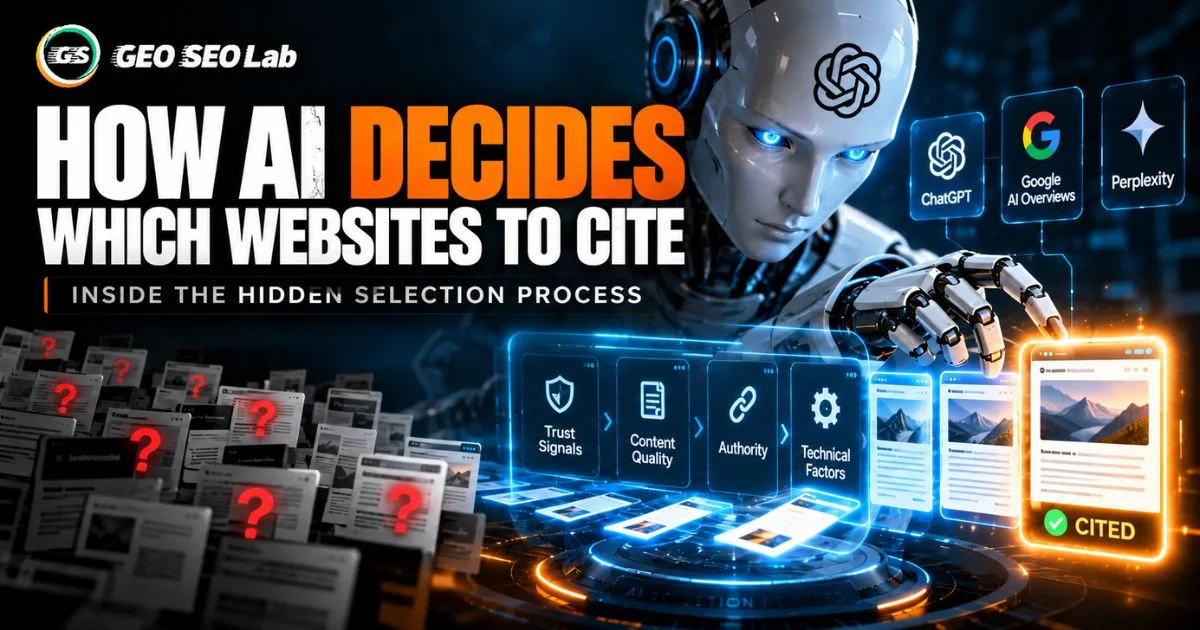
How AI Decides Which Websites to Cite: Inside the Hidden Selection Process
Introduction: The New Gatekeepers of VisibilityPicture this. Someone types a question into ChatGPT, Perplexity, or Google's AI Overview box. Within se...
Why Does AI-Generated Content Need Humanization for SEO?
Why Does AI-Generated Content Need Humanization for SEO?The Real Reason Raw AI Drafts Underperform, and What Actually Fixes ItA GEO SEO Lab ReportEdit...