The Trust Layer: Why Artificial Intelligence Does Not Just Retrieve Information. It Judges Whether to Believe The Trust Layer
The Trust Layer: Why Artificial Intelligence Does Not Just Retrieve Information. It Judges Whether to Believe The Trust Layer
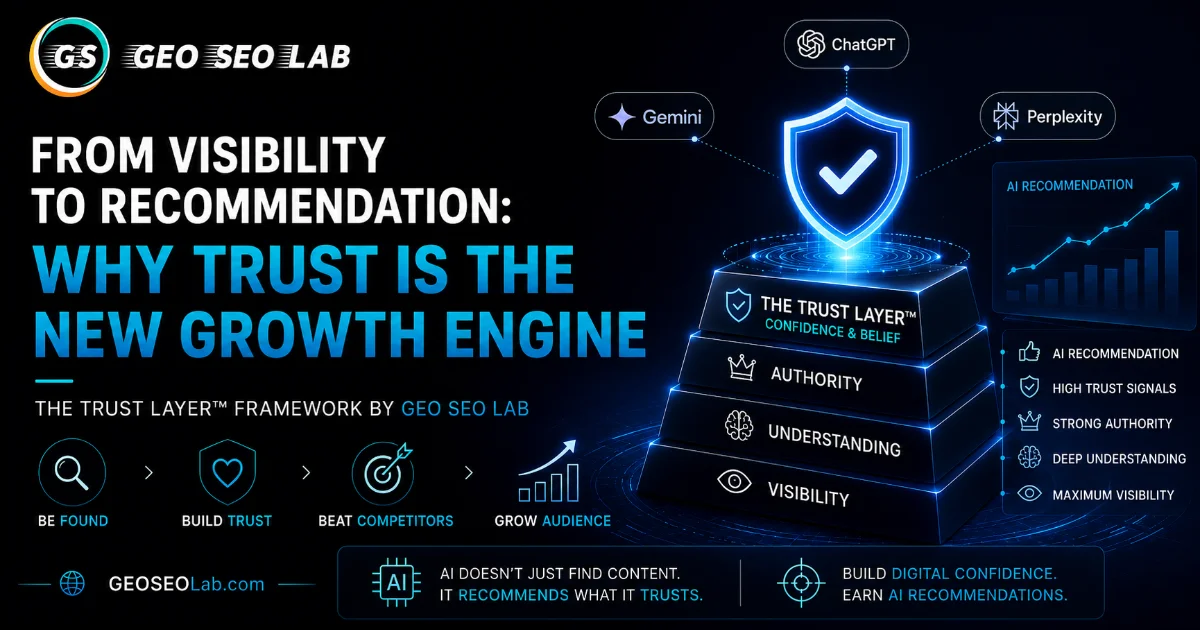
By GEO SEO Lab Research
Editorial note: The Trust Layer, the Confidence Signals Matrix, the Trust Flywheel and the Digital Confidence Score are frameworks created by GEO SEO Lab to help businesses reason about trust in an Artificial Intelligence driven discovery environment. None of these are methodologies belonging to Google, OpenAI, Microsoft, Anthropic or Perplexity and they should not be mistaken for a description of how any specific ranking system works internally.
Executive Summary
Every major shift in how people find information has quietly redrawn the competitive map for businesses. In the era of the commercial web the prize was simply being discoverable. A working website and a directory listing was often enough to get ahead. As Google matured the game moved to authority: backlinks, domain history and structured content became the currency of credibility. Then came the mobile and user experience era, where speed, accessibility and frictionless design started to matter much as the content itself.
We are now in the middle of a shift and it is being driven by Artificial Intelligence. This time the thing businesses are competing for is not new. It has always mattered.. It has rarely been something an algorithm could measure directly: confidence in The Trust Layer.
Think about what happens when someone asks ChatGPT to recommend accounting software asks Gemini to compare hospitals or asks Perplexity to explain a tricky tax rule. They are not just looking for information to sift through. They are outsourcing a judgment call asking The Trust Layer system to tell them what is worth believing in The Trust Layer.
That is a different job than the one search engines used to do. Classic search was built around discovery. Helping people find pages. Artificial Intelligence is built around something to arbitration. Helping people decide which answer among many possible ones deserves their trust in The Trust Layer.
Discovery rewards relevance. Arbitration demands confidence in The Trust Layer.
The exact mechanics that Artificial Intelligence platforms use to weigh sources are proprietary. Vary considerably from one company to the next. But if you read across the documentation a common thread shows up again and again: an emphasis on reliability demonstrated expertise, factual grounding and transparency in The Trust Layer. Google talks about "people-first" content. OpenAI stresses grounding responses in sources. Anthropic frames its work around honesty and transparency in model behavior. Microsoft talks about surfacing information inside its Artificial Intelligence powered search products.
Read together these public signals point to a reality businesses can not ignore: showing up is no longer enough. You also have to be believable in The Trust Layer.
This piece lays out The Trust Layer. GEO SEO Labs framework for how organizations build confidence across the many surfaces where it now matters: websites, Artificial Intelligence assistants, search engines, press coverage, review sites and professional communities. Of the tactical question everyones asking. "How do we optimize for Artificial Intelligence?”. The Trust Layer asks something fundamental: why should a machine or a human being trust your organization enough to actually recommend it in The Trust Layer?
More Content Than Ever and Less Reason to Trust Any of It
The internet cracked one of the hardest problems in human history: getting information to people who need it. Not ago specialized knowledge was scarce and hard to reach. Today it is the problem. A firehose. Ask an Artificial Intelligence assistant to unpack quantum computing compare investment strategies or summarize a clause and you will have a clean readable answer inside seconds. Millions of sites are racing to answer the same questions and thousands of new articles go live every hour.
That sounds like a win for everyone. Information got radically cheaper to produce. But there is a catch nobody planned for: the easier information is to generate the harder it becomes to know which of it deserves your confidence in The Trust Layer.
Picture a small-business owner researching cybersecurity. A decade ago that meant opening tabs and slowly forming a view. Slow, but it forced some critical thinking. Now the same person can ask an Artificial Intelligence tool one question. Get a single polished answer. The friction is. So is the built-in skepticism that friction used to create.
The bottleneck has moved. It is no longer about finding information. It is about figuring out whether the information you just found has earned your trust in The Trust Layer. That shift touches every business publishing anything online. For two decades the fight was to be discoverable. Increasingly the fight is to be dependable in The Trust Layer.
Search Solved "Where Is It." Artificial Intelligence Is Trying to Solve "Should I Believe It.
For most of its history Google acted like an efficient card catalog: it found the most relevant pages and left the reader to decide which ones to trust. The evaluation work sat entirely with the user.
Artificial Intelligence flips that setup. Than handing over ten links and letting the user compare them it typically stitches together one confident-sounding answer. Of asking people to weigh competing sources themselves it does the weighing for them then presents a synthesis.
That is a change than it sounds like. Synthesis requires judgment and judgment requires some basis for confidence in The Trust Layer. An Artificial Intelligence model can not respond to "whats the best CRM for a 20-person startup" or "explain this term" without silently deciding, thousands of times over which sources are more credible than others.
Every provider does this differently under the hood. Googles Artificial Intelligence Overviews do not work like OpenAIs retrieval pipeline and Perplexitys citation approach is not the same as Anthropics. But across all of them one idea keeps surfacing in materials: high-quality well-sourced information gets weighted more heavily in The Trust Layer. Businesses often read that as " another SEO checklist item." It is bigger than that. It is a rewrite of how digital credibility gets evaluated by machines, not people. Artificial Intelligence is not reading your content anymore. It is quietly auditing it in The Trust Layer.
Confidence Is the New Moat
Picture two consulting firms in the niche. Both have modern websites publish a few articles a week and rank on page one for the same keywords. A traditional SEO dashboard would call them neck and neck.
Now picture a client doing their homework. They ask ChatGPT for an overview of leading approaches and the answer cites a research report from Firm B. Curious they find Firm Bs founder speaking at an industry event notice a trade publication referencing the firms benchmark data and read a handful of client reviews.
By the time this prospect actually lands on Firm Bs website the decision has effectively already been made. The website is not creating trust at that point. It is just confirming something the prospect already believes in The Trust Layer.
This is why two companies with identical SEO metrics can end up with wildly different business outcomes. Visibility gets you noticed. Confidence gets you chosen.. In an Artificial Intelligence mediated buying journey being chosen is the metric that actually counts in The Trust Layer.
Introducing The Trust Layer
GEO SEO Lab calls this dynamic The Trust Layer. It does not replace SEO, GEO or Artificial Intelligence visibility work. It sits on top of all three.
Traditional SEO helps people find your information. GEO helps Artificial Intelligence systems understand your information. The Trust Layer asks the question that comes after both: once you've been found and understood why should anyone actually believe what you're saying in The Trust Layer?
That belief rarely comes from one page doing its job well. It is built from repetition and consistency across touchpoints. A research piece an Artificial Intelligence cites, a methodology an industry expert references, a founder interview a journalist runs, an honest review a customer leaves an explainer thats still accurate two years later. None of these on their own creates trust in The Trust Layer. Together they build what we call confidence. Not confidence inside a single algorithm but confidence across the whole information ecosystem a brand touches.
Companies that internalize this stop asking "how do we publish more?". Start asking "how do we become more trustworthy?" That is a question and it changes almost every downstream marketing decision in The Trust Layer.
Trust Gets Built Long Before Anyone Needs You
One of the more common misconceptions in marketing is assuming trust starts the moment someone lands on your homepage. In practice it usually starts before that. Before the prospect even knows they'll need you.
Every useful article, every conference talk, every transparent research report, every candid LinkedIn post every case study that isn't just a highlight reel. These accumulate quietly into a reputation nobody notices forming. Then when a real decision has to be made one brand just feels familiar. One founder seems credible. One company feels like the bet.
None of that trust was created in the moment of decision. It was recognized. Because it had already been built in The Trust Layer.
The Confidence Signals Matrix
Why no single asset can manufacture trust on its
A persistent myth in marketing is that trust can be engineered through one big investment. A redesign, a content sprint, a backlink campaign. Each can help. None alone creates trust, in The Trust Layer. Trust accumulates when many independent signals tell a story over time.
People rarely articulate this consciously. They just say "this company feels established" or "I keep seeing their name " That intuition is not random; it is the residue of encountering the evidence repeatedly in The Trust Layer.
The way companies are seen by people is changing because of intelligence systems. These systems are trying to figure out which sources of information are reliable. To help with this the Confidence Signals Matrix was created by GEO SEO Lab. This matrix looks at five areas that're important for companies.
1. Technical Confidence is one of these areas. People do not always notice this. It affects how they feel about a company. If a companys website is fast and easy to use it shows that the company is competent. This is important because if a website is slow or hard to use people may think the company is not careful. The same thing applies to how a companys information's organized and if its business listings are accurate.
2. Knowledge Confidence is another area. Just because a company can make a lot of content does not mean it is an expert in something. What matters is if the company can explain topics in a clear and original way. If a company can do this people will start to trust it. A good way to test this is to see if someone can learn something from the companys content that they could not have found easily somewhere else.
3. Entity Confidence is about being consistent. Search engines and artificial intelligence systems try to understand what a company is and what it is good at. If a company says things about itself in different places it can be confusing. Companies need to make sure they are saying the thing about themselves everywhere.
4. Reputation Confidence comes from what other people say about a company not from what the company says about itself. Things like reviews, press mentions and case studies are important because they come from outside the company. Many companies spend much money on advertising and not enough on building relationships that can help their reputation.
5. Human Confidence is about people being able to see that there are humans behind a company. As more content is made by machines people are looking for content that is made by humans. When the people behind a company show up and share their expertise it makes the company seem trustworthy.
These five areas do not work alone. They all affect each other. If one area is weak it can hurt all the areas. That is why companies should think about trust as one system not as projects.
The Trust Flywheel
Trust is different from things that companies try to achieve. It does not have a start. End date like an advertising campaign. Once a company has trust it can create its momentum. Customers will recommend the company to others journalists will quote the company and artificial intelligence systems will show the companys information often. Each time someone trusts the company it makes it more likely that others will trust it too.
Authority Is Earned, Not Declared
Many companies want to be seen as authorities in their field.. Authority is not something that a company can just say it has. It is something that is given to the company by its customers, peers and journalists. Authority is when people trust a company and come back to it again and again.
Visibility Fades. Reputation Travels.
Companies should not just focus on being visible. They should also focus on building their reputation. This is because visibility can change quickly. Reputation stays with a company. If a company has a reputation people will still look for it even if it is not visible online.
Trust Is Becoming Everyones Job, Not Marketings
Trust is not just something that the marketing department should worry about. Every part of a company affects how much people trust it. This includes the leadership, engineering, sales, support and product teams. Every interaction that a customer has with a company can. Increase or decrease trust.
Being Remembered Is a Compounding Advantage
When people trust a company they are more likely to remember it. This means that the company will be the one that people think of when they need something. Artificial intelligence systems also work in a way. They are more likely to show information from companies that they have seen before. That have been reliable.
The Digital Confidence Score
Companies have a lot of data about how people interact with them.. This data does not always explain why people trust one company more than another. The **Digital Confidence Score** is a way to measure trust. It looks at things like how consistent a companys messaging's how original its research is and how often it is cited by other people.
Marketing Shifts From Persuasion, to Proof
The way that companies market themselves is changing. Of just trying to persuade people to buy something companies need to prove that they are trustworthy and competent. This is because people are looking for companies that can help them solve their problems not just sell them something.
Marketing has always been about persuading people to buy something. Companies use words, emotional pictures and creative ideas to make their products stand out.. Now with the help of Artificial Intelligence customers are asking for proof before they believe what a company says. They want to see if a company can really back up its claims.
The question is no longer "who says they are the best" but "who can actually prove it". Companies that can show results explain how they do things and have experts who agree with them will be more believable than those who just make big promises. Businesses that understand this will spend money on making big claims and more money on showing real evidence.
Trust Outlasts the Platform It Was Built On
Technology is always changing. New search engines come out social media platforms. Fall Artificial Intelligence models get better and interfaces are redesigned. Companies that try to keep up with every change will always be starting from scratch.. Trust is not like that. A good hospital is still trusted whether you find it on Google through an Artificial Intelligence assistant on YouTube or on a platform that does not exist yet.
Technology helps people find you. Trust is what makes them believe in what they find. That is why it is important to invest in things that will last when technology changes. These things include knowledge, education, transparency and real relationships with professionals. Algorithms will keep changing how they reward these things. People will always value them.
GEO SEO Labs View
Most people talking about Artificial Intelligence search are focusing on the things. They ask how to get mentioned by ChatGPT, how to rank high in Artificial Intelligence answers and how to be more visible. These are questions but they are not the most important ones.
The important question is whether a company has really earned peoples trust in the term. Artificial Intelligence is not creating the need for trust it is just showing how much trust has always mattered. Search engines rewarded content because people found it useful. Artificial Intelligence systems emphasize content because people expect reliability. The way things work will keep changing. What people expect will not.
That is why we think about optimization in layers. Search Engine Optimization makes you discoverable GEO makes you understandable to Artificial Intelligence systems and the Trust Layer answers the question that comes after both. Once someone finds you and understands what you do why should they believe you? This question goes beyond marketing into the quality of your product, leadership, research integrity and transparency. It is what separates a company that's just visible from one that is really influential.
Final Thoughts
Every big technological change affects how information moves.. Very few changes affect why people choose to believe something. The internet made it cheaper to publish information. Search engines made it cheaper to find information. Now Artificial Intelligence is making it cheaper to understand information. But this does not reduce the value of being believable. It actually increases it because being believable is the one thing that does not get cheaper to fake.
The companies that will win in the decade will not be the ones with the biggest libraries of content. They will be the ones whose knowledge keeps getting cited referenced and recommended. By people and by the systems people use to help them decide. This is an interesting conversation than just talking about rankings because the next era of competition will not be about who publishes the most. It will be about who earns the trust.
Key Takeaways
- The Trust Layer is GEO SEO Labs framework for understanding how trust affects visibility and preference in Artificial Intelligence-assisted discovery.
- Digital trust is built slowly through quality, real expertise, consistency, independent reputation and visible human credibility.
- Publishing a lot of content is not as important as creating cited content that builds lasting authority.
- As Artificial Intelligence mediates more decisions companies need to look beyond traditional Search Engine Optimization and focus on becoming genuinely trusted cited sources on the web.
- The next measure of success will not be traffic or rankings. It will be earned trust.
References
- Google Search Central. Creating Helpful, Reliable People-First Content: https://developers.google.com/search/docs/fundamentals/creating-helpful-content
- Google Search Quality Rater Guidelines: https://developers.google.com/search/blog
- OpenAI Research: https://openai.com/research
- Anthropic Research: https://www.anthropic.com/news
- Microsoft Research: https://www.microsoft.com/research
Frequently Asked Questions
Find answers to common questions about this topic
About the Author

Anubhav
SEO Expert & Content Creator
Experienced digital marketing professional specializing in SEO strategies, content optimization, and data-driven marketing solutions. Passionate about helping businesses grow their online presence and achieve better search rankings.
Related Articles
View all posts
Google's AI Content Guidance: What Website Owners Need to Change Right Now
Google's AI Content Guidance: What Website Owners Need to Change Right NowPublication: GEO SEO LabCategory: SEO Strategy / Content Governance / Google...
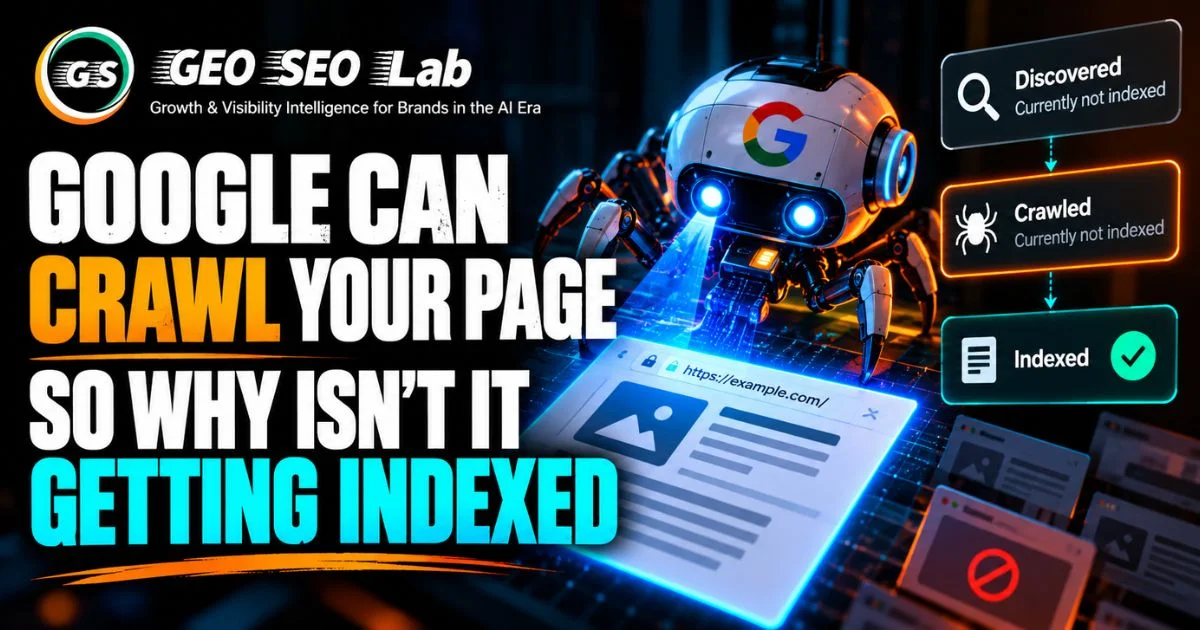
Google Can Crawl Your Page: So Why Isn't It Getting Indexed?
Google Can Crawl Your Page: So Why Isn't It Getting Indexed?Imagine pouring weeks of painstaking effort into a comprehensive, deeply researched articl...
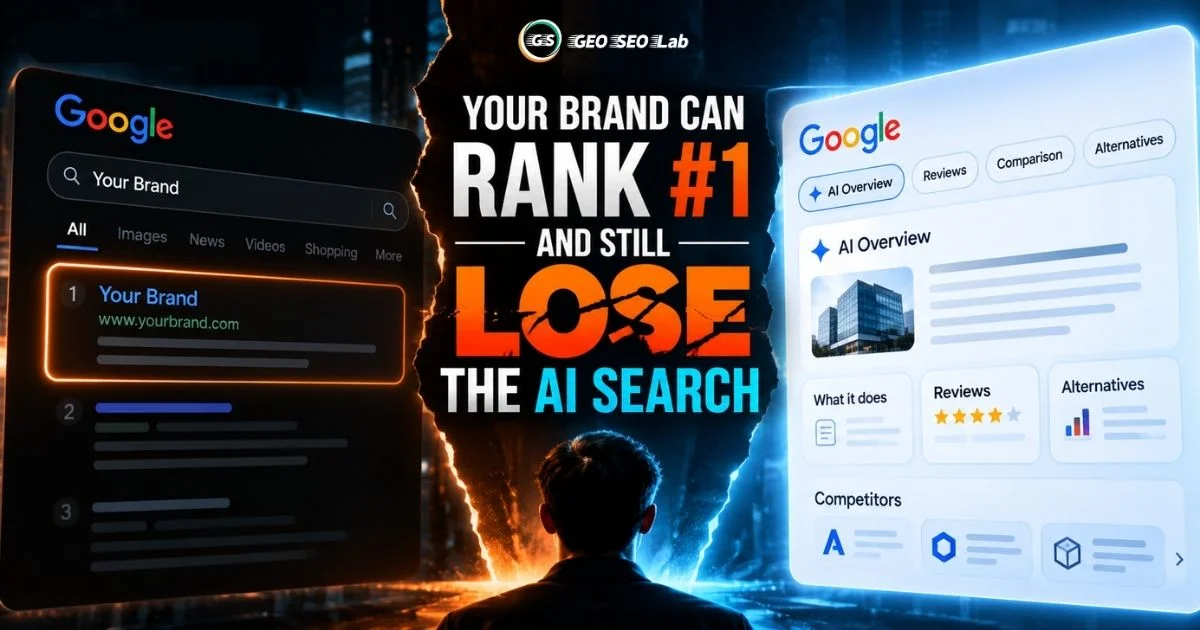
Your Brand Can Rank #1 and Still Lose the AI Search
Your Brand Can Rank #1 and Still Lose the AI SearchGoogle AI Overviews Are Changing Brand Search, and What It Means for SEOEditorial DisclosureThis ar...